Mastering Hazards: Enterprise Risk Management Training
Mastering Hazards: Enterprise Risk Management Training
Enterprise Risk Management Training: Ensuring Safety.
Enterprise risk management refers to the process of identifying, analyzing, and controlling risks to workers' health and safety. It is essential for managing hazards and their potential consequences. Various types of risks may be present in a workplace, such as physical risks, biological risks, psychosocial risks, or risks associated with movement. To avoid them, it is important to undergo enterprise risk management training.
Key Steps in Risk Management
Enterprise risk management occurs in several stages.
Risk Identification
The first step is to identify the risks. Various methods can be used for this, such as task and equipment inventories, risk hunting, and periodic inspections. It is also advisable to assess the environment and consult with employees, as they are directly exposed to dangers on a daily basis.
Risk Assessment and Analysis
Once the risks have been identified, they should be analyzed. It is necessary to determine the probability of their occurrence and their consequences. Two methods are available: quantitative analysis and qualitative analysis. Then, assess the risks using a scoring system or a risk matrix. These two techniques are most commonly used. The objective is to prioritize risks based on their potential impact on the enterprise. Address the most serious threats first.
Risk Response Planning
For each identified risk, you must develop a strategy to manage it. Define the actions to be taken to minimize potential hazards. Virtual reality training on safety best practices, for example, is a good prevention tool. Don't forget to assess associated costs. Indeed, you need to mobilize the necessary resources to implement your risk response. These resources may be financial, material, or human.
Why Is Enterprise Risk Management Training Essential?
Enterprise risk management training offers numerous benefits.
Improvement of Safety and Resilience in the Enterprise
By training your teams in risk management, they can take measures to prevent their occurrence, thereby enhancing overall safety in the enterprise. Moreover, this type of training promotes resilienceby anticipating all dangers and developing effective emergency plans. Thus, even if a risk materializes, its impact will be reduced.
Reduction of Costs Related to Incidents and Accidents
Workplace accidents generate significant costs for a company (victim care expenses, insurance, compensation, pensions, etc.). Prioritizing enterprise risk management training is an excellent way to reduce their frequency. Indeed, if prevention measures are effective, the risks of incidents and accidents will be lower. Consequently, the company will make savings.
Compliance with Regulations and Industrial Standards
An employer has a legal obligation to ensure the safety of its employees. Enterprise risk management training will enable compliancewith this regulation and other industrial standards. Moreover, it will avoid sanctions and fines associated with non-compliance.
Virtual Reality Training: An Innovative Approach
Virtual reality training offered by Immersive Factory
At Immersive Factory, we offertailored virtual reality training to help companies raise employee awareness of risks. Various immersive workshops and exercises are available. They can be adapted to your needs and objectives. We collaborate with industrial groups and HSE professionals to develop them.
Advantages of Immersive Learning in Risk Management
Immersive learning offers several advantages for risk management:
- Improved engagement: Virtual reality training is more engaging and interesting for participants, as they can experience different scenarios.
- Information retention: By experiencing realistic situations, employees learn to react actively to dangers. Moreover, they can repeat scenarios as many times as necessary, which enhances information retention and skills development.
- Safe training: Immersive learning allows each employee to practice safely because even though the exercises are very realistic, they pose no real danger.
Integrating Risk Management Training into the Corporate Strategy
Enterprise risk management training must be an integral part of the development strategy. Here's how to proceed.
Planning and Implementation of Training
First, you need to plan the training. Choose a specific theme such as road safety or fire risks. Then, determine the date, time, and location. For effective learning, enlist experts such as doctors and HSE professionals. Also, remember to mobilize technical resources such as virtual reality equipment for your training project to facilitate its implementation.
Performance Monitoring and Effectiveness Evaluation
Performance monitoring and evaluation are crucial to determine the effectiveness of risk management training. You can gather feedback from learners at the end of the session. Ask them to rate the quality of the training, the teaching method used, and other important aspects. Additionally, monitor changes in behavior after training. If incidents are less frequent, the objective has been achieved. However, learning should be continuous.
The Future of VR Training in Business: Trends and Innovations
Virtual reality is now considered one of the best tools for training employees in companies. Indeed, it fills the gaps in traditional training thanks to its playful and interactive aspect. Moreover, this technology is constantly evolving. Among the latest trends are its integration into mobile applications, the creation of targeted content, and the metaverse. However, although promising, it would be difficult to predict exactly how it will develop in the coming years.

Written by Aurélie Tavernier
Marketing and Communications Manager at Immersive Factory
She became interested in raising awareness of health and safety at work, convinced that an approach tailored to employees can transform the safety culture and reinforce shared vigilance. Her ambition: to encourage all companies, whatever their size, to invest actively in health and safety prevention for the well-being of their employees.
Share
Related articles
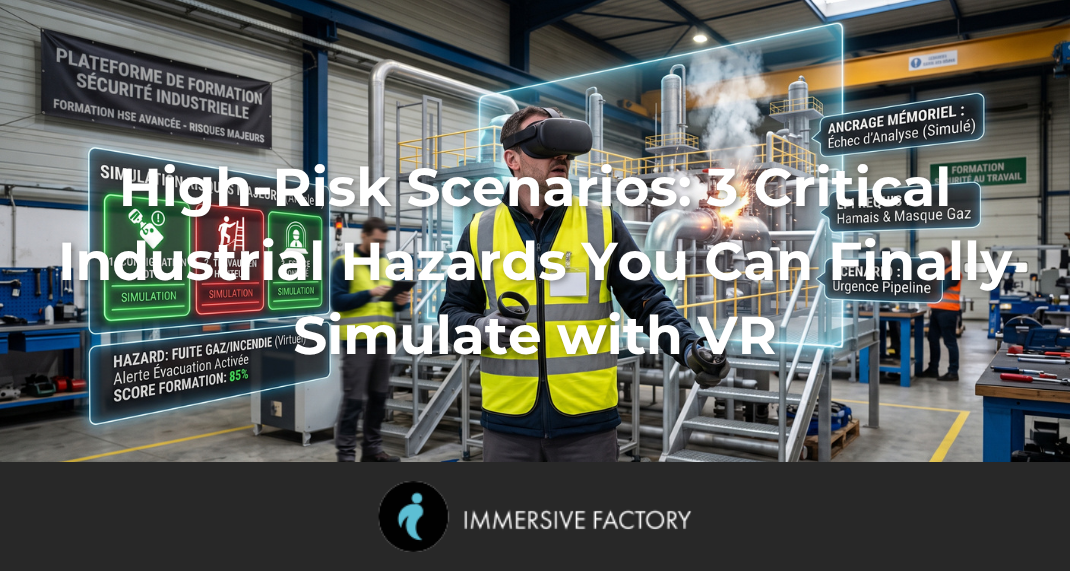
High-Risk Scenarios: 3 Critical Industrial Hazards You Can Finally Simulate with VR
Learn how VR enables safe, realistic simulation of major industrial hazards: Lockout/Tagout (LOTO), working at height, and confined space entry.
Occupational Accidents in Europe (2026): Beyond the Numbers, the Urgency to Act
What do 2026 European workplace accident stats really reveal? Immersive Factory analyzes the EUROGIP study & offers actionable VR safety solutions.
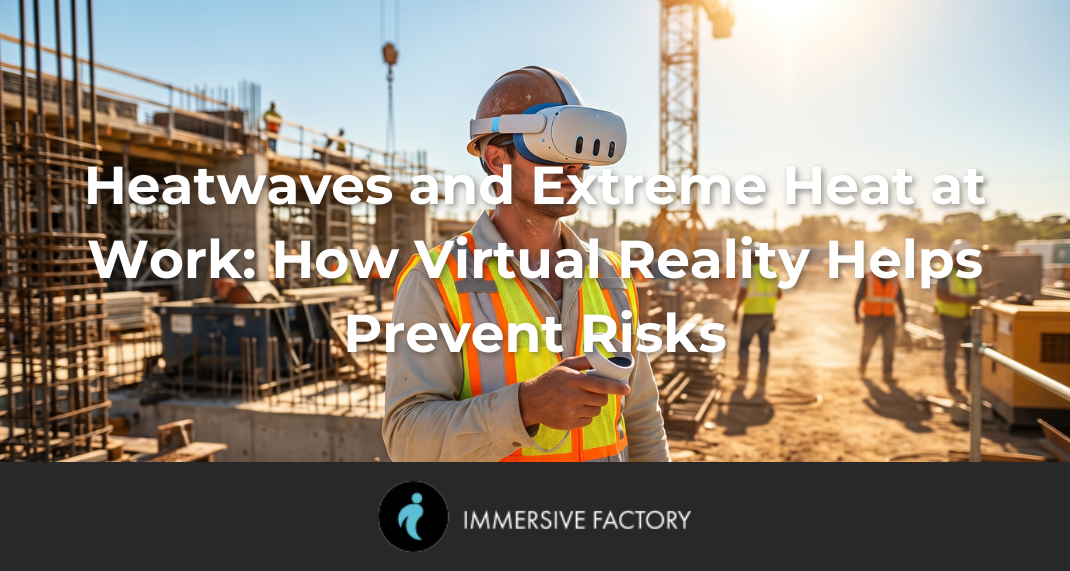
Heatwaves and Extreme Heat at Work: How Virtual Reality Helps Prevent Risks
As summer temperatures continue to soar year after year, extreme heatwaves are no longer exceptional events. For companies worldwide, managing thermal discomfort and high temperatures has become a critical annual health and saf...