Occupational Accidents in Europe (2026): Beyond the Numbers, the Urgency to Act
Occupational Accidents in Europe (2026): Beyond the Numbers, the Urgency to Act
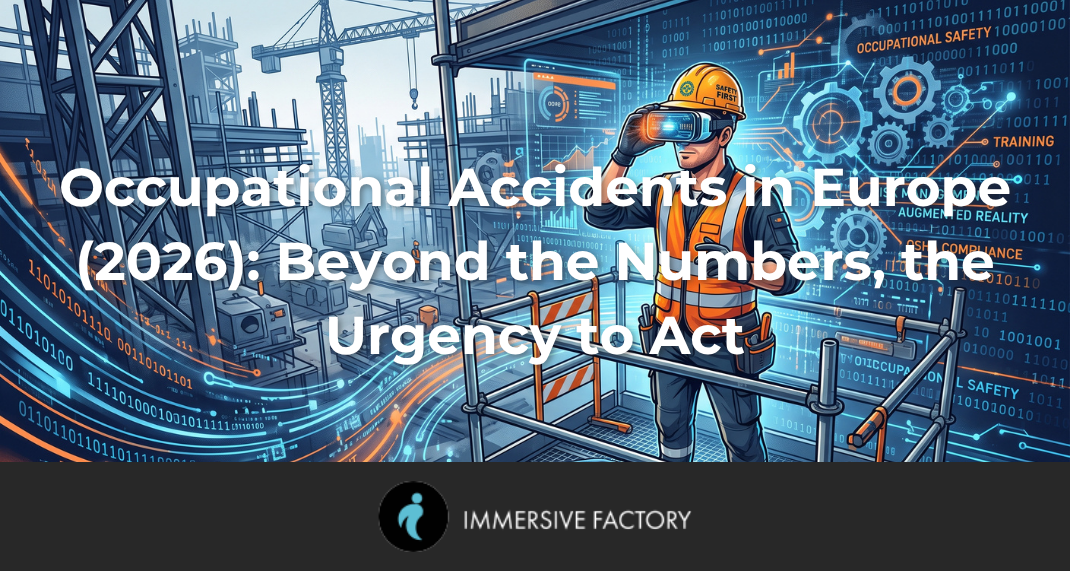
At Immersive Factory, our mission is to make the culture of prevention a reality anchored in the field. The study published by EUROGIP in March 2026 offers a particularly revealing mirror on the state of workplace safety in six major European countries (Germany, Denmark, Spain, France, Italy, Luxembourg). Let's dive into these statistics to better understand the risks and rethink our training approaches.
High-Risk Sectors
The consolidated data for 2023 highlights sectors where the accident rate remains historically persistent.
- The manufacturing industry sadly leads the way, accounting for up to 26% of occupational accidents in Germany, 24% in Italy, and 18% in Spain.
- The construction sector also pays a heavy toll, totaling 17% of accidents in Germany, 16% in Spain, 14% in France, and 13% in Italy.
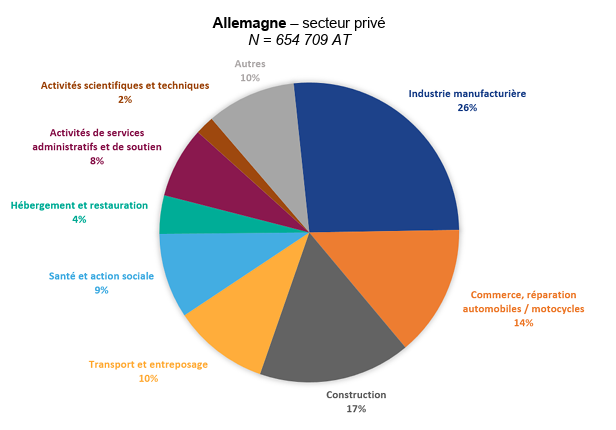
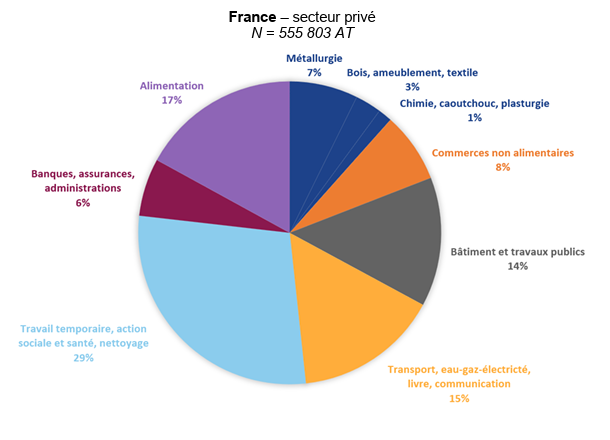
These figures serve as a reminder of an obvious fact: risk perception in industrial environments and on construction sites must be reinvented. Theoretical learning is no longer sufficient in the face of these recurring tragedies.
Severity and Mortality: A Striking Reality
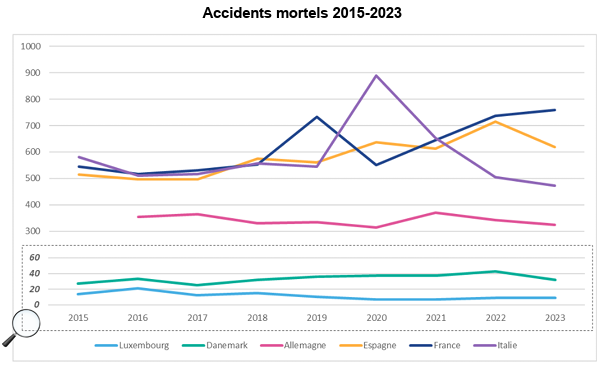
While the majority of accidents result in short absences, workplace mortality remains a major and intolerable challenge for our societies.
- 759 Work-related deaths in France (2023)
- 619 Work-related deaths in Spain (2023)
- 428 Work-related deaths in Italy (2023)
What are the causes of these fatal accidents?
- Road risk accounts for a considerable share of these tragedies: 38.5% of deaths in Italy and nearly a quarter (24 to 25%) in France and Germany.
- Falls (especially from height) constitute the other major scourge. They cause 15% of fatal accidents (with identified risk) in France, 14.8% in Germany, and 12.6% in Spain.
Did you know? "Medical emergencies" (such as heart attacks or strokes) occurring at work account for 57% of deaths excluding road risk in France, and 43.6% in Spain. These high statistics are explained by the application of a strong "presumption of time and place" in these countries, often assimilating these natural causes to occupational accidents.
The Dark Figure: Under-reporting
As alarming as they may be, these figures do not reflect the entire reality. The phenomenon of under-reporting accidents distorts the overall perception of risk and complicates prevention policies.
- An official assessment in France estimated this under-reporting at 48% for the year 2017.
- In Denmark, the Working Environment Authority concluded in 2017 that only 54% of occupational accidents were actually reported to them.
This dark figure confirms the crucial importance of encouraging open communication and establishing a true culture of transparency within teams.
The Immersive Factory Approach: Innovation in the Service of Life
Faced with these findings from the EUROGIP study, traditional awareness-raising methods (top-down meetings, slideshows) are showing their limitations. To sustainably lower these statistics, the active and emotional engagement of employees is key.
Thanks to virtual reality (VR), Immersive Factory allows workers to confront high-risk situations, such as working at height, vehicle-pedestrian interaction, or dangerous industrial environments, in a hyper- realistic yet completely safe manner. By experiencing the accident or near-miss virtually, the brain registers the danger without suffering the physical consequences, creating a deep memory anchor and permanently modifying behaviors.
Inevitability has no place in the workplace. Together, let's train differently to rewrite the statistics of tomorrow.
© 2026 Immersive Factory - Article based on the EUROGIP Study "Occupational accident statistics in Europe - limits of comparability" (Ref. EUROGIP-205/F).

Geschrieben von Aurélie Tavernier
Marketing and Communications Manager at Immersive Factory
She became interested in raising awareness of health and safety at work, convinced that an approach tailored to employees can transform the safety culture and reinforce shared vigilance. Her ambition: to encourage all companies, whatever their size, to invest actively in health and safety prevention for the well-being of their employees.
Teilen
Das könnte Sie auch interessieren
High-Risk Scenarios: 3 Critical Industrial Hazards You Can Finally Simulate with VR
Learn how VR enables safe, realistic simulation of major industrial hazards: Lockout/Tagout (LOTO), working at height, and confined space entry.
Heatwaves and Extreme Heat at Work: How Virtual Reality Helps Prevent Risks
As summer temperatures continue to soar year after year, extreme heatwaves are no longer exceptional events. For companies worldwide, managing thermal discomfort and high temperatures has become a critical annual health and saf...
Neuroscience and HSE: Why Our Brain Retains Risks 4 Times Better Thanks to VR?
When it comes to Health, Safety, and Environment (HSE), the goal of training isn’t to hand out attendance certificates—it’s to save lives. Yet, training directors frequently battle a formidable enemy: Ebbinghaus’s forgetting cu...