Food Safety: How to Effectively Train Teams on Health Risks?
Food Safety: How to Effectively Train Teams on Health Risks?
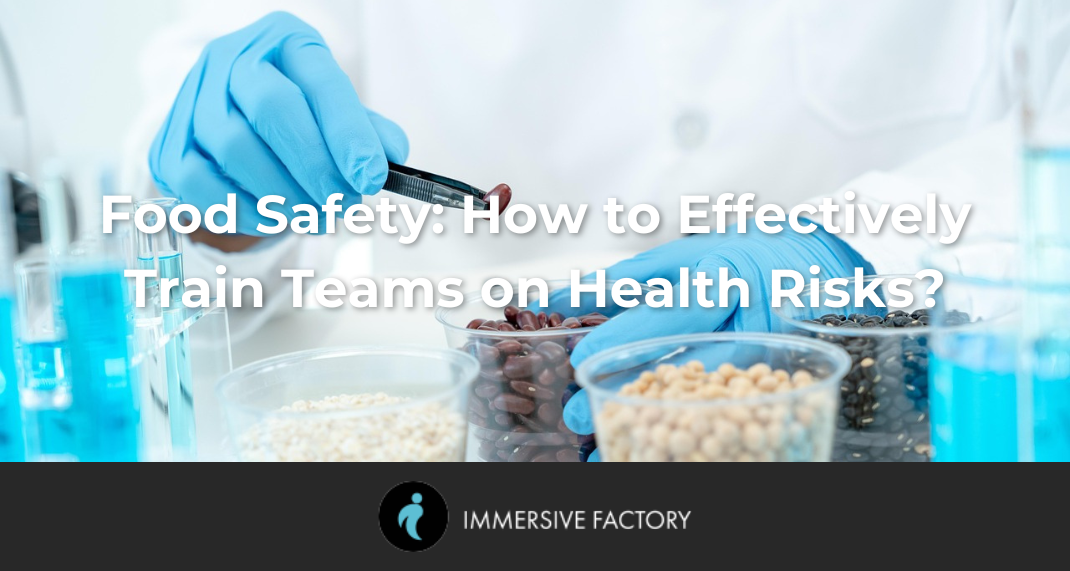
Food Safety: Train Your Teams on Health Risks.
Food safety ensures consumer health protection by minimizing the risks of foodborne illnesses. Additionally, it is an economic and regulatory imperative, as failure to comply with food safety regulations can lead to significant financial losses and damage a company’s reputation. To prevent health risks, teams must be trained in proper hygiene practices.
Identifying Key Health Risks in the Food Industry
Biological, Chemical, and Physical Contaminations
There are three main types of health risks in the food industry:
- Biological contamination: parasites, viruses, bacteria, etc.
- Chemical contamination: pesticide residues, cleaning products, food additives, etc.
- Physical contamination: presence of foreign objects in food, insects, rodents, etc.
Food safety training teaches the procedures to prevent these contaminations and ensure food quality.
Non-Conformities and Risks of Not Following Procedures
Failure to follow proper procedures can result in non-conformities, such as incorrect labeling or improper storage temperatures. These deviations pose significant risks to the food chain. For example, if allergens are not listed on a product’s label, it could lead to severe or even fatal allergic reactions in consumers.
Real-World Cases of Food Incidents and Their Consequences
In 1993, hamburgers from the fast-food chain Jack in the Box were contaminated with E. coli O157:H7, causing hemolytic uremic syndrome and multiple deaths. The investigation revealed that the incident was due to inadequate training in meat handling and cooking procedures. Consequently, health authorities reinforced food safety regulations. This case highlights the importance of a strong safety culture within food businesses.
The Foundations of Effective Training: Methods and Educational Tools
Balancing Theoretical and Practical Learning
An effective training program must combine theory and practice. First, employees must be informed about food safety standards, regulations, and hygiene best practices. However, to ensure optimal food safety, hands-on exercises such as case studies and real-life scenarios must also be incorporated. Practical learning enhances knowledge retention.
Interactive Training Methods
Today, companies can rely on interactive training methods to educate their teams on food safety. Several options are available, including virtual reality and simulation-based learning. These technologies allow employees to experience challenging situations in a simulated environment, increasing their awareness. E-learning is another innovative tool for remote training, providing continuous access to educational resources.
The Importance of Updating Knowledge
Food safety regulations evolve rapidly, making ongoing training essential. Regular training sessions ensure employees maintain a high level of competence and keep companies compliant with the latest regulations. Moreover, it helps prevent penalties and strengthens brand reputation. Keeping knowledge up to date also fosters consumer trust.
The Impact of Immersive Training and New Technologies
Virtual reality has become a key tool in corporate safety training. It immerses learners in realistic environments and allows them to experience different scenarios. This immersive simulation enhances engagement during sessions, improving information retention and promoting lasting behavioral changes.
Immersive environments offer numerous advantages:
- Experiential learning that strengthens involvement
- Skill development in real-world situations
- Familiarization with safety rules and procedures
- High realism, making trainees feel as if they are in the field
- Safe learning, eliminating risks of injury, accidents, and occupational diseases
Engaging and Empowering Teams for Better Implementation
While training is essential for raising awareness about food safety, it is equally important to empower employees by fostering a strong food safety culture within the company. Encourage employees to report anomalies on-site and establish open discussions on safety issues. Additionally, involve all staff members in prevention efforts, from management to factory workers.
This approach promotes continuous improvement and collective progress. For example, you can reward exemplary behavior and conduct regular awareness campaigns on hygiene best practices. Finally, always measure training effectiveness by gathering employee feedback after each session. Ask them to rate aspects such as topic relevance, training duration, and tools used. This feedback helps adapt training content and methods.
Immersive Factory: Towards Continuous Training for Optimal Safety
Ongoing evaluation is essential to track learners' progress and assess the effectiveness of food safety measures. Moreover, training should be tailored to the company's industry.
To effectively educate your employees, rely on Immersive Factory. We offer virtual reality training modules designed to meet professional needs and updated according to evolving regulations. However, beyond technological tools, the key to optimal food safety lies in engaging all employees.
Thus, adopt a proactive and participatory approach to food safety to prevent health risks and ensure regulatory compliance.

Geschrieben von Aurélie Tavernier
Marketing and Communications Manager at Immersive Factory
She became interested in raising awareness of health and safety at work, convinced that an approach tailored to employees can transform the safety culture and reinforce shared vigilance. Her ambition: to encourage all companies, whatever their size, to invest actively in health and safety prevention for the well-being of their employees.
Teilen
Das könnte Sie auch interessieren

Deploying HSE VR Across Multiple Sites: From Pilot to Scaling
Discover how to successfully scale enterprise virtual reality for multi-site safety training: fleet management, LMS integration, and local adoption.
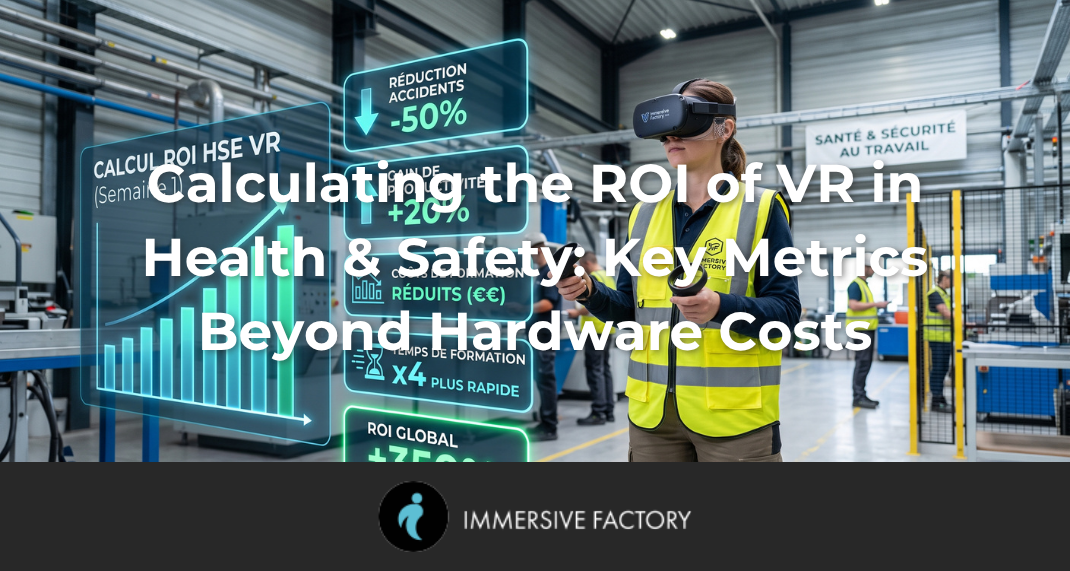
Calculating the ROI of VR in Health & Safety: Key Metrics Beyond Hardware Costs
Learn how to measure the true ROI of virtual reality in HSE safety training. Key metrics, hidden cost savings, and incident rate reduction.
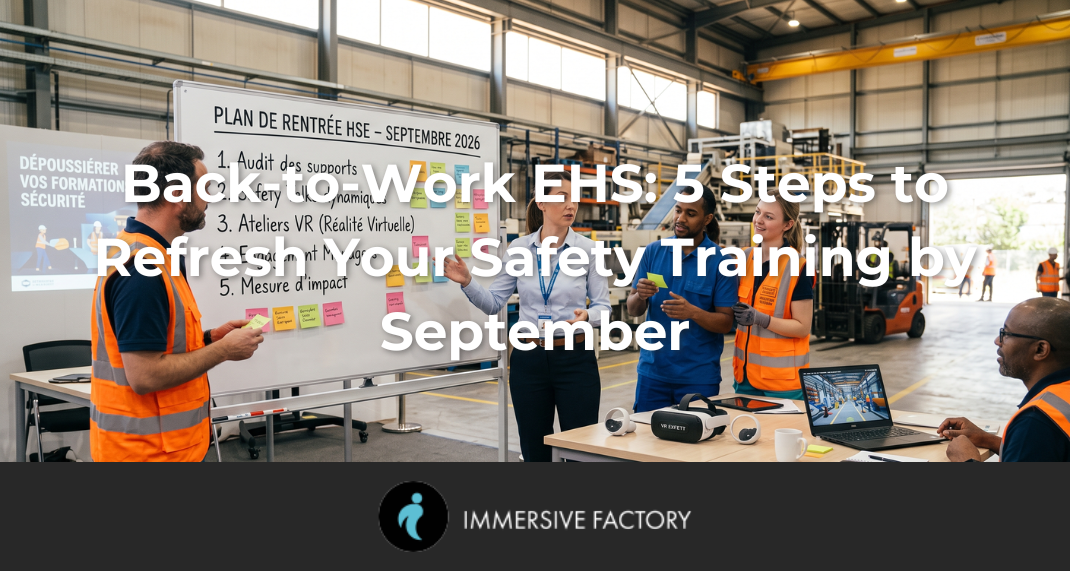
Back-to-Work EHS: 5 Steps to Refresh Your Safety Training by September
Gear up for the fall EHS restart! Discover 5 actionable steps to refresh your safety training, re-engage teams in September, and integrate VR.