Occiational Risk Assessment (EVRP): The Method for Successfully Evaluating Workplace Risks
Occiational Risk Assessment (EVRP): The Method for Successfully Evaluating Workplace Risks
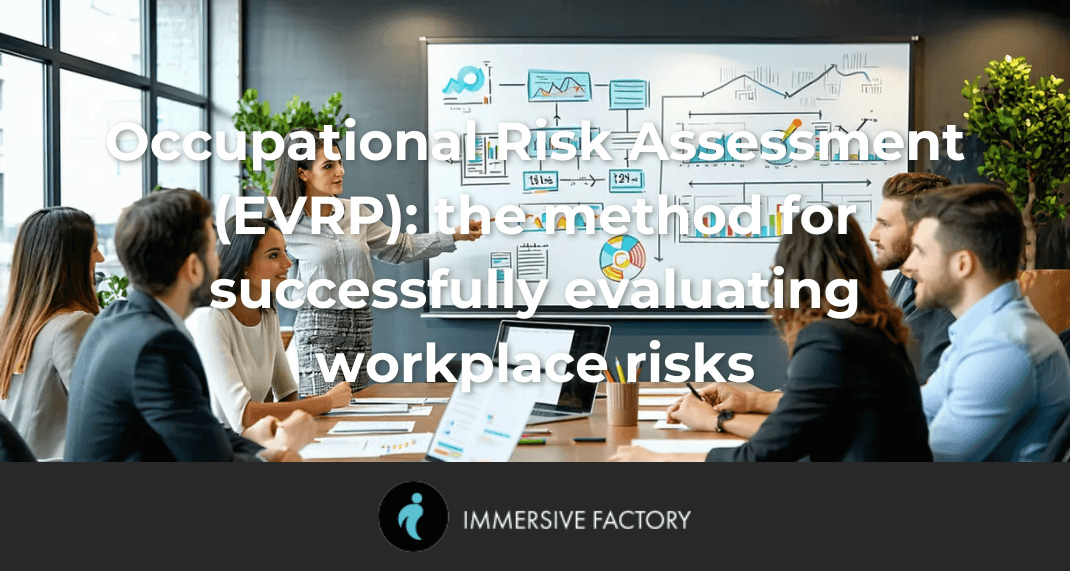
EVRP: Achieving Effective Occupational Risk Assessment in the Workplace.
In Brief: The Method for Successful EVRP
- EVRP involves identifying, analyzing, and preventing all hazards that may affect workplace health.
- It is a legal obligation, formalized in the Single Occupational Risk Assessment Document (DUERP), which must be updated at least annually.
- The method follows multiple steps: preparation, hazard identification, risk assessment, prioritization, action planning, monitoring, and reevaluation.
- A variety of tools exist to simplify the process: specialized software, INRS grids, checklists tailored to each industry.
- Team involvement, traceability, and regular updating are essential for effective prevention and compliance.
Have you ever truly considered the impact of a prevention program? Do you know what a safety day is? Implementing EVRP means anticipating the dangers that may threaten every employee—regardless of company size. EVRP, the Occupational Risk Assessment, is not just administrative—it ensures a safe workspace, a healthy environment, and a motivated team.
Why do many organizations turn this legal obligation into a strategic advantage? Because an accident, occupational illness, or poorly managed exposure is far more costly than prevention! It's also important to integrate an effective VR safety onboarding.
Definition of EVRP and Its Role in Prevention Policy
EVRP is a structured approach to identify, analyze, prioritize, and mitigate risks to health and safety at work.
This method exposes every hazard—noise, chemicals, machinery, stress, work strain—to prevent workplace accidents or occupational illnesses. The goal: provide each employee with the safest environment possible.
Steps include:
- Spotting hazards — physical, chemical, psychosocial…
- Evaluating real and potential exposure in each work unit
- Prioritizing risks based on severity and frequency
- Implementing tailored preventive measures
This collective process—carried out by the employer, CSE, designated committees or a prevention service—places EVRP at the center of workplace health and safety policy.
Legal Framework and DUERP Requirement
In France, the Labor Code mandates that every employer conduct EVRP and formalize it in the DUERP. This document is authoritative and must detail identified hazards and chosen preventive actions, updated regularly.
- Mandatory for all businesses, public and private entities
- Must be accessible to employees, CSE, labor inspectors, and health services
- Updated annually or after any major change (new equipment, accident, reorganization)
The DUERP is more than a file—it is the core tool for prevention governance.
Key Steps for Successful EVRP
Want to turn obligation into opportunity? Here’s a step-by-step guide for turning risk management into continuous improvement:
- Preparation: Assemble a project team and define work units
- Identification: List hazards, consult employees, analyze the work environment
- Evaluation: Measure each risk's severity and probability
- Prioritization: Rank risks by level
- Action Plan: Develop preventive measures, assign responsibilities and tracking
- Updates: Monitor measure effectiveness and revise as conditions change
Tools & Resources to Facilitate EVRP
Collaborative Platforms & Software
To streamline the process, EVRP-dedicated tools offer:
- A collaborative interface for employer, CSE, prevention teams
- Sector-specific risk analysis templates (industry, services, healthcare)
- Automatic tracking of action plans and DUERP updates
- Alerts for regulatory deadlines
The right tool fits your company’s size and sector.
Team Involvement: The Key to Success
How can you engage employees, frontline staff, and managers?
Prevention isn't just HR’s or top management’s role—it involves every employee. Tips to foster a safety culture:
- Train and raise awareness about EVRP and DUERP during onboarding or after organizational changes
- Communicate regularly on emerging risks, chosen measures, and results
- Include the CSE, prevention agents, and safety leaders at every stage
- Create a space to report risks, incidents, and suggestions
“When everyone feels involved, prevention becomes second nature. Each person contributes to team health and safety.”
Practical ADR Management, Traceability & Compliance
Drafting the DUERP once isn’t enough—it must be traceable, up-to-date, and always accessible.Any event (accident, incident, new role, new substance, audit) must trigger an immediate update.
A well-managed DUERP reassures labor inspectors, CSEs, and employees—and proves genuine organizational commitment.
Sanctions & Added Value of EVRP
Under labor law, failing to maintain a valid DUERP may lead to administrative fines—or even criminal charges in the event of an accident.Beyond financial risk, reputational damage, decreased cohesion, and poor performance are at stake.
A well-executed EVRP reduces absenteeism, improves workplace climate, enhances employer brand, and retains talent.
“A good DUERP is proof of commitment to safety, health, and social responsibility.”
Practical Guide to Effective EVRP
- Use tools appropriate to your company’s size
- Involve all stakeholders from action-plan design
- Update and archive every DUERP version
- Highlight prevention in internal and external communications
- Consult INRS and public-service resources regularly
EVRP is not optional—it is a strategic, human, responsible solution. Turning prevention into a collective asset is both a challenge and opportunity!
How do you support daily EVRP in your organization? What tools or tips do you share with other leaders?DUERP, security policy, prevention culture—they are powerful levers for performance and wellbeing within reach of all.

Immersive Safety Onboarding by Immersive Factory: VR for Efficiency
At Immersive Factory, safety onboarding takes on a new dimension with VR! Effective onboarding ensures every new team member or visitor quickly learns best practices, understands hazards, and masters essential safety behaviors.
Rather than relying on a standard briefing or static document, immerse each participant in a 3D environment for dynamic prevention.
VR confronts users with risky scenarios, monitors behaviors, and provides corrective safety measures at the right time.With over 30 customizable immersive workshops, covering simulation, awareness, and anomaly detection…
The result: engaged participants, better hazard awareness, and a stronger safety culture. Welcome to next-generation onboarding, by Immersive Factory!
EVRP FAQs
What is EVRP?
EVRP is the Occupational Risk Assessment process, essential for all French employers.It identifies workplace hazards, formalizes results in the DUERP, and implements prevention.EVRP concerns every exposed employee and relies on an analysis of conditions, situations, and equipment.Employers must implement prevention measures and make the document available to everyone.
What are the 3 primary prevention measures?
- Collective prevention: organization-wide actions to curb risks at the source
- Individual prevention: appropriate PPE for each employee
- Training: essential for awareness of workplace hazardsEVRP identifies these needs and embeds them into the DUERP action plan.
Is EVRP mandatory?
Yes. EVRP is legally mandated in the French Labor Code. Every employer, regardless of size or sector, must maintain an up-to-date DUERP accessible to labor inspectors, CSE, and staff.
What are the 4 prevention tools?
- DUERP (Single Risk Assessment Document)
- Action Plan, detailing measures to be implemented
- Job descriptions, specifying job-specific safety and health instructions
- Training and awareness initiatives, ensuring employee-wide knowledge
What are the 17 occupational risks?
Covering risks that may appear in EVRP and DUERP:chemical, biological, physical, mechanical, electrical, machinery, environmental, manual handling, traffic, psychosocial, fire, slips, noise, vibration, extreme temperatures, musculoskeletal disorders, radiation, stress/workload—identifying them all allows tailored prevention measures.
Does CHSCT still exist?
No. Since 2020, the CHSCT has been replaced by the CSE (Social and Economic Committee). CSE ensures prevention continues: risk evaluation, DUERP drafting, proposing prevention measures, and monitoring workplace health and safety remain core responsibilities.

Scritto da Aurélie Tavernier
Responsabile Marketing e Comunicazione presso Immersive Factory.
Appassionata di sensibilizzazione alla salute e sicurezza sul lavoro, convinta che un approccio adattato ai collaboratori possa trasformare la cultura della sicurezza e rafforzare la vigilanza condivisa. Il suo obiettivo: incoraggiare tutte le imprese, qualunque sia la loro dimensione, a impegnarsi attivamente nella prevenzione sanitaria e di sicurezza per il bene dei loro dipendenti.