The Workplace Health and Safety Dojo: Revolutionizing Prevention Through Practice
The Workplace Health and Safety Dojo: Revolutionizing Prevention Through Practice
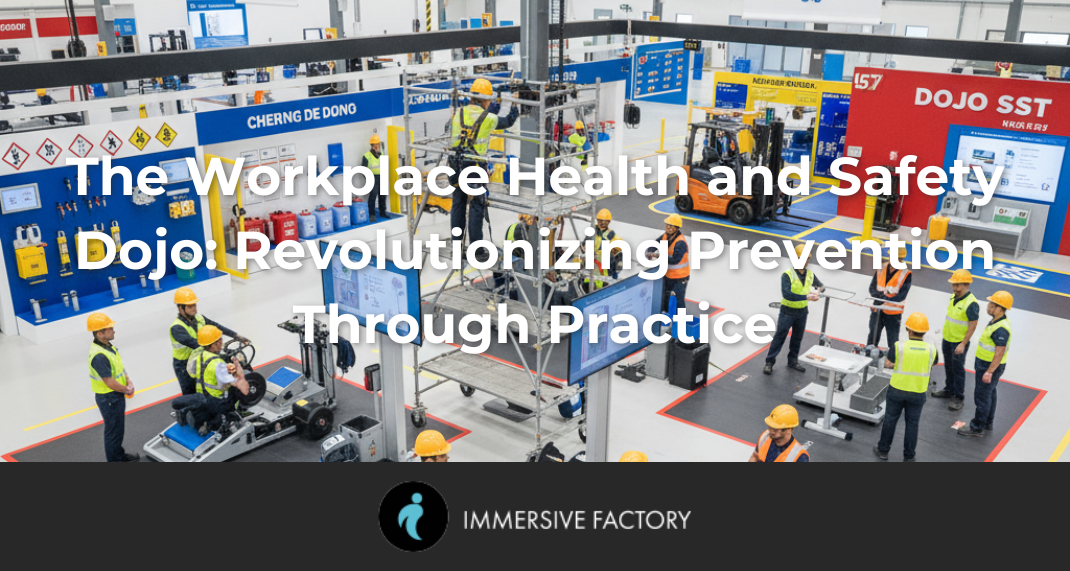
In the field of workplace health and safety (WHS), training is king. Yet, how much do employees truly retain after another risk presentation on PowerPoint? The effectiveness of theoretical training is wearing thin. Faced with this reality, a new, more dynamic and engaging approach is gaining ground: the Workplace Health and Safety Dojo.
Inspired by Japanese martial arts dojos – places dedicated to learning and mastering movement – the WHS dojo transposes this concept to the professional world. It is an immersive training space where employees don't just listen to safety, they practice it.
What Exactly is a Safety Dojo?
A safety dojo (or "HSE dojo," "WHS dojo") is a permanent or mobile practical training workshop dedicated to preventing occupational hazards.
Forget the classic meeting room. The dojo is a controlled environment that simulates workstations, risk scenarios, and industrial settings (production lines, logistics areas, maintenance workshops...).
The goal is not to memorize rules, but to:
- Feel the risk (e.g., the difficulty of a poor posture).
- Learn the correct motion through repetition.
- Understand the direct impact of one's actions on their own safety and that of others.
This active pedagogy is based on the "learning by doing" principle, which promotes much stronger memory retention than passive listening.
Why is a WHS Dojo More Effective Than Traditional Training?
The dojo's superiority lies in its neuro-pedagogical approach. Theoretical training mainly engages semantic memory ("knowing what"). The dojo, however, activates procedural memory ("knowing how," or muscle memory).
- Active Engagement: The employee is an active participant in their training. They handle, test, make mistakes, and correct them. This engagement multiplies attention and information retention.
- Freedom to Fail Safely: The dojo is a safe environment where mistakes are learning opportunities. An employee can experience the consequences of a wrong move (e.g., trying to lift a 30 kg load with incorrect technique) without risk of actual injury.
- Realistic Simulation: By faithfully reproducing work conditions, the dojo makes training concrete and directly applicable. The transfer of skills to the actual job is almost immediate.
The Concrete Benefits of a Health and Safety Dojo
Implementing a WHS dojo is not an expense, but a strategic investment. The return on investment (ROI) is fast and measurable.
- Drastic Reduction in Accidents: Fewer workplace accidents and occupational illnesses thanks to better integration of safe practices.
- Decrease in MSDs: Musculoskeletal disorders (MSDs), the leading cause of occupational illness, are directly targeted by "manual handling and posture" and ergonomics workshops.
- Strengthening of Safety Culture: The dojo creates a common language and demonstrates visible commitment from management. Safety becomes everyone's business, every day.
- Improved Onboarding: It's a perfect tool for welcoming newcomers (permanent or temporary staff), who learn the right reflexes from day one.
- Performance Optimization: Less time off work, but also better production quality (a safe motion is often an efficient one) and reduced equipment breakage.
What Topics to Cover in a WHS Dojo? (Workshop Examples)
A dojo is modular and must be adapted to the company's specific risks. Here are the most common workshops:
- Manual Handling and Posture (MSD Prevention): Workshops on lifting loads, "pushing/pulling," working postures on a line, tool use (e.g., screwdriving).
- Work at Height: Harness use simulation (anchoring, suspension test), use of ladders and stepladders.
- Chemical Risk: Pictogram recognition, decanting procedures, spill management, use of PPE (Personal Protective Equipment).
- Electrical Risk: Lockout/Tagout (LOTO) simulation.
- Traffic and Logistics: Workshops on pedestrian/forklift co-activity, blind spots, 5S housekeeping.
- Cut Risk / Sharp Objects: Safe use of utility knives, handling of tools.
How to Implement a Safety Dojo in Your Company
Launching a WHS dojo is a major project. Here are the main steps:
- Analyze Risks (The "Why"): Identify your priority risks based on your risk assessment documents, accident/illness statistics, and feedback from the field (e.g., "safety talks").
- Define Objectives (The "What"): What skills do you want to develop? What behaviors do you want to change?
- Design the Workshops (The "How"): Create short (15-20 min per workshop), high-impact, and realistic simulations. Involve field managers and operators in the design.
- Set Up the Space (The "Where"): Find a dedicated location ("fixed dojo") or opt for a mobile solution ("dojo kit" or "pop-up dojo") to bring the training closer to the teams.
- Train the Facilitators: The dojo's success depends on the trainer's quality. They must be a coach, not a lecturer. They guide, ask questions, but don't give the solution away immediately.
- Plan and Measure: Integrate the dojo into training pathways (initial, refresher). Track key performance indicators (KPIs): accident frequency/severity rates, MSD rates, participant feedback.
Conclusion: The Dojo, a Safety Culture Accelerator
The workplace health and safety dojo marks a break from passive prevention methods. It is an operational excellence tool that places action and experimentation at the heart of learning.
By enabling every employee to become an actor in their own safety, the dojo doesn't just teach rules: it creates lasting behavioral change and embeds a true culture of prevention within the company.

Scritto da Aurélie Tavernier
Marketing and Communications Manager at Immersive Factory
She became interested in raising awareness of health and safety at work, convinced that an approach tailored to employees can transform the safety culture and reinforce shared vigilance. Her ambition: to encourage all companies, whatever their size, to invest actively in health and safety prevention for the well-being of their employees.
Condividere
Da leggere anche

Deploying HSE VR Across Multiple Sites: From Pilot to Scaling
Discover how to successfully scale enterprise virtual reality for multi-site safety training: fleet management, LMS integration, and local adoption.
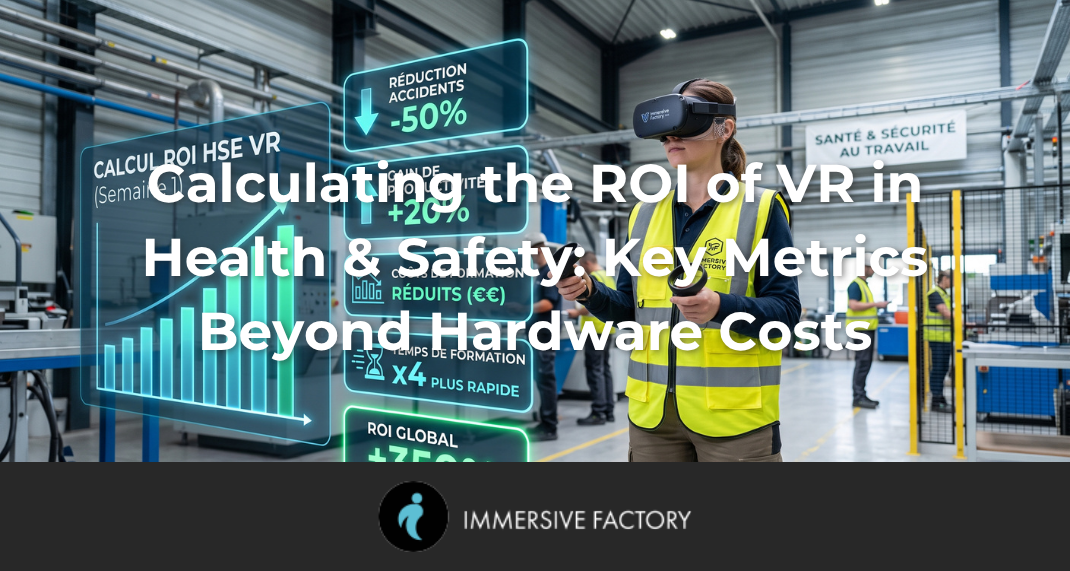
Calculating the ROI of VR in Health & Safety: Key Metrics Beyond Hardware Costs
Learn how to measure the true ROI of virtual reality in HSE safety training. Key metrics, hidden cost savings, and incident rate reduction.
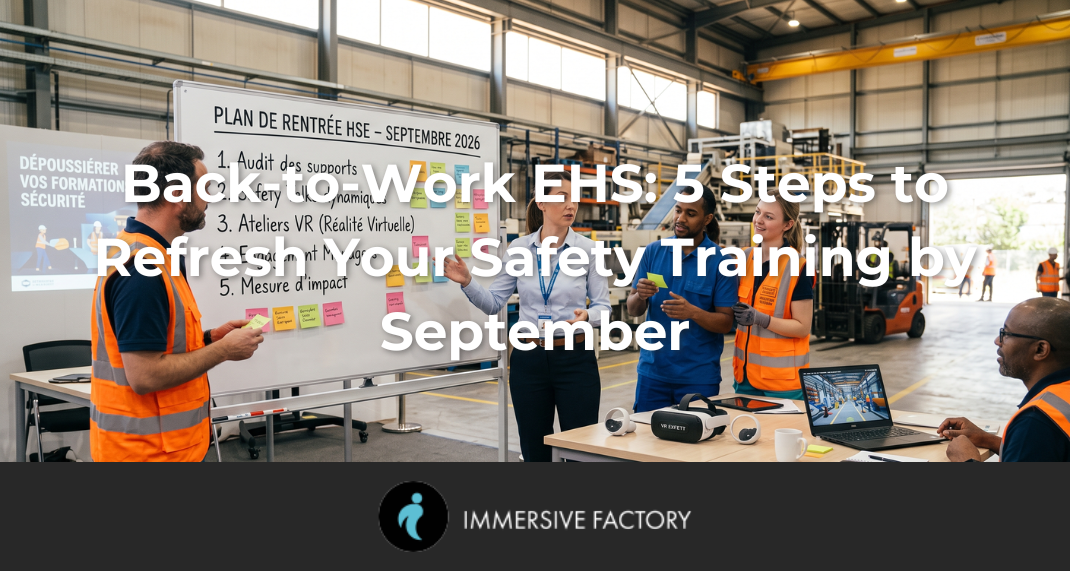
Back-to-Work EHS: 5 Steps to Refresh Your Safety Training by September
Gear up for the fall EHS restart! Discover 5 actionable steps to refresh your safety training, re-engage teams in September, and integrate VR.