Succeeding in Your Safety Briefing: Tips and Strategies for Effective Facilitation
Succeeding in Your Safety Briefing: Tips and Strategies for Effective Facilitation
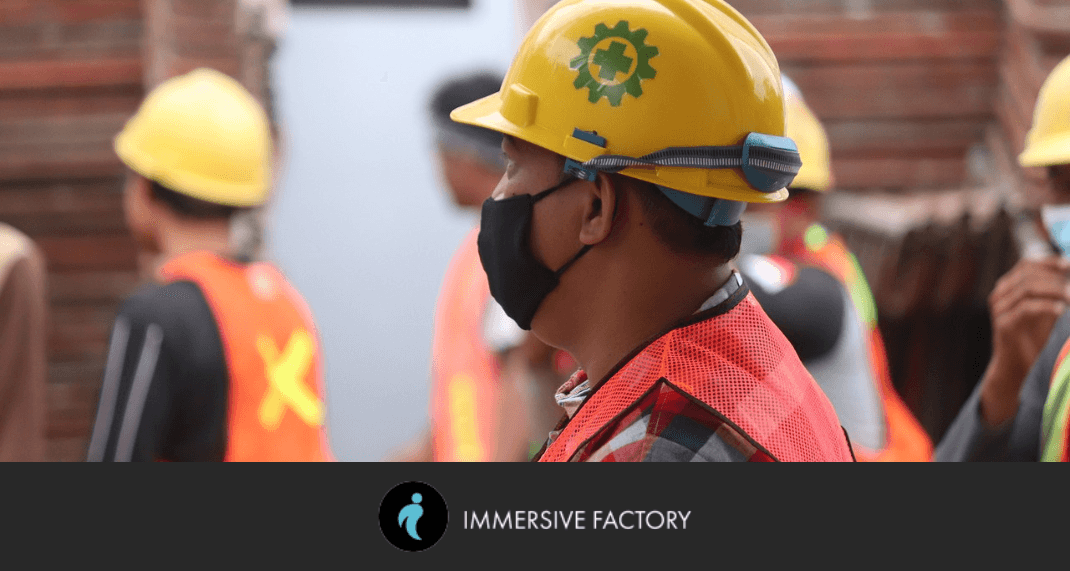
Practical guide for conducting a safety briefing.
The safety briefing is a periodic meeting during which company employees discuss topics related to occupational risk management. It serves to remind procedures for preventing hazards. The safety briefing is considered a real prevention tool in business. Indeed, it contributes to raising employees' awareness of threats and strengthening the safety culture. So, how to conduct a safety briefing? Follow the steps mentioned in this guide.
Preparing an Impactful Safety Briefing
Choosing Themes and Key Messages
For the safety briefing to contribute to risk prevention, you must choose interesting themes and define key messages to convey. Here are some examples of relevant topics:
- Chemical risk management;
- Working at heights;
- Compliance with safety standards;
- Road risk;
- Equipment circulation, etc.
If you're unsure which one to choose, consult this example of safety briefing themes.
Preparing Materials and Communication Supports
To make the meeting more impactful, prepare various communication supports such as presentation videos, slideshows, and summary sheets. It is also possible to focus on innovative tools like virtual reality to capture employees' attention. Additionally, prepare the necessary equipment such as a computer, a projector, an internet connection, and display panels for visuals. They mainly depend on the chosen supports.
Animation Techniques to Capture Attention
Methods to Make the Session Interactive and Dynamic
For the session to be more interactive and dynamic, it should not be limited to a simple presentation. The facilitator should encourage participants to interact, give their opinions, and express themselves so they can take ownership of safety rules. They can propose games, use polling applications, or organize quizzes. It all depends on the topic to be addressed.
Concrete Examples and Situational Exercises
Here are some concrete examples of animation techniques and situational exercises to energize your safety briefings.
The Mistake GameThe mistake game involves showing a series of images to employees in which errors have been intentionally included. The objective is to help them identify these errors to raise awareness of safety best practices.
Evacuation SimulationThis exercise allows the application of previously established emergency evacuation procedures. It helps employees to react quickly and correctly in case of danger.
Involving Participants and Encouraging Participation
To conduct a safety briefing, participants must feel involved. Here's how to achieve it.
Techniques to Promote Exchange and Sharing of Experiences
Collaborative workshops, debates, and sharing sessions are effective techniques for conducting a safety briefing. They encourage exchanges and sharing of experiences. In any case, it is important to establish open communication so that employees feel free to express themselves, without fear of judgment or repercussions.
Handling Audience Questions and Reactions
Participants will likely have questions during the meeting. Therefore, the facilitator must anticipate them by equipping themselves with documents and informing themselves about the topic beforehand. To optimize the safety briefing, it is preferable to reserve time at the end of the presentation to answer questions and manage various reactions.
Virtual Reality Training Offered by Immersive Factory
To conduct a safety briefing, invest in an innovative tool like virtual reality. It offers several advantages for safety training.
Virtual Reality Training Modules Adapted to Safety Briefings
Our virtual reality training modules adapted to safety briefings are based on active pedagogy. Indeed, our tools are capable of simulating high-risk situations to confront participants with dangers. We provide a digital platform for exchanging themes and participating in immersive workshops.
Benefits of Integrating Virtual Reality to Enhance Learning and Engagement
Virtual reality is increasingly used for workplace safety training. Indeed, this technology can enhance learning and engagement during a safety briefing by simulating realistic scenarios, capturing attention, and promoting practice. It allows participants to experience the consequences of their mistakes themselves and to change their behaviors.
Tracking and Evaluating the Effectiveness of the Safety Briefing
Methods to Measure the Impact of the Session on Behaviors
To measure the impact of the safety briefing on employees' behaviors, use the following methods:
- Feedback questionnaires;
- Discussion groups;
- Individual interviews.
Strategies to Maintain Interest and Engagement in the Long Term
To maintain workers' engagement in the long term, it is advisable to periodically organize safety briefings. Vary the themes and animations to arouse their interest. Additionally, it is advisable to regularly communicate on the importance of safety in the workplace. Leaders must be involved in the process for messages to have more impact. Finally, reward safe behaviors to motivate employees to make more efforts on a daily basis.
Integrate innovative tools like virtual reality training to maximize the effectiveness of your prevention sessions.
The tools used condition the success of prevention sessions. Invest in virtual reality training to teach your teams best practices in a more dynamic context. With our modules, you can effectively raise awareness of risks and establish a strong safety culture within your company.

Geschrieben von Aurélie Tavernier
Leiterin Marketing und Kommunikation bei Immersive Factory.
Sie interessierte sich für die Sensibilisierung für Gesundheit und Sicherheit am Arbeitsplatz, überzeugt davon, dass ein an die Mitarbeiter angepasster Ansatz die Sicherheitskultur verändern und die gemeinsame Wachsamkeit stärken kann. Ihr Ziel: alle Unternehmen, unabhängig von ihrer Größe, zu ermutigen, sich aktiv für die Gesundheits- und Sicherheitsprävention zum Wohle ihrer Mitarbeiter einzusetzen.