Safety Update: New Technologies Revolutionizing Risk Prevention
Safety Update: New Technologies Revolutionizing Risk Prevention
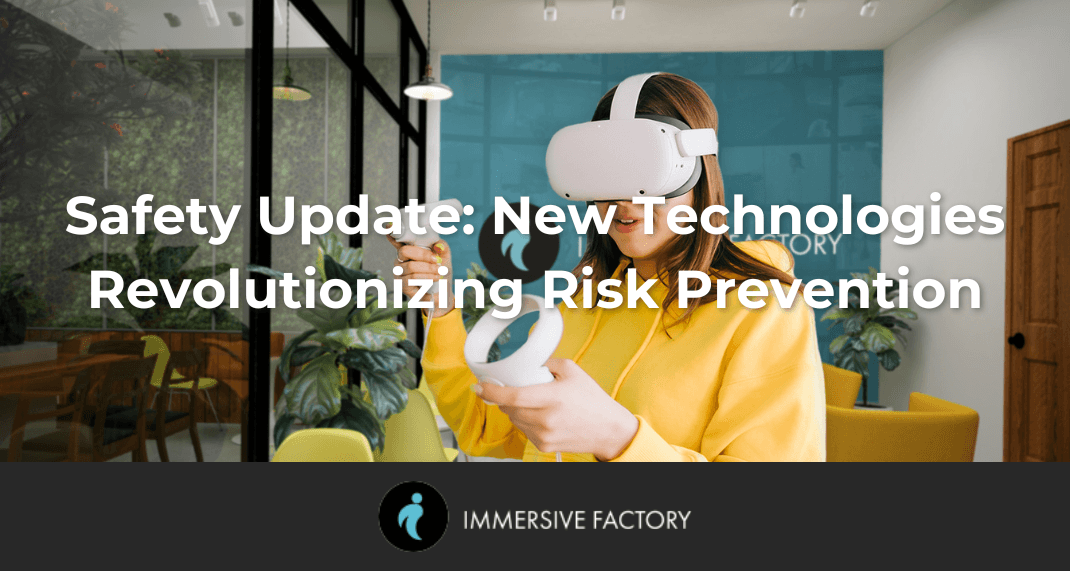
Safety Briefing: A Key Tool for Occupational Risk Prevention.
Workplace risk prevention is essential for creating a safe work environment for employees while ensuring compliance with legal regulations. With the rise of new technologies, employers now have innovative solutions to enhance workplace safety. From virtual reality to digital learning, discover the latest trends to improve your safety briefings.
The Rise of New Technologies in Workplace Risk Prevention
The use of new technologies has significantly improved workplace risk prevention. This is why many companies incorporate them into their Safety Day events. Technological solutions offer a more innovative and immersive approach to workplace safety, actively engaging employees in recognizing and mitigating the risks associated with their jobs.
Some of the most effective technological tools for risk prevention include:
- Virtual Reality (VR)
- The Internet of Things (IoT)
- Gamification and Digital Learning
Each of these tools provides unique advantages for worker training. Compared to traditional safety training methods, they are more engaging and interactive. A safety briefing can now include interactive workshops and virtual learning experiences, leading to better retention of safety protocols.
Virtual Reality: An Immersive Tool for HSE Training
Virtual Reality (VR) uses digital simulations to create realistic workplace environments, making it an ideal tool for Health, Safety, and Environment (HSE) training.
Total Immersion for Optimal Learning
With virtual reality, employees can train in a risk-free digital environment while actively participating in realistic safety scenarios. This hands-on approach ensures optimal learning, as employees experience situations such as fires, gas leaks, or hazardous spills firsthand. By encountering these challenges in a controlled setting, they develop stronger reflexes and a deeper understanding of workplace dangers.
Customized Training for All Industries
Virtual reality training is fully customizable and can be adapted to any industry, including construction, manufacturing, pharmaceuticals, and transportation.
For example, in the construction sector, VR helps workers improve their awareness on job sites and handle heavy machinery safely. Additionally, VR can simulate unusual or dangerous scenarios that would be difficult—or even impossible—to replicate in real life. This makes virtual reality an essential tool for workplace risk prevention.
The Internet of Things (IoT) for Workplace Safety
The Internet of Things (IoT) refers to the connection of physical devices to the internet, offering powerful solutions to enhance workplace safety.
Smart Sensors to Detect and Prevent Hazards
IoT technology allows companies to anticipate workplace hazards using smart sensors. These sensors can detect anomalies in the work environment, such as:
- Gas leaks or the presence of toxic substances
- Abnormal vibrations in equipment
- Dangerous noise levels
- Temperature fluctuations
By providing real-time alerts, these sensors help prevent major workplace incidents and protect employees from harm.
Real-Time Monitoring for Faster Response
IoT technology enables real-time monitoring of workplace conditions. For example, smart clothing embedded with sensors can track workers' postures and send alerts if they engage in unsafe movements. This helps prevent workplace injuries before they occur.
Additionally, IoT technology allows companies to track employee locations, ensuring faster emergency response in case of an incident.
Gamification and Digital Learning for Employee Engagement
Gamification applies game mechanics to workplace training, while digital learning uses technology-based methods to facilitate learning. These two approaches make safety briefings more effective.
A Fun and Engaging Way to Learn
By incorporating game elements such as badges, leaderboards, and rewards, gamification makes safety training more engaging and interactive. It helps employees stay focused and motivated to retain key safety information. This educational approach encourages active participation and promotes a stronger safety culture.
Interactive, On-Demand Training Modules
With digital learning, employees can access training materials anytime, anywhere. This is particularly beneficial for companies with distributed teams or remote workers. Additionally, digital learning helps reduce the logistical challenges of in-person training while lowering costs and accelerating the rollout of new safety protocols.
Immersive Factory: Elevating Workplace Safety Through Immersive Training
Want to provide your employees with an immersive safety training experience? Immersive Factory offers cutting-edge technological solutions for workplace risk prevention. Our platform provides customizable, practical exercises tailored to your industry’s specific needs.
By partnering withImmersive Factory, you can transform your company’s safety culture. Our team of experts will guide you through every step of the process, from assessing your needs to implementing tailored safety solutions.
In conclusion, New technologies are revolutionizing workplace safety by enhancing risk prevention strategies. Their efficiency, interactivity, and accessibility make them powerful tools for raising awareness and reducing workplace accidents and injuries.
For a dynamic and impactful safety briefing, trust Immersive Factory. Our advanced training solutions can be easily tailored to your organization’s needs, helping you create a safer, smarter workplace.

Geschrieben von Aurélie Tavernier
Leiterin Marketing und Kommunikation bei Immersive Factory.
Sie interessierte sich für die Sensibilisierung für Gesundheit und Sicherheit am Arbeitsplatz, überzeugt davon, dass ein an die Mitarbeiter angepasster Ansatz die Sicherheitskultur verändern und die gemeinsame Wachsamkeit stärken kann. Ihr Ziel: alle Unternehmen, unabhängig von ihrer Größe, zu ermutigen, sich aktiv für die Gesundheits- und Sicherheitsprävention zum Wohle ihrer Mitarbeiter einzusetzen.