Heatwaves and Extreme Heat at Work: How Virtual Reality Helps Prevent Risks
Heatwaves and Extreme Heat at Work: How Virtual Reality Helps Prevent Risks
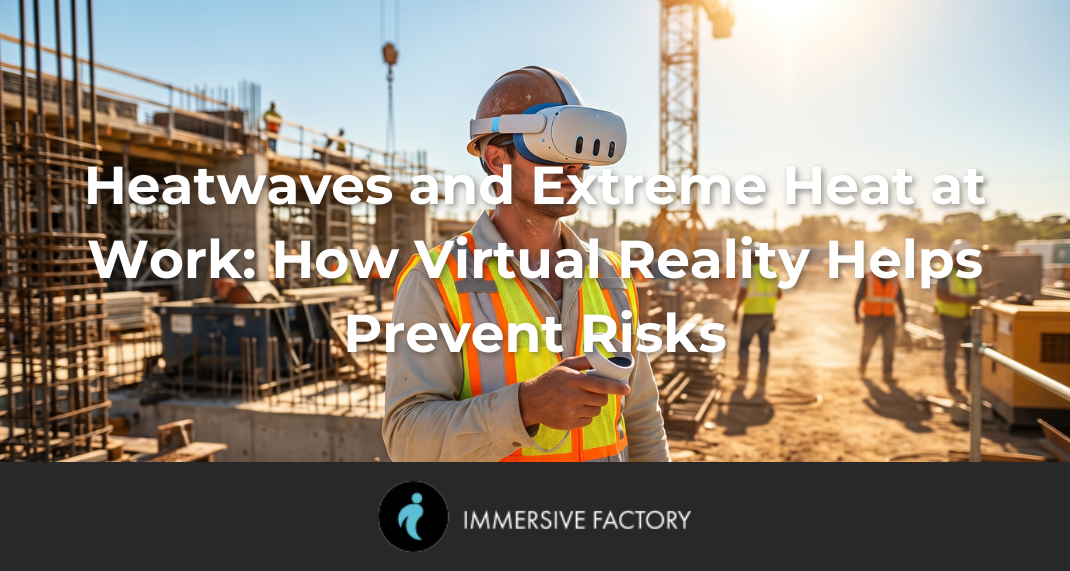
As summer temperatures continue to soar year after year, extreme heatwaves are no longer exceptional events. For companies worldwide, managing thermal discomfort and high temperatures has become a critical annual health and safety challenge. Beyond standard compliance (such as adjusting working hours or providing fresh water), training your workforce remains the absolute cornerstone of effective heatwave workplace prevention.
However, engaging employees on the extreme heat risks at work is notoriously difficult. How do you raise awareness about an invisible danger before it becomes a medical emergency? This is exactly where HSE virtual reality training completely redefines the rules of engagement.
The Limitations of Traditional Training Face-to-Face with Invisible Risks
Traditionally, thermal risk prevention relies on distributing flyers, toolbox talks, or standard e-learning slides. While informative, these formats often fail to trigger a real behavioral shift.
Heat exhaustion and dehydration are frequently perceived as "abstract" threats. Workers often overestimate their physical tolerance, assuming that "feeling a bit hot" is just part of the job. This mindset is precisely where dangerous situations begin. When a worker suffers from a severe heat stroke, safety protocols must be executed instantly. Every minute counts, and a lack of practical preparation can lead to tragic outcomes.
Virtual Reality: Experiencing the Risk to Better Anticipate It
Virtual Reality (VR) does not just showcase danger; it simulates it. By plunging the learner into a 360-degree immersive environment—be it a sun-drenched construction site, a poorly ventilated warehouse, or a heavy industry plant—VR taps into emotional and cognitive memory.
Here is how immersive learning transforms seasonal safety training:
- Spotting early warning signs in teammates: Within the simulation, the learner must monitor virtual colleagues. They learn to identify the subtle behavioral and physical triggers of heat illness (confusion, unusual irritability, heavy sweating, or a staggering gait) that are impossible to replicate in a textbook.
- Practicing life-saving reflexes safely: If a virtual coworker collapses from heat stroke, the trainee must act immediately. Calling emergency services, moving the victim to the shade, applying cool water, and loosening tight clothing... VR allows users to practice these emergency steps repeatedly until they become second nature, with zero real-world danger.
- Assessing environmental hazards: Summer-specific "hazard hunt" modules empower managers and operators to audit their surroundings (lack of shaded rest areas, insufficient hydration points, or improper PPE for hot weather) and re-organize workflows proactively.
Building a Long-Lasting Safety Culture, Even in the Summer Peak
The power of virtual reality lies in learning by doing. An employee who has "experienced" the urgency of a virtual heat stroke will be infinitely more vigilant during their next shift under a blazing sun. They will be much more likely to hydrate regularly and actively look out for their teammates (interdependent safety culture).
Investing in VR for your summer safety campaigns transforms a routine regulatory requirement into a high-impact, engaging experience for your teams, while drastically reducing climate-related workplace accidents.
Ready to upgrade your seasonal prevention strategy? Explore our HSE virtual reality training modules and keep your workforce safe on the ground.

Geschrieben von Aurélie Tavernier
Marketing and Communications Manager at Immersive Factory
She became interested in raising awareness of health and safety at work, convinced that an approach tailored to employees can transform the safety culture and reinforce shared vigilance. Her ambition: to encourage all companies, whatever their size, to invest actively in health and safety prevention for the well-being of their employees.
Teilen
Das könnte Sie auch interessieren
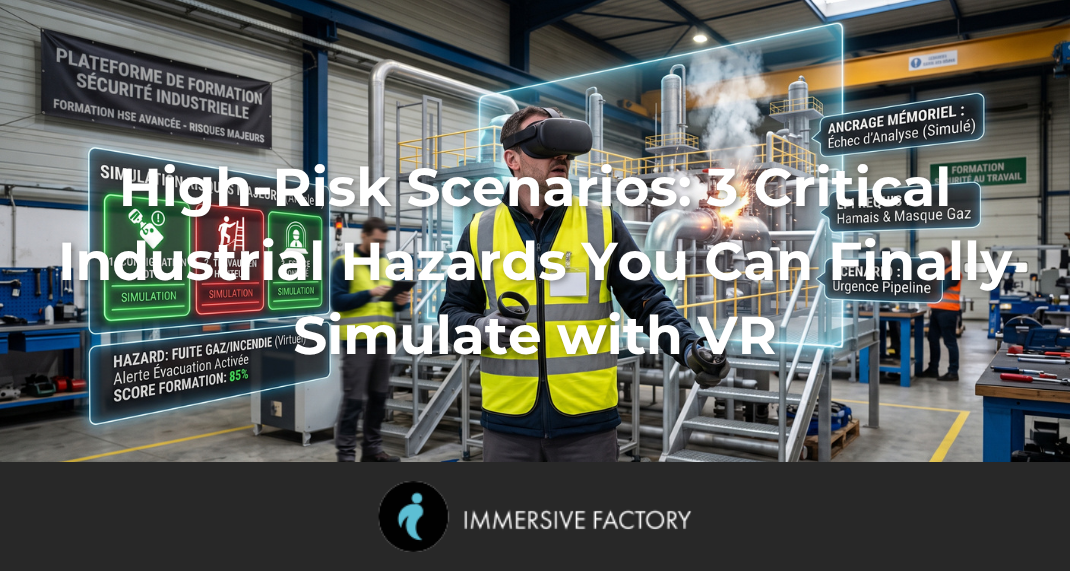
High-Risk Scenarios: 3 Critical Industrial Hazards You Can Finally Simulate with VR
Learn how VR enables safe, realistic simulation of major industrial hazards: Lockout/Tagout (LOTO), working at height, and confined space entry.
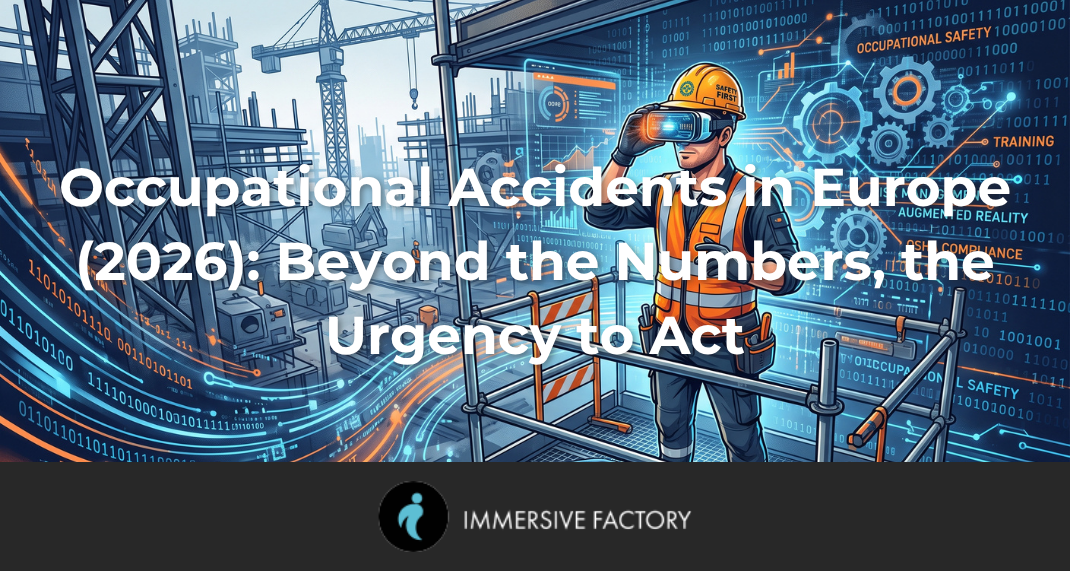
Occupational Accidents in Europe (2026): Beyond the Numbers, the Urgency to Act
What do 2026 European workplace accident stats really reveal? Immersive Factory analyzes the EUROGIP study & offers actionable VR safety solutions.
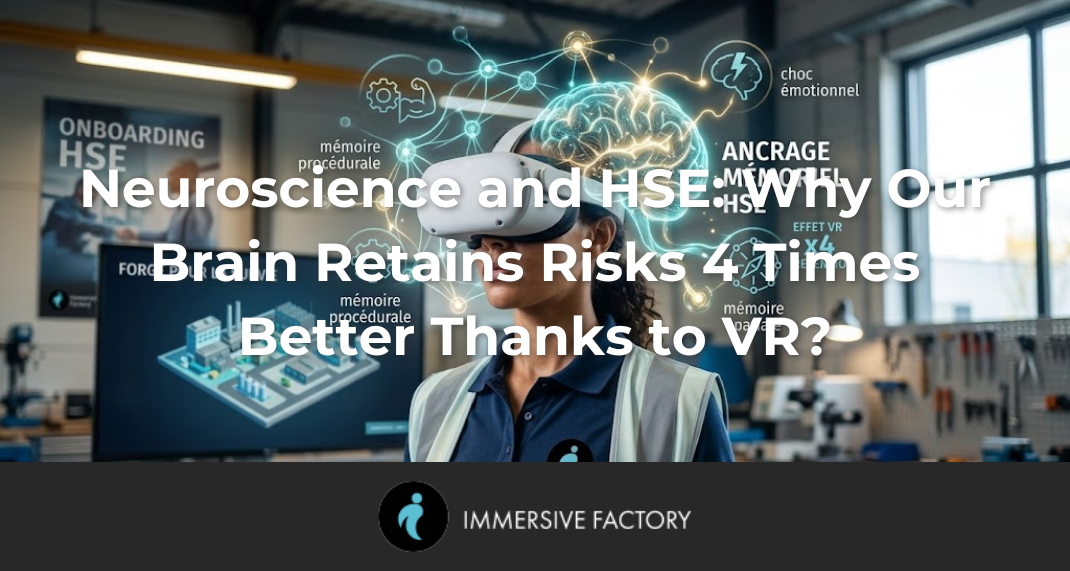
Neuroscience and HSE: Why Our Brain Retains Risks 4 Times Better Thanks to VR?
When it comes to Health, Safety, and Environment (HSE), the goal of training isn’t to hand out attendance certificates—it’s to save lives. Yet, training directors frequently battle a formidable enemy: Ebbinghaus’s forgetting cu...