Enterprise Risk Management Plan: Keys to an Effective Approach
Enterprise Risk Management Plan: Keys to an Effective Approach
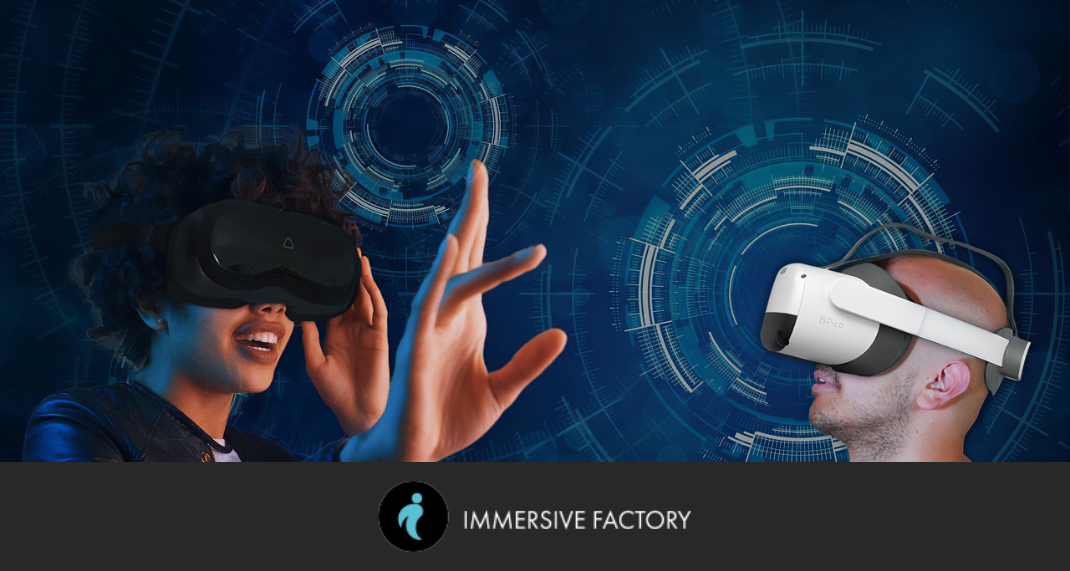
Risk Management Plan: Steps in Prevention
Holistic risk prevention is a major challenge for any business. Indeed, a workplace can pose dangers to the health and safety of workers. This is why creating a risk management plan is essential. It's the best way to ensure legal compliance and better work organization.
Understanding Risks in Business
Definition of Risks in the Workplace
In the professional environment, a risk refers to the likelihood of experiencing harmful effects from a dangerous situation while performing a job. To better grasp it, familiarize yourself with the 10 golden rules of workplace safety. Various types of risks are recognized:
- Physical risks
- Biological risks
- Chemical risks
- Psychosocial risks
- Ergonomic risks
What is the relationship between risk management and workplace safety?
Risk management is a way to ensure the safety of employees at work. Its goal is to minimize accidents and occupational diseases by identifying hazards and threats and implementing effective preventive measures. To raise awareness of its importance among employees, you can organize an immersive virtual campus.
Step 1: Risk Identification
Risk Identification Methods
You can use various methods to identify occupational risks:
- Task analysis: to pinpoint issues
- Observation: to spot dangers
- Feedback: to understand the on-the-ground work reality
- Cause/effect method: to analyze threats
Assessing the Severity and Likelihood of Identified Risks
To assess the severity of a risk, one should analyze the impact of a constraint on the organization. For instance, in an industry, if a device breaks down, the issue can be resolved quickly. However, if it explodes, it could have serious ramifications on work. As for probability, it determines whether an incident is likely to happen or not. In the same example, certain criteria need to be considered, such as the age of the device and its usage frequency.
Using Virtual Reality to Simulate Risky Scenarios and Enhance Danger Identification
Virtual reality is an ideal technology for making employees aware of occupational risks. It enables the simulation of various scenarios and makes it easier to spot dangers. It ensures better results than any other analytical tool.
Step 2: Risk Analysis
In-depth Analysis of Identified Risks
The analysis of occupational risks is conducted in several stages. After identifying them, you should categorize them. This will allow you to suggest preventive actions. These should be included in your risk management plan.
Identifying Factors Contributing to Risks and Existing Preventive Measures
Certain factors can amplify occupational risks, like organizational issues, technical and material conditions, and the environment. They shouldn't be overlooked in the analysis process. Moreover, it's crucial to determine which preventive measures have been implemented to mitigate the dangers. It will then be easier to make corrections.
Using Tools to Assess Risks
The FMEA method (Failure Mode and Effects Analysis) is the most commonly used for evaluating occupational risks. As its name suggests, it aims to assess risks linked to a system's failure. It's divided into three:
- FMEA Process/Procedure: to examine failure modes and confirm the reliability of a validation procedure
- Product Method: to ensure a product's compliance
- Means/Machine Method: to ensure equipment reliability
Step 3: Planning Preventive and Protective Measures
Defining Priority Actions to Reduce Identified Risks
Planning measures is a decisive step in setting up a risk management plan. To make a work environment safer, it's crucial to prioritize preventive actions. Indeed, the most severe issues should be addressed first.
Implementing Technical, Organizational, and Human Preventive Measures
Preventive measures cover technical, organizational, and human aspects:
- Technical aspect: work equipment, premises and facilities, materials, and technologies
- Organizational aspect: work organization, instructions, emergency planning
- Human aspect: training, medical follow-ups, skills
Using Virtual Reality to Train Employees on Preventive Measures and Test Their Effectiveness
Virtual reality can be employed to train employees on preventive measures. It lets them experience situations so they know how to react to dangers. Through simulations, they'll become more responsive in case of problems. Therefore, virtual reality tests the efficiency of implemented actions.
Step 4: Implementation and Monitoring of the Risk Management Plan
Implementation of Defined Preventive and Protective Measures
For implementing the preventive approach, it's recommended to mobilize internal resources. This includes management and executives. The company can also seek help from external organizations for professional advice.
Communication and Raising Awareness Among Employees about Risks and Implemented Measures
Informing and making employees aware can be done in various ways:
- Posters about risks
- Risk-specific videos
- Promoting safe behaviors
Regular Monitoring of Measure Effectiveness and Adjustments if Needed
To ensure the effectiveness of preventive measures, regular and systematic monitoring should be implemented. Depending on risk evolution, some adjustments might be required.
Immersive Factory Supports You in Setting Up Virtual Reality Training
We offer virtual reality training programs in risk management for businesses. They're designed by experts and customized according to your industry. We use modern technical resources for implementation. Our training programs guarantee quality. They're both practical and effective. For more information about our services, contact us directly through our website.

Geschrieben von Aurélie Tavernier
Marketing and Communications Manager at Immersive Factory
She became interested in raising awareness of health and safety at work, convinced that an approach tailored to employees can transform the safety culture and reinforce shared vigilance. Her ambition: to encourage all companies, whatever their size, to invest actively in health and safety prevention for the well-being of their employees.
Teilen
Das könnte Sie auch interessieren
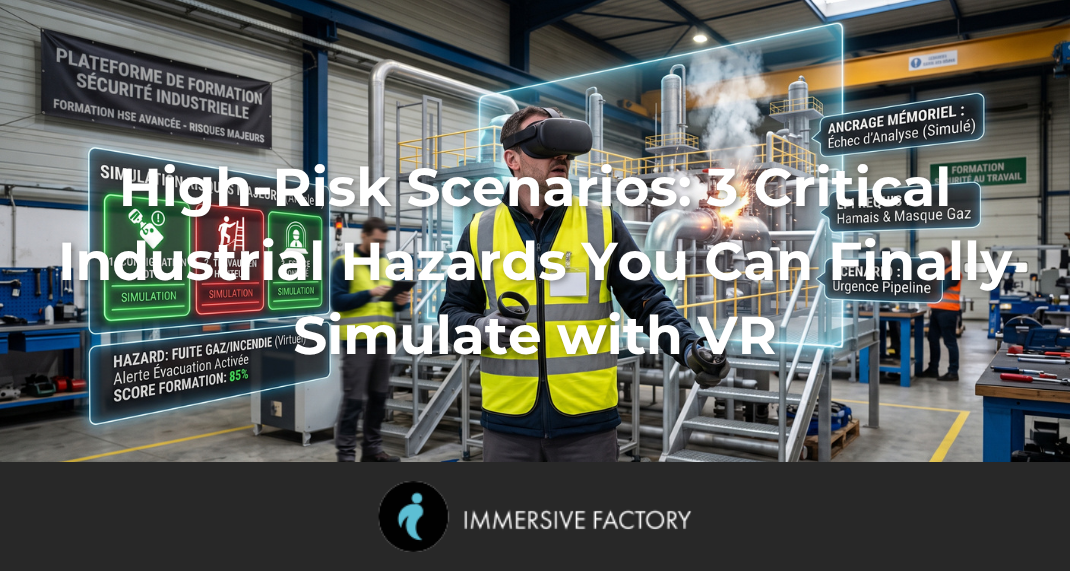
High-Risk Scenarios: 3 Critical Industrial Hazards You Can Finally Simulate with VR
Learn how VR enables safe, realistic simulation of major industrial hazards: Lockout/Tagout (LOTO), working at height, and confined space entry.
Occupational Accidents in Europe (2026): Beyond the Numbers, the Urgency to Act
What do 2026 European workplace accident stats really reveal? Immersive Factory analyzes the EUROGIP study & offers actionable VR safety solutions.
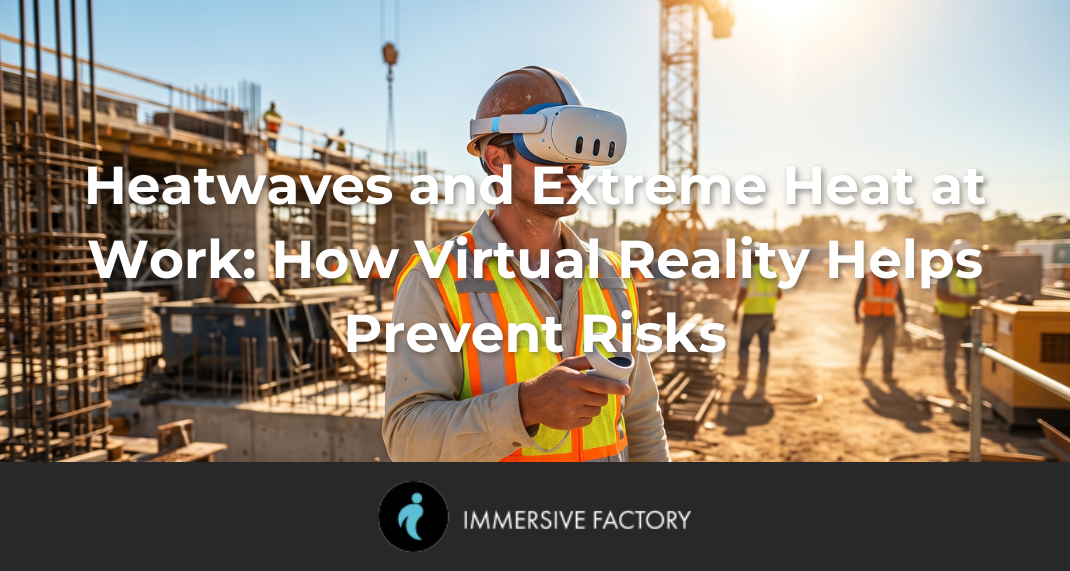
Heatwaves and Extreme Heat at Work: How Virtual Reality Helps Prevent Risks
As summer temperatures continue to soar year after year, extreme heatwaves are no longer exceptional events. For companies worldwide, managing thermal discomfort and high temperatures has become a critical annual health and saf...