Employer's Safety Obligations: Keys to a Safe Working Environment
Employer's Safety Obligations: Keys to a Safe Working Environment
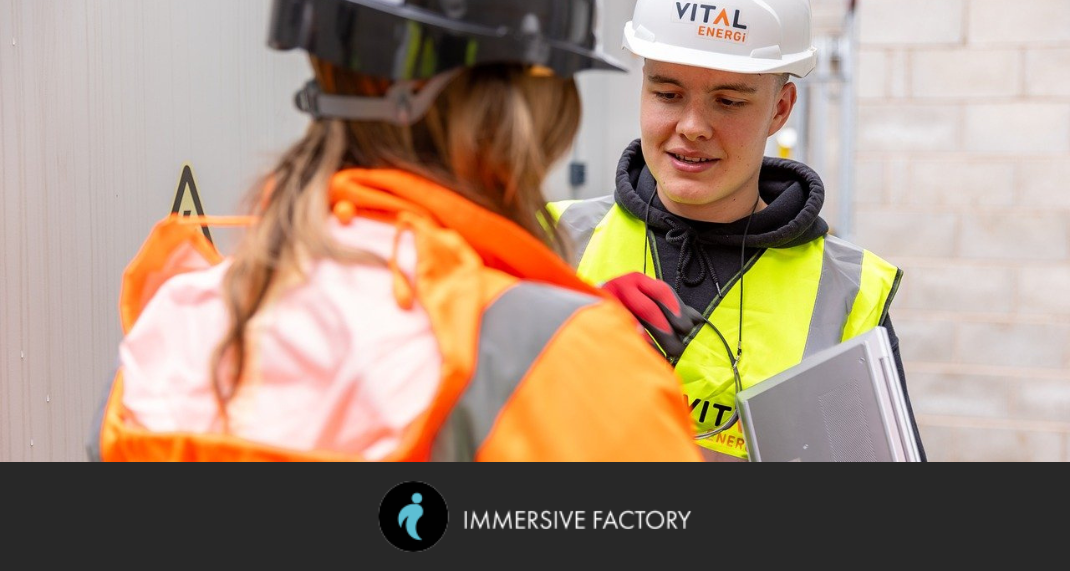
What are the employer's obligations in terms of safety?
Workplace safety ensures the well-being and protects the health of employees. The employer plays a crucial role in implementing adequate measures such as training, providing appropriate equipment, and developing a positive safety culture. They must create a safe working environment for all staff. So, what are the employer's obligations regarding safety? In this article, we will explore their responsibilities and strategies for implementation in depth.
Legal Framework of Safety Obligations
Overview of the employer's obligations regarding safety
According to Article L4121-1 of the Labor Code, the implementation of prevention actions, information, and training of employees is a safety obligation of the employer:
Prevention of occupational risks
Prevention actions for occupational risks must be implemented in a company. They cover psychosocial risks, physical risks, fall risks, and chemical risks.
Information and training actions
The employer must also set up information and training actions for new hires, temporary workers, employees changing their job position, and employees resuming their activity.
Risk assessment in the company
If it is not possible to avoid risks, the employer must assessthem and implement preventive measures.
Development of a DUERP
The results of the occupational risk assessment must be included in the Professional Risk Assessment Document or DUERP.
The importance of compliance to avoid sanctions and protect the health and safety of employees
Compliance with legal obligations in health safety is crucial to avoid sanctions and preserve the company's reputation. It also helps to reduce the risk of workplace accidents, injuries, and occupational diseases. Thus, it contributes to improving team productivity. Finally, compliance promotes a strong safety culture, as it raises awareness and encourages employees to adopt safe practices daily. Note that VR training is an excellent way to improve workplace safety and stay compliant.
Risk Assessment and Prevention
The question of what are the employer's obligations in terms of safety is now answered. So, how to assess occupational risks and minimize them?
The process of assessing occupational risks as a fundamental first step to identify hazards and determine the necessary preventive measures
Assessing occupational risks allows identifying hazards in the workplace and defining effective preventive measures. It includes several steps:
- Identifying hazards: The first step is to identify potential hazards such as physical, biological, chemical, ergonomic, and psychosocial dangers.
- Risk assessment: Once hazards have been identified, it is appropriate to assess the risks associated with them. This involves determining the likelihood that they will occur.
- Defining preventive measures: Preventive measures must be identified to eliminate or reduce the identified risks. These can be technical, individual, and organizational measures.
- Implementing preventive measures: Preventive measures must be effectively implemented. It is important to involve management and all workers in this process.
- Evaluation and monitoring: It is advisable to follow up and evaluate the preventive measures in place to adjust them in the future.
Tips for implementing a risk prevention plan
To implement a risk prevention plan, it is important to prioritize risks. Measures should be taken quickly for the highest risks. Moreover, identify the preventive measures to be implemented based on the prior evaluation. Then, define the training needs for each category of employee and ensure they are all trained in relevant safety procedures. Finally, determine the necessary personal protective equipment (PPE) to protect workers. They must be quality and tailored to the specific tasks of each employee.
Implementing Safety Measures
Safety measures that the employer must implement
Here are some measures that the employer must implement to ensure workplace safety:
Personal Protective Equipment
The employer must provide employees with the personal protective equipment they need to prevent accident risks at the workplace. This includes helmets, protective clothing, gloves, glasses, and safety shoes.
Safety Training
The company must train its teams on safety measures and procedures to follow in an emergency. This will help reduce occupational risks.
Hazard Management
A risk assessment is required to identify potential hazards and implement preventive measures.
Secure Arrangement of Workplaces
Arrange workplaces to minimize the risk of accidents and injuries. For example, appropriate signage can be used in dangerous areas.
Importance of regular equipment maintenance and updating safety procedures
Regular equipment maintenance is required to detect failures and correct defects. This optimizes their performance and improves productivity and work quality. Moreover, it is imperative to update safety procedures regularly to ensure that the company remains compliant with current regulations.
Training and Awareness of Employees
Many leaders wonder what are the employer's obligations in terms of safety? Training and raising employee awareness are part of it:
The employer's obligation to train and raise awareness among employees about the specific risks of their job, emergency procedures, and the correct use of protective equipment
The employer is required to train and sensitize employees to the specific risks of each job position. They must also teach them emergency procedures to follow in the event of an incident and show them how to correctly use personal protective equipment. Training must be ongoing to promote a proactive safety culture within the company. Moreover, it allows for considering new risks and changes in safety procedures.
Examples of successful training programs and tips for their implementation
Here are some examples of successful training programs and tips for their implementation:
Emergency simulations and evacuation drills
Emergency simulations allow employees to become familiar with procedures in case of an incident. The exercises must be realistic to facilitate understanding of responsibilities.
Practical training on the use of personal protective equipment
During the session, employees learn to correctly use personal protective equipment. For better results, the training should be interactive. Indeed, learners should have the opportunity to ask questions.
Immersive Training for Corporate Safety
Immersive technologies as innovative tools for safety training
Immersive technologies like virtual reality and augmented reality are innovative tools for safety training. Indeed, they allow learners to immerse themselves in realistic virtual environments where they can train without risk and learn to react correctly to dangers. The content can be customized according to the needs and objectives of the company. They can be adapted to the skill level of employees. Thanks to immersive training, they will have the opportunity to repeat procedures several times, which will contribute to better information retention.
Advantages of immersive training
Immersive training offers numerous advantages for staff awareness:
- Increased employee engagement: Immersive virtual environments captivate learners' attention by offering a more engaging learning experience;
- Simulation of dangerous situations without real risks: Virtual reality can recreate realistic scenarios like a fire without compromising the safety of participants. Thus, they can acquire essential safety skills;
- Accurate assessment of skills: Thanks to simulations, trainers can easily assess employees' skills (their strengths and weaknesses). This allows tailoring the training to their needs.
Documentation and Monitoring
Want to know what are the employer's obligations regarding safety? Don't forget the documentation and monitoring of preventive measures.
The importance of documentation and monitoring in terms of safety
Documentation and monitoring are essential to guarantee a safe working environment for employees. They include:
Maintaining and updating safety records
Document the safety measures taken to demonstrate compliance with legal regulations. The records serve as a reference for improving safety practices.
Reporting and analyzing incidents
Whether or not they result in injuries, work health safety incidents must be documented and reported. This allows identifying underlying causes and taking appropriate preventive and corrective measures.
Conducting regular safety audits
Safety audits allow assessing the effectiveness of safety practices and determining improvement points.
Tips for effective monitoring and using collected data in the continuous improvement of safety practices
For effective monitoring and optimal use of collected data in the continuous improvement of safety practices, it is important to identify key performance indicators such as the injury frequency rate and the number of incidents. They allow tracking the evolution of safety practices. Moreover, use data tracking and management tools to generate reports and make informed decisions regarding safety. Finally, set measurable goals corresponding to the company's needs.
Trust Immersive Factory for your virtual reality training for corporate safety
To enhance the effectiveness of safety programs in your company, adopt innovative approaches like immersive training. In addition to guaranteeing better results, it will help you save money, as you will reduce the costs associated with accidents and occupational diseases. On our Immersive Factory site, you can choose from different programs integrating practical and playful exercises. Moreover, your employees will be accompanied by experienced trainers.

Geschrieben von Aurélie Tavernier
Marketing and Communications Manager at Immersive Factory
She became interested in raising awareness of health and safety at work, convinced that an approach tailored to employees can transform the safety culture and reinforce shared vigilance. Her ambition: to encourage all companies, whatever their size, to invest actively in health and safety prevention for the well-being of their employees.
Teilen
Das könnte Sie auch interessieren
Deploying HSE VR Across Multiple Sites: From Pilot to Scaling
Discover how to successfully scale enterprise virtual reality for multi-site safety training: fleet management, LMS integration, and local adoption.
Calculating the ROI of VR in Health & Safety: Key Metrics Beyond Hardware Costs
Learn how to measure the true ROI of virtual reality in HSE safety training. Key metrics, hidden cost savings, and incident rate reduction.
Back-to-Work EHS: 5 Steps to Refresh Your Safety Training by September
Gear up for the fall EHS restart! Discover 5 actionable steps to refresh your safety training, re-engage teams in September, and integrate VR.