Corporate Safety Week: Planning and Implementation for a Safer Work Environment
Corporate Safety Week: Planning and Implementation for a Safer Work Environment
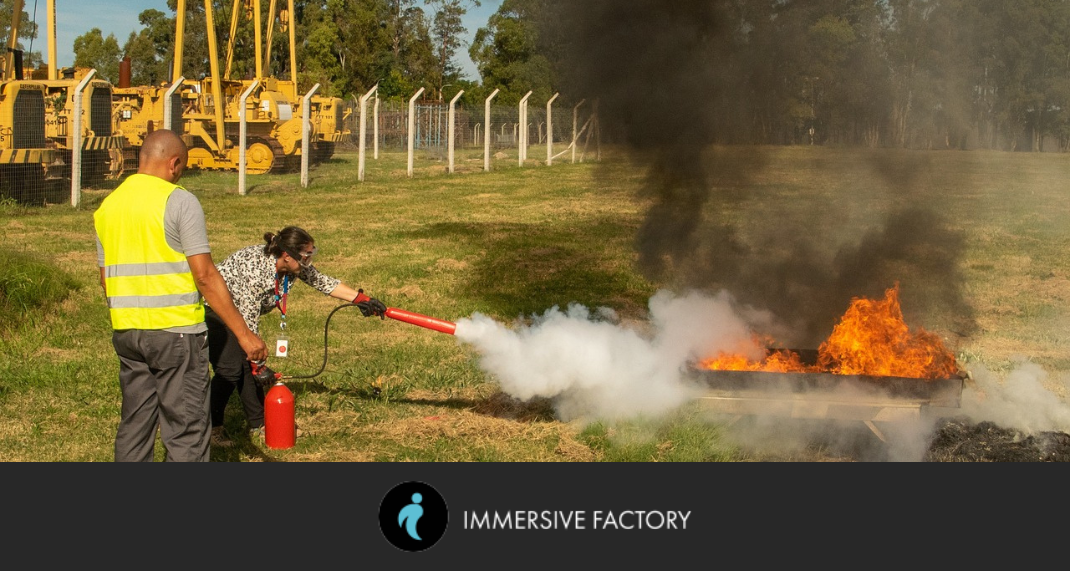
Practical Guide to Organizing a Corporate Safety Week.
Corporate safety is crucial for preserving the health and well-being of employees. During safety week, trainers raise awareness, educate, and promote good safety practices by preparing practical exercises and awareness campaigns. Its organization involves planning and implementing various activities such as emergency simulations and training sessions. Safety week has a significant impact on safety culture as it fosters a better understanding of occupational risks and encourages the adoption of safe behaviors daily. So, how to organize a corporate safety week?
Planning the Safety Week
Here are some practical tips for planning a safety day or a safety week.
Define Objectives
The first step is to identify the objectives of the safety week. Indeed, it could be aimed at raising awareness of specific threats, developing a stronger safety culture, or improving safety skills.
Choose Relevant Safety Themes
Choose themes relevant to your industry by considering the needs and challenges of your company. They should have a real impact on corporate safety. Workplace accident prevention can be cited as an example.
Establish an Event Schedule
Plan the week's activities over several days (practical workshops, training sessions, discussions on best practices...). Consider employee availability and time constraints when establishing an event schedule.
Developing Educational Content and Activities
Here are some ideas for content and educational activities to organize the corporate safety week:
- Informative Videos: Prepare videos including employee testimonials on past incidents, safety tips at work, or demonstrations of good practices;
- Interactive Quizzes: Plan live quiz sessions to test employees' knowledge of health and safety at work;
- Role-playing Games: Organize role-playing games to simulate emergency situations like a fire. They will allow participants to practice safety procedures;
- Safety Workshops: During workshops, employees will learn to correctly use safety equipment like fire extinguishers and to react effectively in an emergency.
Integrating Virtual Training for Workplace Safety
The Importance and Benefits of Virtual Training
Virtual reality training offers numerous advantages for safety, mainly in the context of remote work or for multi-site companies.
Realistic Immersion
Virtual reality provides employees witha realistic immersive experience. It allows them to train in 3D environments that accurately reproduce dangerous work situations.
Risk Reduction
Virtual reality helps to reduce occupational risks because it can expose participants to different situations and help them better prepare.
Accessibility
Virtual training can be conducted remotely, which is a significant advantage for multi-site companies and teleworking employees. Indeed, the contents are accessible from anywhere and at any time.
Cost Reduction
Implementing virtual reality training is cost-effective in the long term, as it can reduce costs related to production interruptions, workplace accidents, and material damage.
Suggestions for online training platforms, webinars, interactive simulations, and online educational games
Here are some suggestions to organize a corporate safety week and engage your employees.
Online Training Platforms
Among the best training platforms, LinkedIn Learning and Coursera can be cited. The former offers video courses on workplace safety, while the latter offers various online courses on diverse subjects.
Webinars
Zoom remains the go-to platform for organizing interactive webinars on health and safety at work topics. You can also use GoToWebinar to organize professional webinars.
Interactive Simulations
On Immersive Factory, you can choose from various awareness and training workshops on workplace risks. Take advantage of realistic and customized interactive simulations.
Online Educational Games
Use Kahoot! or Quizizz to create interactive online quizzes on workplace safety.
Tips for Ensuring Accessibility and Effectiveness of Virtual Training
To ensure the accessibility and effectiveness of virtual training, offer sessions at flexible times. Employees can participate at any time. Also, use platforms compatible with different devices and operating systems. Moreover, divide the content into several modules to facilitate the assimilation of information and offer additional resources such as videos or documents.
Don't forget to track participation by using learning management tools and sending regular reminders to employees. Finally, assess the knowledge gained at the end of each session to measure learners' understanding and identify areas for improvement in future sessions.
Communication and Promotion of the Event
To promote safety week and generate employee interest, use effective strategies:
- Awareness Campaign: It should be launched before the safety week to inform employees about the objectives, planned activities, and the importance of their participation;
- Leadership Involvement: To reinforce the importance of safety in the company, leaders should support and participate in the safety week or safety day;
- Using Various Communication Channels: Use posters, emails, social media, and the company's intranet to continuously disseminate information about the safety week.
Organizing the Safety Day
Organize a special event or a significant activity to strengthen the impact of the week
To make the safety week successful, organize a special eventor a significant activity during one day. This will enhance the event's impact. For example, you could plan a large-scale emergency simulation like a chemical leak to allow participants to apply their safety knowledge and skills. Alternatively, organizing competitions among employees can foster team spirit and reinforce commitment to safety.
Event Suggestions
During the safety day, you caninvite safety experts or health professionals to give lectures on relevant topics. Moreover, organize safety knowledge contests to test employees' understanding. Finally, introduce new safety technologies for more effective risk prevention in the future.
Evaluation and Follow-up
The Importance of Event Evaluation and Tips for Maintaining Workplace Safety Momentum
Evaluating the safety week is crucial to measure its effectiveness and determine future topics to address. It also allows collecting participant feedback. To maintain safety momentum, regularly organize training sessions on health and safety using various formats like workshops and online courses. Similarly, implement recognition programs and reward employees for their contributions.
Tips for Maintaining Momentum
To create a lasting safety culture within the company, integrate the lessons learned into operational procedures. Furthermore, establish regular follow-up action plans to implement improvements and corrective measures. All employees should be involved in this process. They can offer ideas and suggestions for a successful corporate safety week.
For Successful Virtual Training, Turn to Immersive Factory
To ensure your employees' safety, invest now in virtual reality training. Thanks to its effectiveness, it will contribute to your company's overall success. We offer various options to raise your employees' awareness of occupational risks. We provide cutting-edge equipment to help you impart good practices and simulate real situations. Trust our team of experts to master the dangers within your organization.

Geschrieben von Aurélie Tavernier
Marketing and Communications Manager at Immersive Factory
She became interested in raising awareness of health and safety at work, convinced that an approach tailored to employees can transform the safety culture and reinforce shared vigilance. Her ambition: to encourage all companies, whatever their size, to invest actively in health and safety prevention for the well-being of their employees.
Teilen
Das könnte Sie auch interessieren
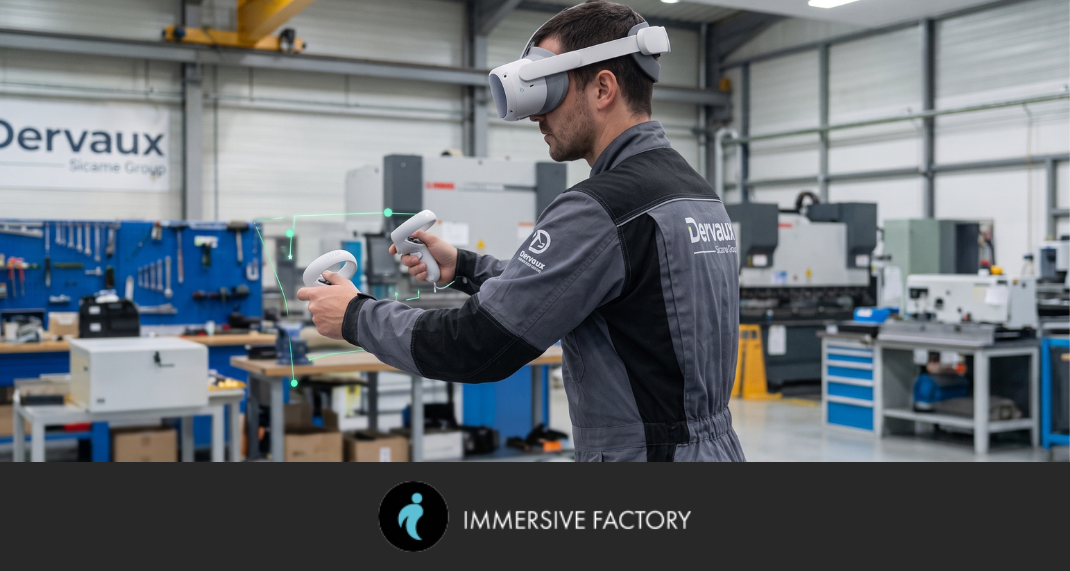
How Dervaux Is Reinventing Its Safety Day with Virtual Reality
Discover how Dervaux boosts its Safety Day using Immersive Factory's virtual reality: an engaging and interactive hazard hunt.
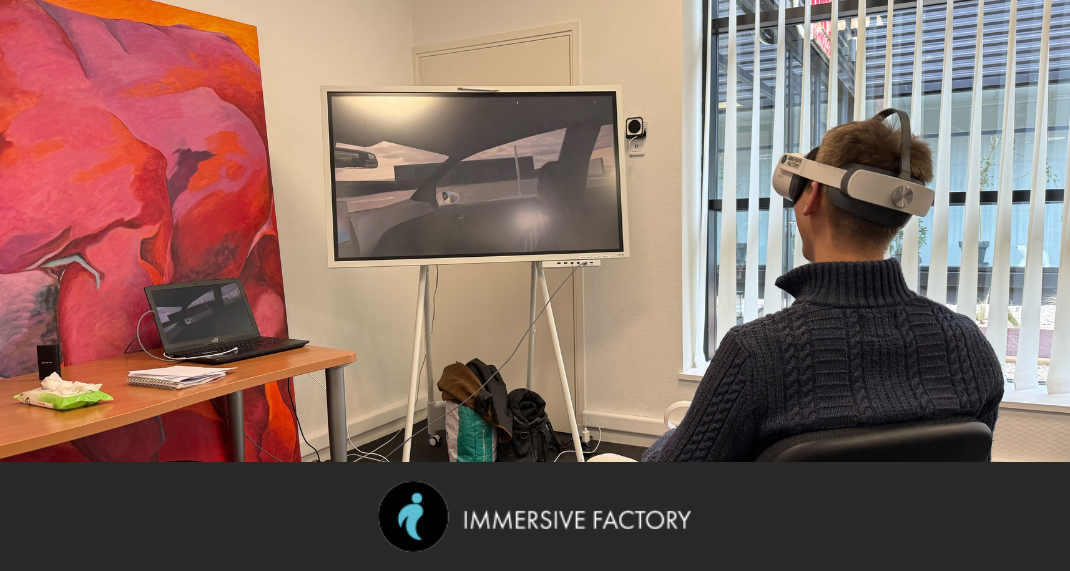
When Virtual Reality Revolutionizes Safety at IMV Technologies
Safety is even better when you truly feel like you're there! With this modern and impactful approach, an intense safety awareness day took place for the teams at IMV Technologies.To make a lasting impression and anchor preventi...
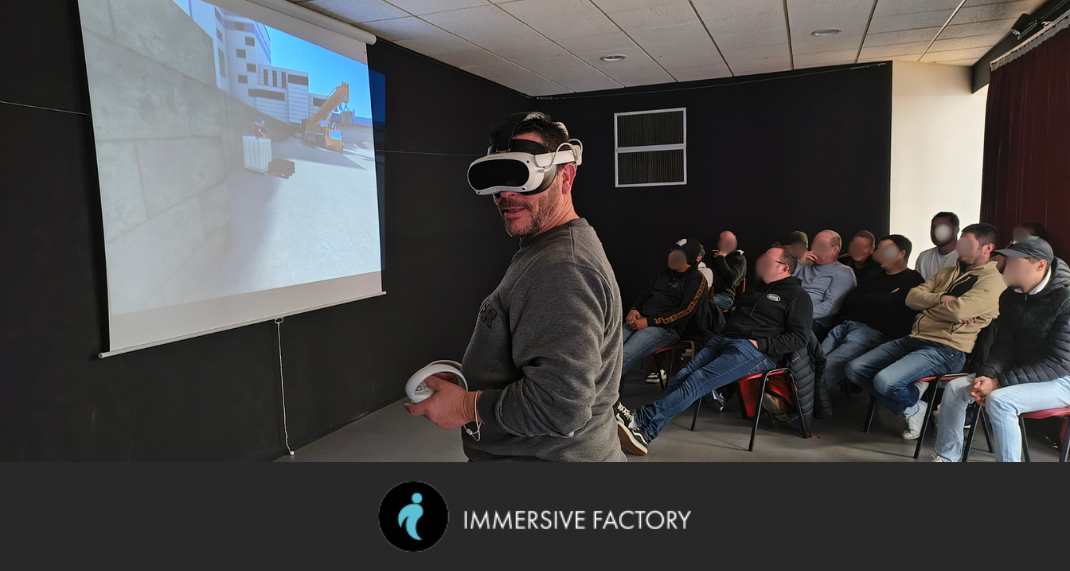
Safety in Public Works: Virtual Immersion Driving Prevention at Aubron Mechineau
A few weeks ago, the teams at Aubron Mechineau took a key step forward in their risk prevention approach. For an innovative safety day, the company chose to leverage virtual reality to raise awareness among employees about the ...