Risk Hunt on Construction Sites: How Virtual Reality is Revolutionizing Worker Safety
Risk Hunt on Construction Sites: How Virtual Reality is Revolutionizing Worker Safety
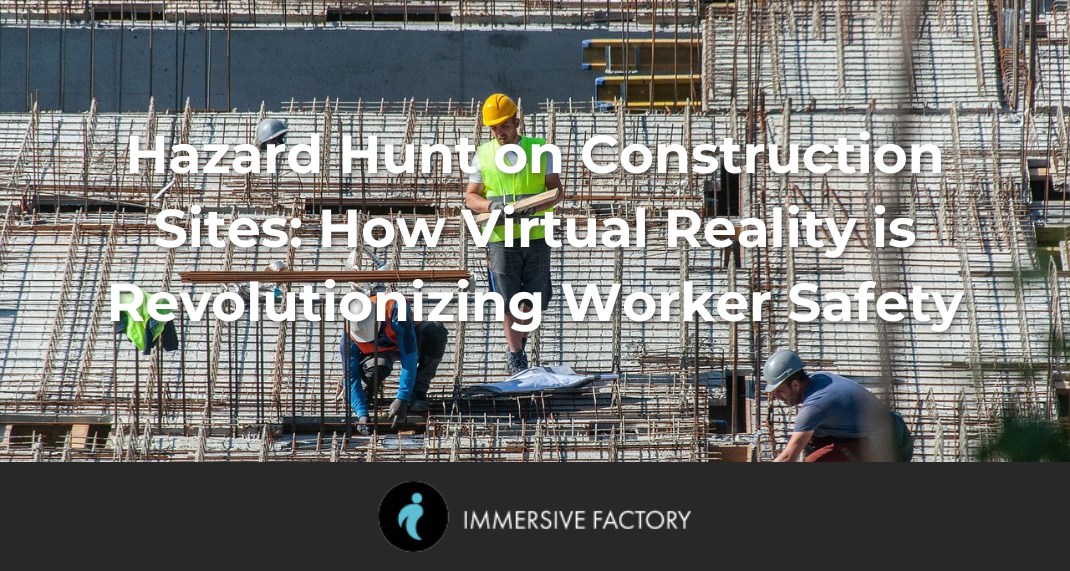
Using Virtual Reality for Risk Hunts on Construction Sites.
On a construction site, there are numerous risks for workers and people not involved in the work. The resulting accidents are often serious, even fatal, which can lead to significant costs for the company in addition to the considerable human impact. This is why safety must be a priority on construction sites. For effective occupational risk prevention, virtual reality is recommended. It’s an innovative solution for risk hunts on construction sites.
The Main Risks on a Construction Site
Several risks are specific to construction jobs.
Falls from Height and Equipment-Related Risks
Working at height presents significant fall risks. These risks are related to the work environment (terraces, roofs, frameworks, staircases…) as well as the access means in place, such as walkways or scaffolding. Other risks are associated with safety equipment. If the equipment is defective or not used correctly, it can endanger workers' safety. Note that the risk hunt on construction sites is an excellent way to train teams on the proper use of this equipment.
Crushing and Collision Risks with Machinery
Crushing risks are often linked to poor traffic management on the site, the presence of obstacles, and unfavorable environmental conditions. As for collision risks, they arise from the presence of machines in a confined space. To teach workers how to manage these risks, offer them virtual reality training.
Lack of Visibility and Communication
Lack of visibilityand communication is sometimes the cause of work accidents on a construction site, as it affects workers' ability to assess occupational risks and coordinate their movements. Additionally, it leads to decreased efficiency.
Dangerous Environmental Conditions
Dangerous environmental conditions should not be overlooked, as they can impact workers' health and safety. These include exposure to fumes and gases, bad weather, extreme temperatures, flooding, and unstable ground.
Traditional Methods of Risk Management
In-Person Training and Awareness
Risk management training is usually conducted in person and lasts a few days. It aims to raise workers' awareness of the occupational risks related to their activities. Several methods are used to convey knowledge, such as course materials, discussions, and practice.
Safety Procedures and Regular Audits
Safety procedures are established to inform employees on how to act in risky situations or workplace accidents. They also provide guidelines for performing specific tasks. Additionally, regular audits must be carried out within a company to identify safety shortcomings and propose corrective measures.
Limitations of Traditional Methods in Preventing Accidents
Despite their advantages, traditional risk management methods have limitations. First, they do not allow for real-time monitoring and detection of risks, which can delay their identification and the search for solutions. Additionally, some tools, such as audits, focus primarily on problem correction, making them useful only after risks have manifested. Finally, course materials like documents and videos can quickly become outdated and may not accurately reflect the reality on the ground.
Virtual Reality: A Revolutionary Approach to Safety Training
Introduction to Immersive Technology
Immersive technology mimics a physical world through a simulated one, creating a sense of immersion. It relies on the use of a computer and a VR headset. Virtual reality (VR) can generate scenes and objects that seem real to provide users with a highly realistic experience.
How Does VR Simulate Real Construction Site Conditions?
Virtual reality can simulate real construction site conditions in various ways:
- Recreating dangerous situations: To help workers prevent accidents, VR recreates hazardous situations such as working at heights, exposure to fumes, and collisions with construction machinery.
- Simulating weather and environmental conditions: VR can simulate rain, snow, or extreme heat to allow workers to react effectively to adverse weather without putting themselves in danger. This technology can also recreate difficult environmental conditions like darkness.
- Simulating accidents: Through virtual reality, workers can become aware of the consequences of workplace accidents such as falls from heights, electrocution, collisions, and collapses. This makes it easier for them to grasp proper safety practices.
Advantages of Virtual Reality Training
Virtual reality training offers numerous advantages:
- Immersion: VR can recreate a simulated environment that closely resembles reality, allowing for complete immersion.
- Risk-free repetition: Users can train repeatedly on the same scenario, improving their execution and developing their skills.
- Performance measurement: VR headsets and modules provide real-time feedback, which can help users improve their performance.
The Concrete Benefits of Risk Hunts with VR
A risk hunt on construction sites using virtual reality offers several benefits.
Reducing Accidents on Sites Through Better Risk Anticipation
By allowing workers to recognize, understand, and anticipate risks, virtual risk hunts helpreduce workplace accidents on construction sites.
Training Workers to Manage Emergency Situations
Thanks to realistic training and the ability to repeat certain actions, workers learn to manage emergency situations. They develop the ability to remain calm and make the best decisions to ensure their safety.
Creating Reflexes for Hazardous Situations
Virtual risk hunts on construction sites create reflexes for handling hazardous situations. By allowing workers to experience different scenarios, it teaches them the appropriate behaviors to adopt in any situation.
Solutions Offered by Immersive Factory
At Immersive Factory, we offer various innovative solutions for risk hunts on construction sites. Our virtual reality training programs are designed to provide an immersive and interactive experience for your teams. Whether it's paper-based risk hunts, VR headset risk hunts, or digital flat hunts, the options are varied and adaptable to your needs.

Geschrieben von Aurélie Tavernier
Marketing and Communications Manager at Immersive Factory
She became interested in raising awareness of health and safety at work, convinced that an approach tailored to employees can transform the safety culture and reinforce shared vigilance. Her ambition: to encourage all companies, whatever their size, to invest actively in health and safety prevention for the well-being of their employees.
Teilen
Das könnte Sie auch interessieren
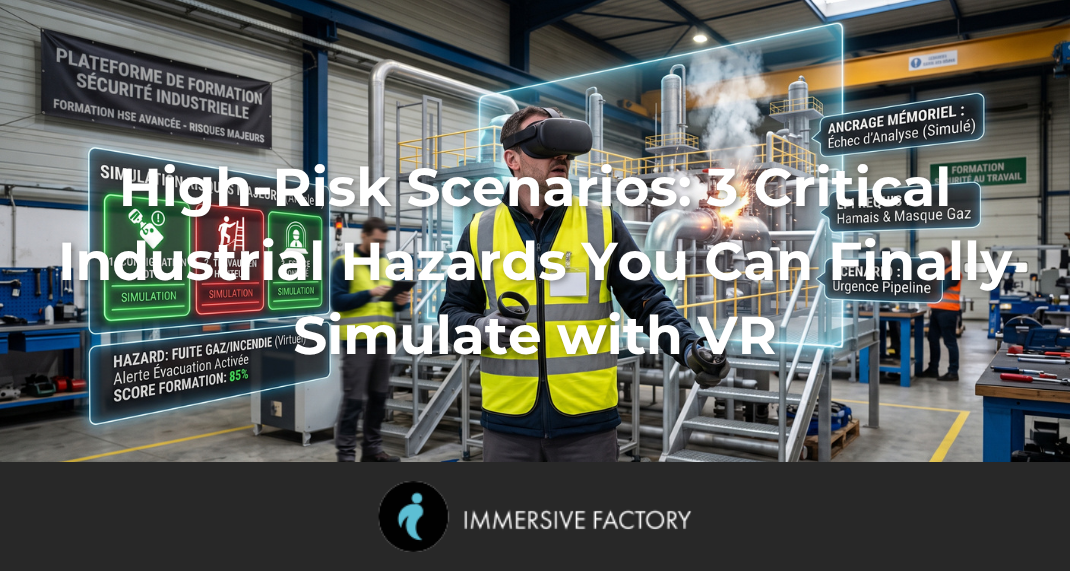
High-Risk Scenarios: 3 Critical Industrial Hazards You Can Finally Simulate with VR
Learn how VR enables safe, realistic simulation of major industrial hazards: Lockout/Tagout (LOTO), working at height, and confined space entry.
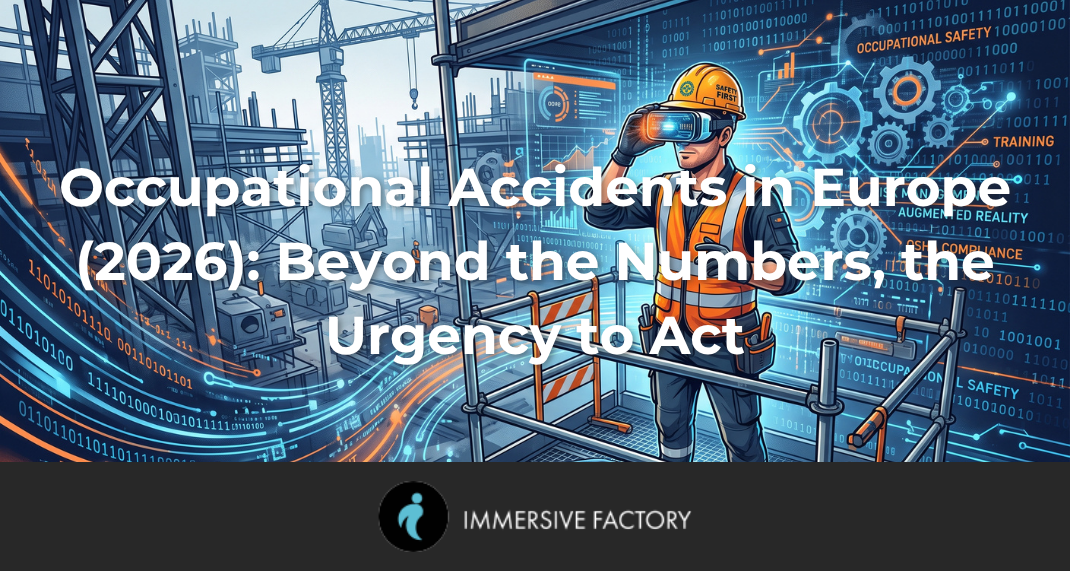
Occupational Accidents in Europe (2026): Beyond the Numbers, the Urgency to Act
What do 2026 European workplace accident stats really reveal? Immersive Factory analyzes the EUROGIP study & offers actionable VR safety solutions.
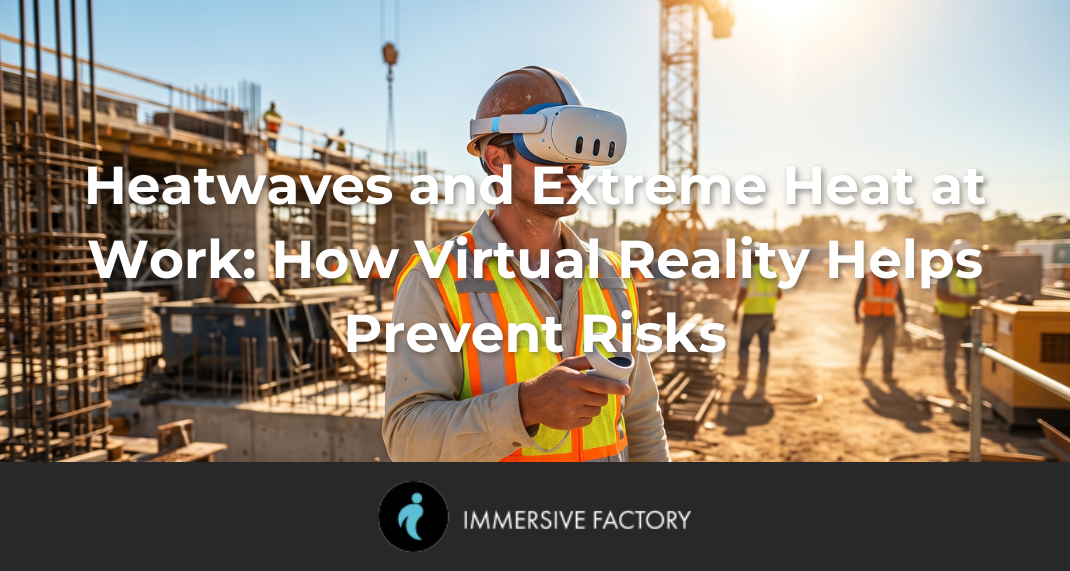
Heatwaves and Extreme Heat at Work: How Virtual Reality Helps Prevent Risks
As summer temperatures continue to soar year after year, extreme heatwaves are no longer exceptional events. For companies worldwide, managing thermal discomfort and high temperatures has become a critical annual health and saf...