Mastering Risk Management in Business: Towards Sustainable Security
Mastering Risk Management in Business: Towards Sustainable Security
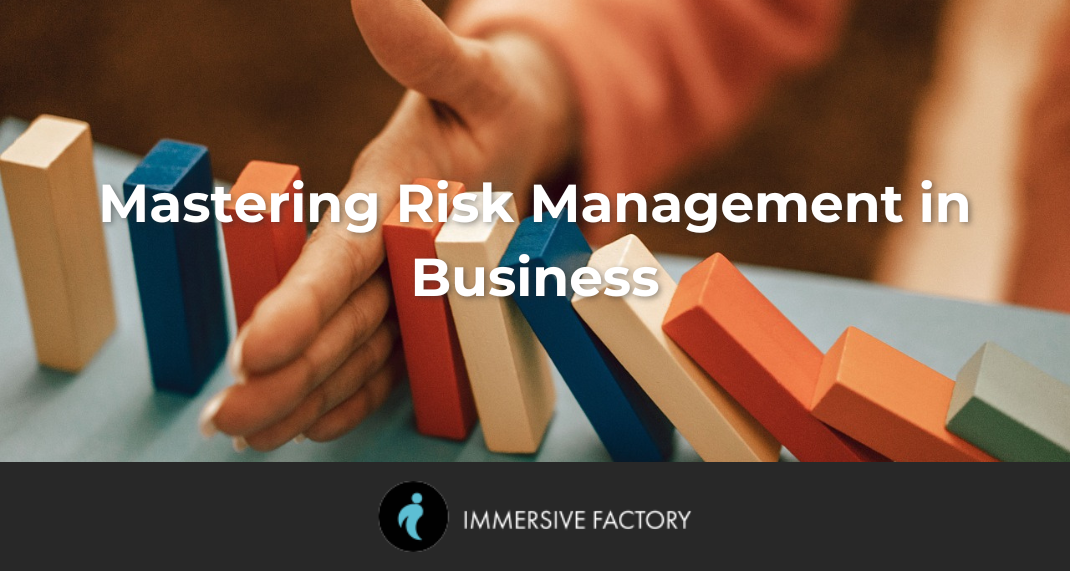
Tips for Ensuring Risk Management in Business.
Risk management in business refers to the process of identifying, evaluating, and controlling occupational risks at every stage of activities. It aims to minimize their potential consequences, such as financial losses, workplace accidents, and occupational diseases. This is why it presents many challenges for businesses. Not only does it ensure operational continuity in case of incidents, but it also improves performance and operational efficiency. Discover its specificities in this guide.
Identification and Evaluation of Risks
Methodology for Identifying Potential Risks
Here are the main methodsused for identifying and analyzing risks in the workplace:
- Brainstorming: This involves gathering employees to collect ideas to solve health and safety-related problems.
- Interviews: Occupational risks can be identified through group or individual interviews.
- Inspections: These come from site visits and contact with workers.
Risk hunting is also an effective system for evaluating risks and their impact. It must rely on a clear information strategy to ensure effective prevention of incidents.
Analysis of Impacts and Risk Probability
Occupational risks can have a significant impact on a business, particularly on activities, reputation, profitability, and workers. To visualize their potential consequences, you can create realistic scenarios or organize a safety briefing. Furthermore, assess the likelihood of each risk occurring by analyzing factors and statistics from past incidents. Create a probability scale as part of your analysis to determine which resources should be mobilized to limit the impact of risks on the organization.
Implementation of Preventive Measures
Strategies to Minimize Risks
Risk management involves defining an effective strategy to minimize them. For example, it is advisable to eliminate the hazard or exposure to it, create a prevention plan, adapt the work to the individual by considering individual differences, address occupational risks at their source, and provide proper instructions to employees. Additionally, it is essential to regularly inform them about each risky event and clearly explain the preventive measures to take.
Tools and Technologies to Prevent Incidents
A company can use various tools and technologies to prevent incidents. These include PPE (personal protective equipment), video surveillance, risk hunting, safety audits, and communication platforms. Don’t forget to analyze data from previous incidents to better guide your efforts. Finally, it is important to train employees in the use of tools and technologies to maximize their effectiveness and promote a strong safety culture within the organization.
Organizing Workshops Like Risk Hunting and Safety Briefings
Organizing workshopsis crucial to achieving the objectives of a risk management project. On the one hand, risk hunting helps identify potential health and safety threats through practical activities, improve decision-making, and ensure compliance with laws and regulations. On the other hand, the safety briefing allows discussion on various topics related to workplace risk prevention.
Crisis Management and Incident Response
Emergency Plans and Quick Response Protocols
An effective emergency plan must include several elements, such as an in-depth analysis of occupational risks, well-defined evacuation procedures, precise instructions on actions to be taken, a list of emergency contacts, and measures to ensure effective communication during a crisis. Additionally, it is crucial to define quick response protocolsto incidents to reduce their impact on the business and make the best decisions despite the urgency of the situation. This involves, for example, preparing standard messages for each incident to ensure rapid and coherent communication.
Exercises and Simulations to Be Ready for a Crisis
To help employees face crises, plan realistic exercises and simulations. By imagining different scenarios, you will prepare them to react actively in the event of incidents. In fact, practical exercises help develop the right reflexes and appropriate actions to prevent injuries and illnesses. Prioritize role-playing and immersive simulations to optimally manage crises.
Monitoring and Controlling Risks
Implementation of Performance Indicators and Alerts
To master the evaluation of risk management in business, several performance indicators (KPIs) must be considered:
- Organizational performance indicators: absenteeism rate, turnover rate, cost of integrating new employees, performance level, etc.
- Performance indicators for inventory, supply chain, and logistics: storage, inventory turnover, delivery, etc.
- Financial performance indicators: return on investment, accounts receivable management, cash flow planning.
Prioritize measurable and qualitative indicators to monitor and control work-related risks. Furthermore, set up automatic alerts like email or SMS notifications when predefined thresholds for each KPI are reached.
Audit and Regular Review of Risk Management Plans
Regular audits help analyze the quality of internal mechanisms and ensure that the risks the company faces are well managed. Similarly, it is essential to review the risk management plan to ensure it reflects real conditions in the field and considers newly identified risks. This review activity should be aligned with the company’s objectives to foster proactive management of occupational risks.
Training and Employee Awareness with Immersive Factory
The Importance of Continuous Training for Effective Risk Management
Continuous training is crucial to strengthen employees' skills and to build a safety culture within the company. Moreover, it effectively prepares teams to handle occupational risks and better evaluate their likelihood to reduce workplace accidents. Finally, this continuous training strategy ensures compliance with new health and safety laws and regulations while promoting a collective safety culture.
Using Immersive Technologies Like Immersive Factory to Enhance Skills
To enhance your employees' skills in risk management and prevent health and safety dangers at work, use ourimmersive technologies. With our services and virtual reality training modules, your teams can practice in realistic conditions and implement an effective prevention plan. Furthermore, the training will provide all the essential information about the impact of risks in businesses.

Geschrieben von Aurélie Tavernier
Marketing and Communications Manager at Immersive Factory
She became interested in raising awareness of health and safety at work, convinced that an approach tailored to employees can transform the safety culture and reinforce shared vigilance. Her ambition: to encourage all companies, whatever their size, to invest actively in health and safety prevention for the well-being of their employees.
Teilen
Das könnte Sie auch interessieren
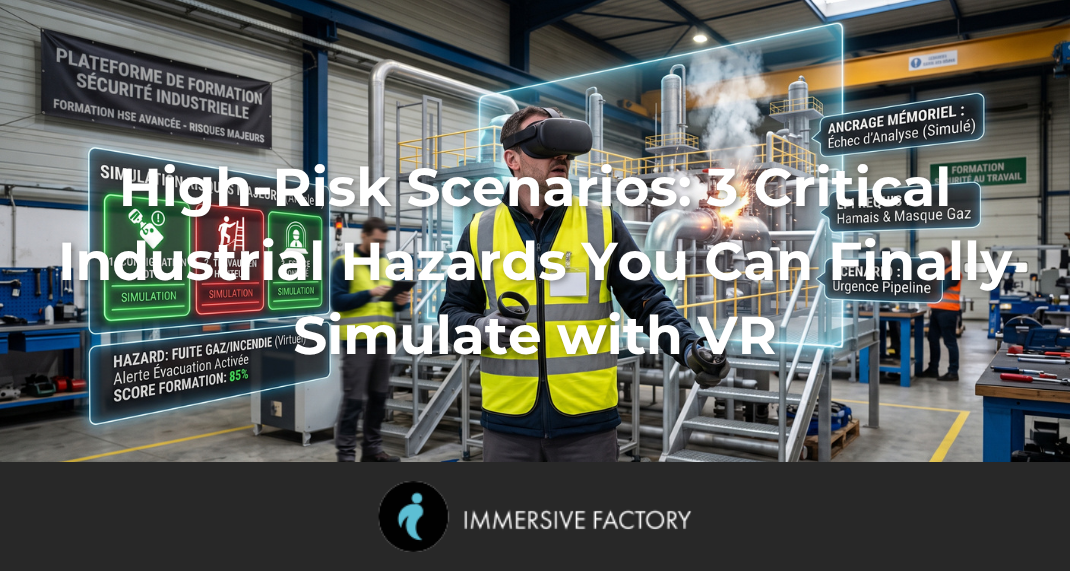
High-Risk Scenarios: 3 Critical Industrial Hazards You Can Finally Simulate with VR
Learn how VR enables safe, realistic simulation of major industrial hazards: Lockout/Tagout (LOTO), working at height, and confined space entry.
Occupational Accidents in Europe (2026): Beyond the Numbers, the Urgency to Act
What do 2026 European workplace accident stats really reveal? Immersive Factory analyzes the EUROGIP study & offers actionable VR safety solutions.
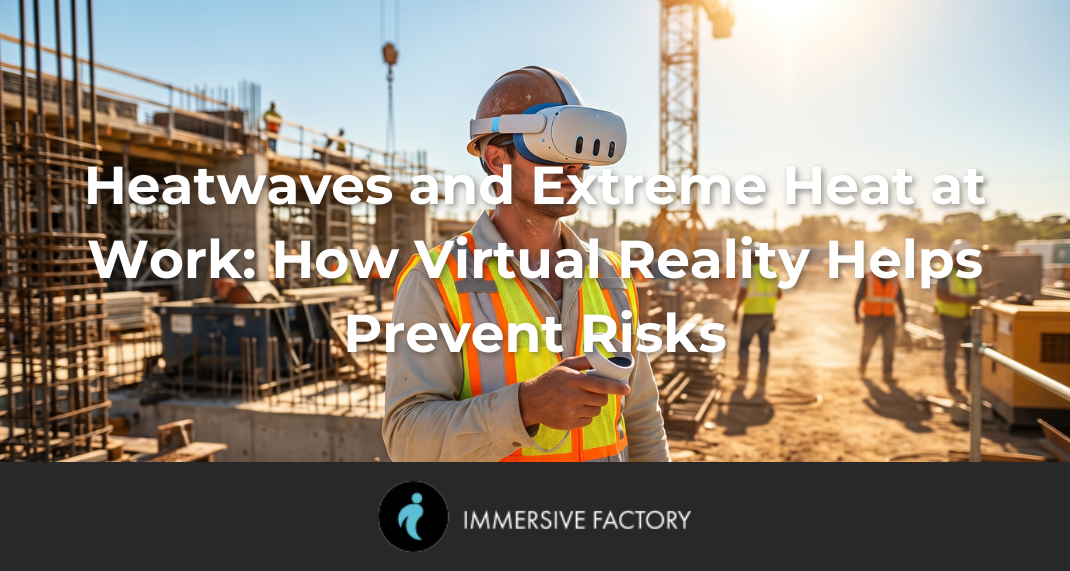
Heatwaves and Extreme Heat at Work: How Virtual Reality Helps Prevent Risks
As summer temperatures continue to soar year after year, extreme heatwaves are no longer exceptional events. For companies worldwide, managing thermal discomfort and high temperatures has become a critical annual health and saf...