Enhance Workplace Safety with Risk Hunting Workshops
Enhance Workplace Safety with Risk Hunting Workshops
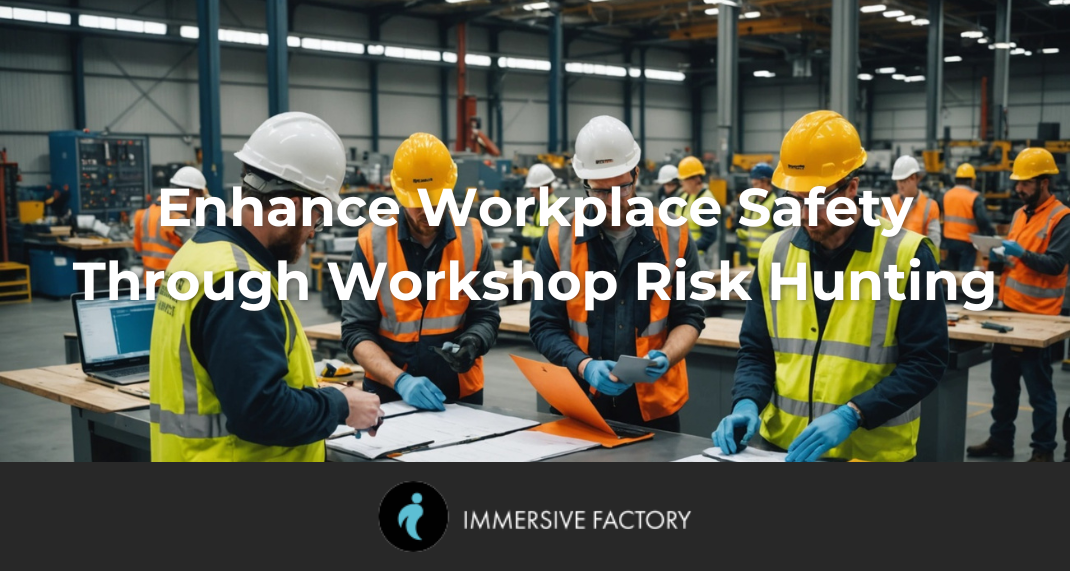
Secure Your Business with Risk Hunting.
In a professional environment, ensuring employee safety is essential. Workplace accidents can result in significant financial losses and damage a company’s reputation. With the advent of new technologies and stricter regulations, safety has become a strategic priority for organizations. But did you know that a simple approach like risk hunting workshops can transform your workplace? You can improve safety and optimize productivity. Let’s explore these powerful strategies together.
Identify and Prevent Workplace Risks
Understanding Risk Hunting
Risk hunting workshops are a participatory method that involves employees in identifying, analyzing, and reducing hazards in their work environment. It is based on two key pillars: collaboration and accountability. This approach aims to create a culture of prevention, empowering everyone to take responsibility for collective safety.
The objectives are clear: detect risky situations, propose practical solutions, and encourage collective awareness. Take, for example, a cluttered passageway where boxes block circulation. This scenario can lead to trips or collisions. A risk-hunting workshop would identify this hazard and resolve it by reorganizing the space or establishing clear storage rules. The group discussions accompanying these observations also offer opportunities for ongoing awareness and training.
A Structured Method for Lasting Results
For a risk-hunting workshop to be effective, it must follow a structured process, including:
- Observation: Analyze work areas to identify visible or potential hazards.
- Active Participation: Engage teams to share their perspectives and experiences.
- Proposing Solutions: Take concrete actions tailored to the identified risks.
- Follow-up and Evaluation: Measure results to ensure continuous improvement.
For example: In a manufacturing plant, analysis revealed slippery floors near machines. Following a risk-hunting workshop, anti-slip mats were installed, reducing falls by 40%. In another company, improperly secured wall cables posed an electrocution risk. The cables were isolated and secured after inspection, showcasing how this method can prevent serious accidents. These simple yet strategic actions can significantly enhance overall workplace safety.
The Different Forms of Risk Hunting
Risk hunting can be tailored to various contexts and evolve based on the specific needs of each company:
- Physical Tools: Posters, paper-based exercises, or illustrated boards to raise employee awareness.
- Immersive Simulations: Virtual reality (VR) experiences that recreate high-risk scenarios.
- Escape Games: Interactive activities that immerse participants in simulated situations, helping them identify and resolve workplace-specific anomalies, such as misplaced items or realistic equipment failure scenarios.
These different approaches make training more accessible and engaging. Companies like Immersive Factory offer interactiverisk-hunting workshops that raise awareness while increasing participant motivation. Immersive training not only helps identify hazards but also tests appropriate responses in a safe environment.
Choosing the Ideal Format depends on several factors
The Company size, Industry type, and Specific risks the organization faces. For smaller organizations, simple methods like physical tools are cost-effective and easy to implement. For example, posters or hands-on exercises directly involve employees.
In large industrial companies, immersive simulations, such as VR-based experiences, are particularly advantageous. These tools realistically replicate complex scenarios, allowing teams to practice identifying and managing hazards in a safe setting. The ability to adapt exercises to specific needs makes risk hunting a universal and indispensable method, delivering tangible results in diverse contexts.
Train Teams for Sustainable Prevention
Benefits of Immersive Approaches
Immersive technologies, like VR and gamification, increase employee engagement and improve knowledge retention. Key benefits of these approaches include:
- Risk-Free Training: Immersive scenarios allow safe practice without endangering participants.
- Increased Motivation: Gamification introduces clear goals, scoring systems, and rewards to encourage participation.
- Preparation for Complex Situations: Interactive scenarios train employees to respond effectively to real-world challenges.
These technologies combine learning with practical experience, significantly enhancing training effectiveness. They also offer a personalized approach that adapts to the needs of each company.
Why Lean Manufacturing is Essential
Once hazards are identified, lean manufacturing plays a critical role in addressing the root causes of problems. This continuous improvement framework optimizes processes by reducing waste while enhancing safety. Practices like 5S (visual workspace organization) ensure a safer and more organized work environment.
Implement Effective Training with Immersive Factory
To maximize the effectiveness of these strategies, specific training is necessary. For instance, Immersive Factory offers tailored lean manufacturing training, integrating lean principles to help organizations reduce inefficiencies while strengthening risk prevention.
Imagine a workshop where every employee knows how to identify hazards and contribute to the continuous improvement of workplace conditions. These initiatives turn workplaces into exemplary environments. By adopting exercises like risk hunting, businesses can create environments where safety and productivity coexist harmoniously. With partners like Immersive Factory, these strategies can be implemented efficiently to transform your organization. Why wait? Investing in these approaches means choosing a safer and more productive future.

Geschrieben von Aurélie Tavernier
Marketing and Communications Manager at Immersive Factory
She became interested in raising awareness of health and safety at work, convinced that an approach tailored to employees can transform the safety culture and reinforce shared vigilance. Her ambition: to encourage all companies, whatever their size, to invest actively in health and safety prevention for the well-being of their employees.
Teilen
Das könnte Sie auch interessieren
High-Risk Scenarios: 3 Critical Industrial Hazards You Can Finally Simulate with VR
Learn how VR enables safe, realistic simulation of major industrial hazards: Lockout/Tagout (LOTO), working at height, and confined space entry.
Occupational Accidents in Europe (2026): Beyond the Numbers, the Urgency to Act
What do 2026 European workplace accident stats really reveal? Immersive Factory analyzes the EUROGIP study & offers actionable VR safety solutions.
Heatwaves and Extreme Heat at Work: How Virtual Reality Helps Prevent Risks
As summer temperatures continue to soar year after year, extreme heatwaves are no longer exceptional events. For companies worldwide, managing thermal discomfort and high temperatures has become a critical annual health and saf...