Virtual Reality Hazard Hunts: The Ultimate Guide to Boosting Your Safety Culture
Virtual Reality Hazard Hunts: The Ultimate Guide to Boosting Your Safety Culture
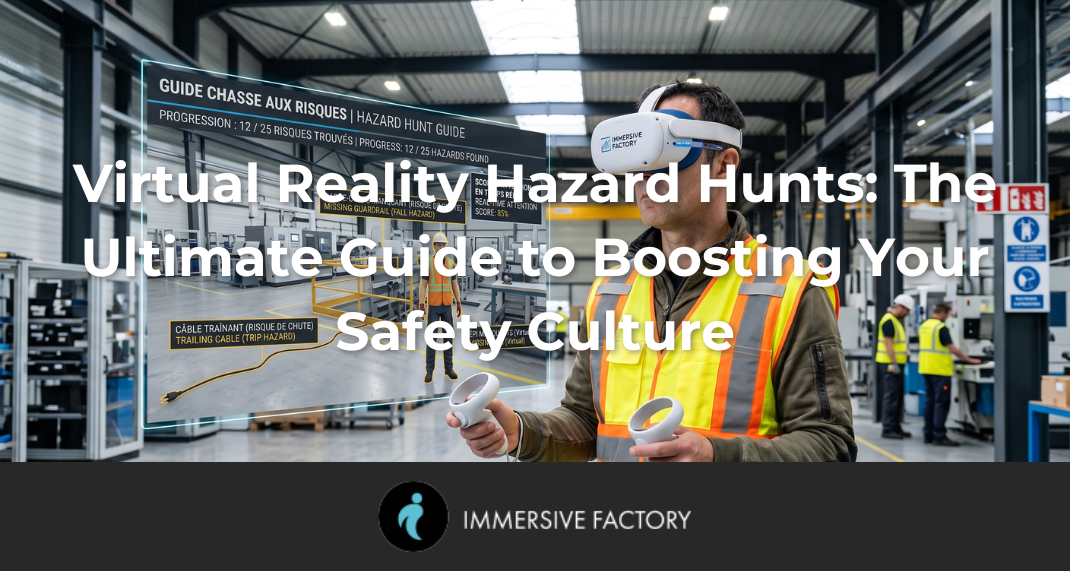
The "Hazard Hunt" is a staple in HSE training. The goal is straightforward: to sharpen employees' critical eyes so they can proactively identify anomalies and dangerous situations in their work environment. It is the absolute foundation of a strong safety culture and shared vigilance.
However, in the digital age, the way this company safety exercise is delivered is just as important as the message itself. How do you transform an exercise sometimes perceived as repetitive into a highly engaging experience? Virtual reality (VR) for workplace safety offers a incredibly effective solution.
The Flaws of Paper or Photo-Based Hazard Hunts
Traditionally, an HSE hazard hunt takes place in a meeting room: a photo of a workshop or construction site is projected on a screen, and employees must spot the "7 mistakes" (a trailing cable, an operator missing safety goggles, an oil spill...).
While this exercise is useful for reviewing the basics, it has major limitations:
- Lack of spatial context: A 2D image is static. It does not allow users to gauge distances, blind spots, or working at heights.
- A passive posture: The learner is not an active participant in their environment. They cannot "turn their head" or walk closer to a machine to inspect a detail.
- A disconnect from reality: In the field, attention is constantly challenged by noise, movement, and workload. Spotting a hazard on a silent slide is much easier than doing it on a bustling factory floor.
360° Immersion: Spotting Hazards in Real-World Conditions
With virtual reality, the hazard hunt takes on a whole new dimension. The learner puts on a headset and is teleported into a fully reconstructed 3D professional environment (a construction site, a logistics warehouse, an office, or a production line).
- Freedom of movement and active inspection: In VR, the user must physically scan the space. They have to look up to spot a dangerous suspended load, lean over to check for clutter in an aisle, or listen to the ambient sound to identify a malfunctioning machine.
- Adaptable complexity: Virtual scenarios can be adjusted based on the learner's skill level. Hazards can range from the obvious (a poorly parked pallet jack) to the highly subtle (incorrect PPE for a specific task).
- Visualizing invisible risks: VR can even materialize what cannot be seen with the naked eye, such as gas exposure zones, magnetic fields, or heat radiation, making the invisible perfectly understandable.
Gamification and Analytics: Measure Your Teams' Awareness
Beyond realism, VR brings two crucial elements for engagement: gamification and data. At the end of the exercise, the learner receives a score based on the number of hazards found, the time taken, and any false positives. This mechanic creates a healthy, positive sense of competition among teams.
For HSE managers, the tool provides invaluable data. You can easily identify which specific risks are consistently overlooked by your workforce and adjust your future prevention campaigns accordingly.
Want to breathe new life intoyour toolbox talks? Turn your employees into proactive prevention experts with our virtual reality hazard hunt modules.

Geschrieben von Aurélie Tavernier
Marketing and Communications Manager at Immersive Factory
She became interested in raising awareness of health and safety at work, convinced that an approach tailored to employees can transform the safety culture and reinforce shared vigilance. Her ambition: to encourage all companies, whatever their size, to invest actively in health and safety prevention for the well-being of their employees.
Teilen
Das könnte Sie auch interessieren
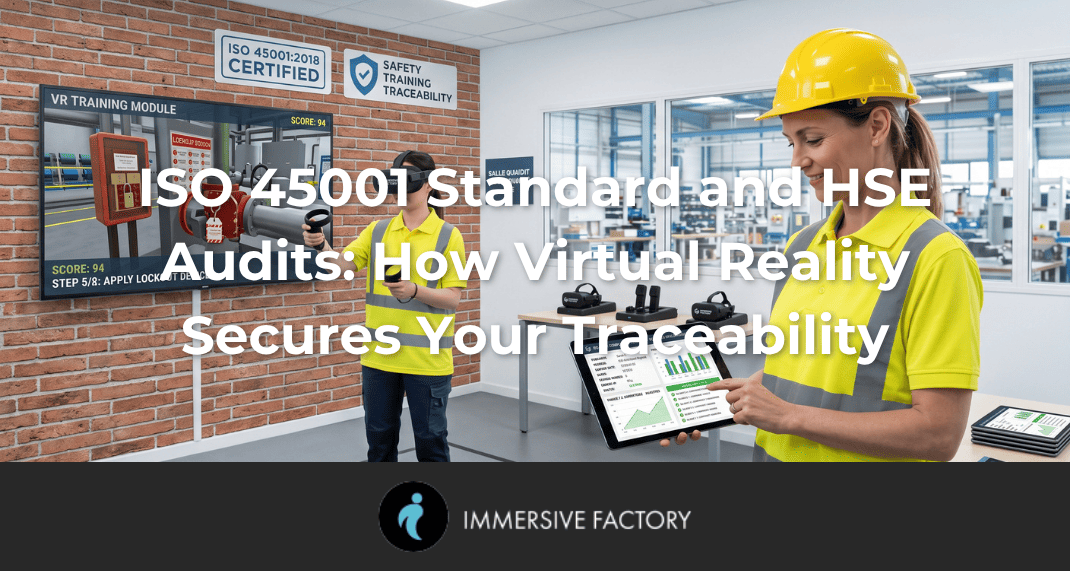
ISO 45001 Standard and HSE Audits: How Virtual Reality Secures Your Traceability
Prepare for your occupational health and safety audits with virtual reality. Discover how VR ensures the traceability of your HSE training.
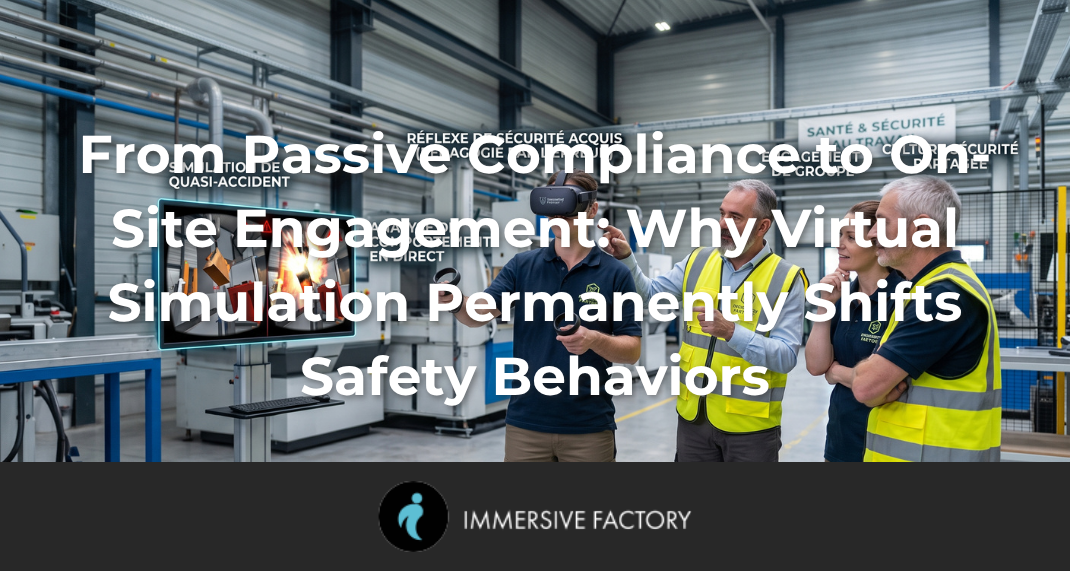
From Passive Compliance to On-Site Engagement: Why Virtual Simulation Permanently Shifts Safety Behaviors
Discover how VR shifts safety culture in industrial workplaces. Explore error-based learning, emotional risk awareness, and interactive safety talks.
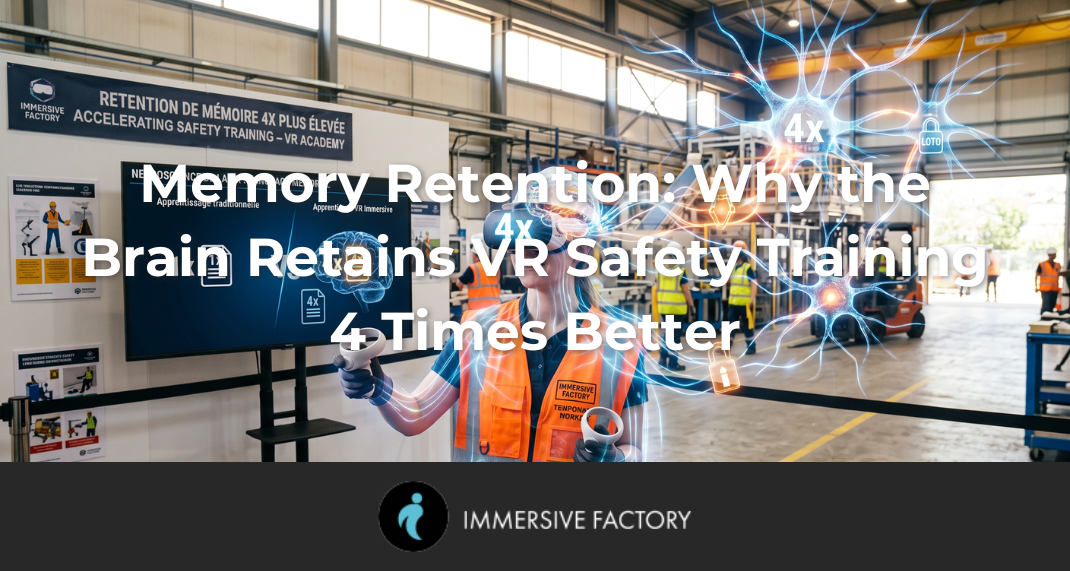
Memory Retention: Why the Brain Retains VR Safety Training 4 Times Better
Discover the neuroscience behind virtual reality: why memory retention and experiential learning make VR safety training up to 4 times more effective.