Leading a Fire Safety Training in Business: The Contribution of Virtual Reality
Leading a Fire Safety Training in Business: The Contribution of Virtual Reality
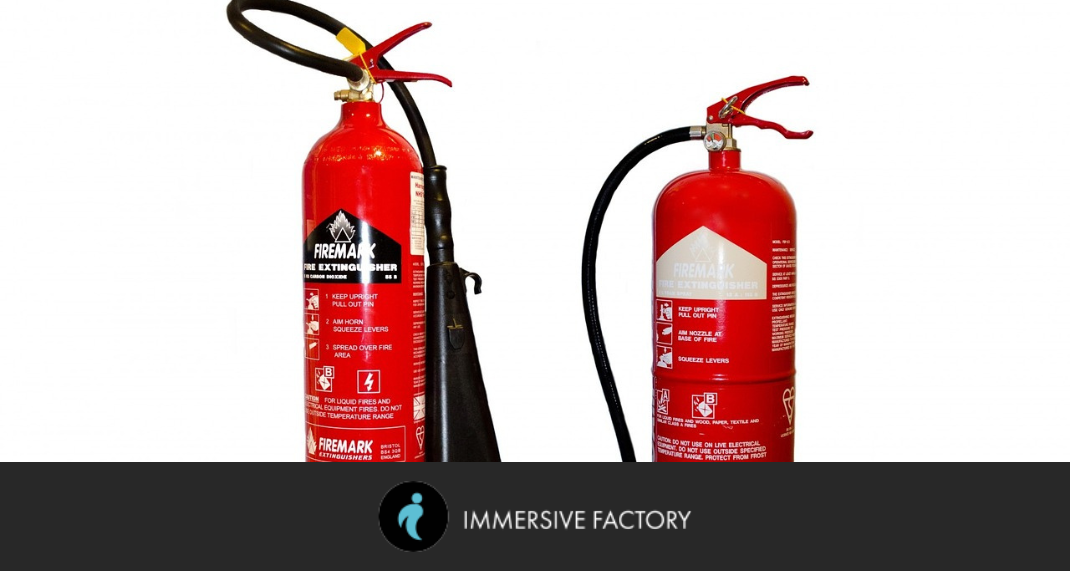
How animate a fire safety training in company?
Ensuring the protection of employees and regulatory compliance, fire safety training is essential in business. Indeed, it helps workers actively respond to danger in their workplace, reducing the risk of accidents and occupational diseases. Virtual reality is a crucial tool for leading this type of training. It simulates realistic scenarios and can be customized according to the needs and objectives of the employer. So, how to lead a corporate fire safety training?
Challenges of Fire Safety Training in Business
Statistics on business fires and their consequences
Every year, more than 300,000 cases of fires are reported in France. In 2023, for example, firefighters carried out more than 250,000 interventions, equivalent to extinguishing a fire every two minutes. Fires have significant consequences on businesses, including economic losses due to material damage and human losses. Additionally, such incidents significantly impact professional activity, leading to either temporary operation interruptions or the definitive closure of the establishment. To avoid these consequences, companies must prioritize workplace safety training.
Regulations and legal obligations regarding fire safety training
Fire safety training obligations are governed by the Labor Code. Indeed, every employer is required to train all their employees on the fire risks specific to their work environment. Training can be implemented during a safety day and cover various aspects such as:
- Using fire extinguishers;
- Actions to take in case of fire;
- Evacuation procedures;
- Awareness of fire risks.
Goals of effective training
The goals of effective fire training are numerous. They aim to sensitize staff to risks, prevent accidents through better understanding of prevention measures, or ensure quick reaction in emergency situations.
Limitations of Traditional Training Methods
Given the many consequences of an uncontrolled fire, the question arises: how to lead a corporate fire safety training? To answer, it's important to evaluate the limitations of traditional training methods.
Lack of immersion and participant engagement
In classic training, information is transmitted to learners via static materials like documents and images, or through presentations. However, this method fails to fully captivate participants' attention and does not foster their engagement. Consequently, it does not guarantee effective information retention.
Difficulties in simulating real emergency situations
Simulating real emergency situations is not always possible with traditional methods. Indeed, the old modes of information transmission lack dynamism and do not allow the feeling of pressure and stress associated with a real emergency. Therefore, employees might not be adequately prepared to actively respond if a fire occurs in the company.
Logistical constraints and costs associated with practical exercises
Organizing practical exercises requires significant technical, financial, and human resources. This includes safety materials such as fire extinguishers, personal protective equipment, and fake fire alarms. Additionally, exercises must be supervised by a qualified fire trainer and conducted in a suitable location, presenting many constraints for the company.
The Contribution of Virtual Reality in Fire Safety Training
Wondering how to lead a corporate fire safety training? Invest in virtual reality. This technology has multiple benefits:
Immersion and realism of simulations
Virtual reality offers unparalleled realistic immersion in simulations. Interacting with virtual environments, participants can experience various emergency situations, learning how to use fire extinguishers and evacuate premises in case of fire. This experience enhances their engagement and fire safety skills.
Ability to create varied and customized scenarios
Virtual reality allows fire safety trainers to create varied and customized scenarios based on employees' needs and training objectives. For instance, they can specify the type, severity, and context of the fire. Moreover, virtual reality simulators can integrate other variables like the presence of victims, making simulations more realistic and engaging.
Advantages in terms of safety and cost reduction
Interactive virtual environments pose no risk to employees. Indeed, VR allows them to learn safely without endangering themselves. Additionally, this technology ensures long-term cost reduction, as it only requires mobilizing a few technical resources initially. Furthermore, scenarios can be repeated several times until information is assimilated.
Implementing Virtual Reality Fire Safety Training
Ultimately, how to lead a corporate fire safety training using virtual reality? Here are some practical tips for implementation:
Equipment and necessary technologies
VR fire safety training requires several pieces of equipment and technologies, including VR headsets to interact with virtual environments, powerful computers, virtual fire safety equipment, VR content creation software, and tracking stations to monitor users' movements during training.
Designing scenarios and integrating educational objectives
Before designing scenarios, it's important to define the training's objectives (risk awareness, understanding fire evacuation procedures, etc.). Then, identify the specific skills to develop, whether practical or cognitive. Next, create realistic and relevant scenarios for the professional context of employees. Enhance their engagement by incorporating interactive elements like obstacles to overcome, helping them make informed decisions.
Feedback and Testimonials from Companies that Adopted This Method
EDF Group is among the companies that have adopted virtual reality to train their teams in fire prevention at its nuclear plants. It sought an interactive and immersive solution to offer them the opportunity to train in secure emergency situations. The goal was to prepare them to respond efficiently in case of a fire while reducing risks in their workplace. Other international entities like Airbus and Dassault Aviation have also chosen to implement VR fire training in their facilities.
Future Prospects and Innovations
Evolution of Virtual Reality Technologies and Their Impact on Training
Virtual reality technologies are continually evolving to provide more realistic immersion than ever before. They allow learners to interact with virtual elements in a more natural way, enhancing the effectiveness of learning. Additionally, scenarios can be tailored to reflect the risks employees might face in their workplace. As VR becomes more popular among professionals, it becomes increasingly accessible, leading to reduced costs for training.
Integration of Artificial Intelligence for More Realistic and Interactive Simulations
Artificial intelligence can be integrated into VR fire safety simulations, improving the training experience. Integration can occur in various ways:
- Behavioral modeling of fires: AI can simulate the behavior of fires based on factors like smoke, heat, and fire spread;
- Real-time scenario adaptation: Thanks to AI algorithms, training scenarios can be adapted based on the actions and decisions of employees, changing in real-time;
- Performance analysis: AI is capable of analyzing learners' performances during simulations and assisting them in improving their skills.
Extension to Other Areas of Corporate Safety
Virtual reality is useful in other areas of corporate safety, such as:
Road Safety Training
This technology can reproduce dangerous driving situations, encouraging employees to drive cautiously to prevent road accidents.
Workplace Safety Training
Safety trainers can rely on virtual reality to sensitize employees to risks and dangers in their workplace, aiding them in taking effective precautionary measures in emergencies.
Cybersecurity Training
VR can simulate cyberattacks like data breaches, training employees to recognize the signs of an attack and strengthen corporate cybersecurity.
Food Safety Training
Personnel in the food sector can be trained to adhere to hygiene standards and take necessary measures to ensure food safety. Virtual reality offers various scenarios like food poisoning and contamination.
Immersive Factory, Your Expert in Corporate VR Training
Want to teach your employees to respond cautiously in case of a fire, instruct them on evacuation procedures, or provide extinguisher training? Trust Immersive Factory to design and implement realistic immersive exercises. With our expertise, we will encourage them to adhere to fire safety instructions to ensure their health and well-being at work.

Scritto da Aurélie Tavernier
Marketing and Communications Manager at Immersive Factory
She became interested in raising awareness of health and safety at work, convinced that an approach tailored to employees can transform the safety culture and reinforce shared vigilance. Her ambition: to encourage all companies, whatever their size, to invest actively in health and safety prevention for the well-being of their employees.
Condividere
Da leggere anche

Deploying HSE VR Across Multiple Sites: From Pilot to Scaling
Discover how to successfully scale enterprise virtual reality for multi-site safety training: fleet management, LMS integration, and local adoption.
Calculating the ROI of VR in Health & Safety: Key Metrics Beyond Hardware Costs
Learn how to measure the true ROI of virtual reality in HSE safety training. Key metrics, hidden cost savings, and incident rate reduction.
Back-to-Work EHS: 5 Steps to Refresh Your Safety Training by September
Gear up for the fall EHS restart! Discover 5 actionable steps to refresh your safety training, re-engage teams in September, and integrate VR.