Mandatory Safety Training in Companies: What Labor Law Says
Mandatory Safety Training in Companies: What Labor Law Says
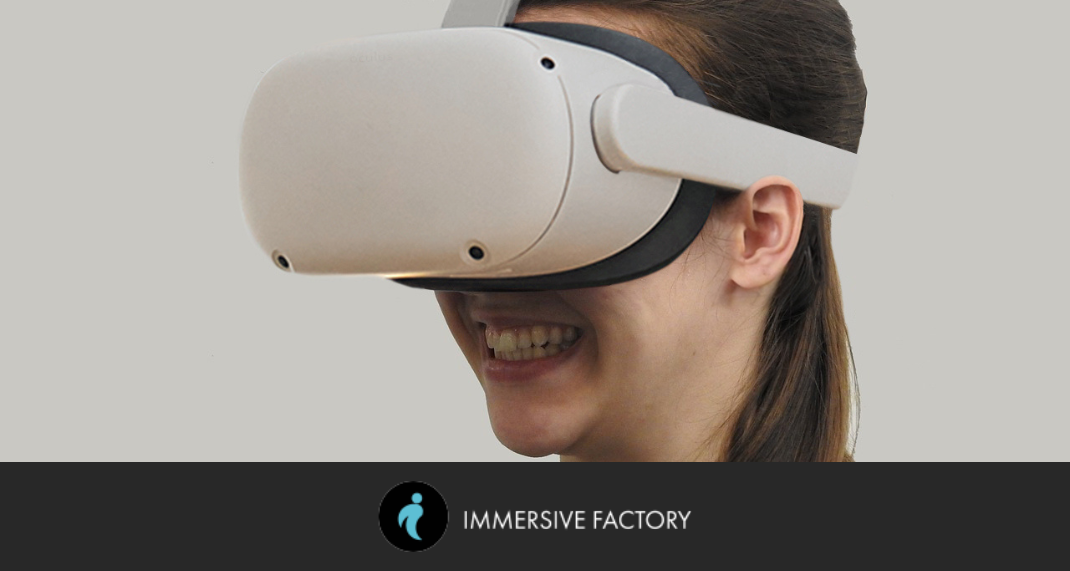
The mandatory safety training in companies according to labor law.
Professional risks are higher in an unsafe work environment. They result in prolonged absences and sometimes human losses for the company. To prevent occupational accidents and diseases, the Labor Code requires every employer to train employees in health and safety. So, what does the law say about training obligations?
Legislation on Safety Training
Laws and regulations on mandatory safety training in companies under labor law
According to the Labor Code, an employee must receive safety training if they can be exposed to risks during the performance of their duties. Article R4141-5 states that workers involved in the following operations are subject to training: handling operations, use of portable or non-portable machines, handling of chemical products, driving of vehicles and machinery, work involving contact with animals, assembly, disassembly or transformation of scaffolding, maintenance work, and use of rope access and positioning techniques. Apart from mandatory SST training in companies, employees must benefit from the following training:
- Training for working at heights
- Fire safety training
- Driving competences training
- Gesture and posture training
- Training for preventing risks related to chemical products and asbestos risk
- Electrical qualification training for staff required to work on electricity
- Basic safety training for all personnel, including temporary workers and interns
- Training on work equipment (machines)
- Training on the use of PPE
- Training on explosive areas for relevant staff
Employer Responsibilities and Employee Rights
Employer’s Responsibilities
According to article L.4121-1 of the Labor Code, the employer must take all necessary measures to ensure the safety and preserve the physical and mental health of employees. Not only is the employer required to reduce risks, but also prevent them. For this, they must implement professional risk prevention and training actions. For this purpose, they can use virtual reality training. Finally, the employer is obligated to establish an appropriate organization and means.
Employee Rights
Workers must have optimal working conditions within companies, regardless of their position. Among the rights they enjoy are:
- The right to be trained in health and safety
- The right to work under good working conditions and in a healthy environment
- The right to have equipment and materials necessary for performing their duties
- Medical follow-up
Risks in Companies
Common Professional Risks
Here are the most common risks in the professional environment:
Security-Related Risks
Security risks are often present on a construction site because poor working conditions can cause injuries, illnesses, or even death. These include electrical risks, fall risks, machine-related risks, and spills on the ground. Implementing mandatory workplace safety training is essential to prevent these dangers.
Biological Risks
Biological risks are associated with working with animals, infectious plant materials, or people. These can include blood or other bodily fluids, bacteria, insect bites, animal feces, and fungi.
Chemical Risks
Chemical risks are present in certain work environments like laboratories. They include skin reactions, respiratory problems, and illnesses. These risks are associated with liquids, fumes, vapors, gases, pesticides, and flammable materials.
Risks Related to Work Organization
They are a source of tension, constraints, and anxiety for employees (sexual harassment, lack of respect, violence, workload demands...).
Ergonomic Risks
Ergonomic risks include various elements such as poor posture, awkward and repetitive movements, poorly adjusted chairs, and frequent lifting of loads.
Physical Risks
Physical risks can impact the body, even in the absence of direct contact. They include extreme temperatures, radiations, or constant loud noise.
Consequences of Occupational Illnesses and Work Accidents
Occupational illnesses and work accidents have consequences for both the employer and the employee. On one hand, they lead to a decrease in productivity, resulting in work stoppages. Moreover, the need for staff rotation involves training costs, not to mention the compensation for employees. Thus, occupational risks have serious financial repercussions for the company. On the other hand, the employee victim of an occupational disease or a work accident may experience physical pain, which in extreme cases can be debilitating. They will have to accept their status of disability or incapacity. Occupational risks also have psychosocial consequences, as illnesses can significantly impact morale.
Illustrative Statistics
Since 2020, figures on occupational risks have been decreasing. For example, 604,565 work accidents were recorded in 2021, a reduction of 7.8% compared to 2019. Similarly, the number of recognized diseases was 46,448 the same year, a decrease of 4.3% compared to 2019. These improvements are mainly due to employers' efforts in mandatory workplace safety training.
Immersive Training: Revolutions in Work Safety
The Immersive Training: A Modern Approach
Immersive training is a modern approach to meeting legal requirements for safety in the workplace. It involves learning by practice by immersing participants in a fictional universe. Realistic scenarios are set up to allow them to experience situations similar to those they would encounter in the real world.
Advantages of Immersive Training Compared to Traditional Methods
The advantages of immersive training are numerous compared to traditional learning methods:
Employee Engagement
By combining theory and practice, workers will be more engaged during training. They will be more focused and will assimilate information more easily, making them more effective in their jobs.
Repetition of Movements
Scenarios can be replayed several times until employees assimilate the right gestures to adopt. This will allow them to perfect their practice.
Fun Learning
Thanks to virtual reality, learning becomes more enjoyable for learners. Moreover, distractions are eliminated, as wearing a VR headset requires them to focus fully on professional training.
Compliance Through Immersive Training
How can companies comply with legal requirements thanks to immersive training?
Virtual reality is an excellent way to comply with legal requirements for mandatory workplace safety training. Indeed, immersive training directly confronts employees with occupational risks, without endangering their lives. By becoming actors in the training, they will progress rapidly and be able to adopt appropriate behaviors when performing their tasks.
Example of Success and Benefits for Companies and Employees
Immersive training is essential for fire safety. Virtual reality can simulate a fire in a work environment. Participants must perform several exercises to understand the risks and solutions to implement if a similar situation occurs within the company.
Innovation for Safety with Immersive Factory
Adopt immersive training to ensure worker safety.
In summary, the employer's obligations regarding health and safety are numerous in a company. He must implement various prevention and training actions to protect employees. Virtual reality is a good way to train workers on safety instructions. Thanks to immersive experience and practice, it ensures their safety while complying with the law.
Solutions Offered by Immersive Factory to Achieve This Goal
We offer HSE training in virtual reality to allow your employees to immerse themselves in your company's safety culture. The programs are personalized according to your field of activity and your objectives. In addition, HSE exercises are specifically designed according to your requests (serious games, quizzes, risk identification...).

Geschrieben von Aurélie Tavernier
Marketing and Communications Manager at Immersive Factory
She became interested in raising awareness of health and safety at work, convinced that an approach tailored to employees can transform the safety culture and reinforce shared vigilance. Her ambition: to encourage all companies, whatever their size, to invest actively in health and safety prevention for the well-being of their employees.
Teilen
Das könnte Sie auch interessieren
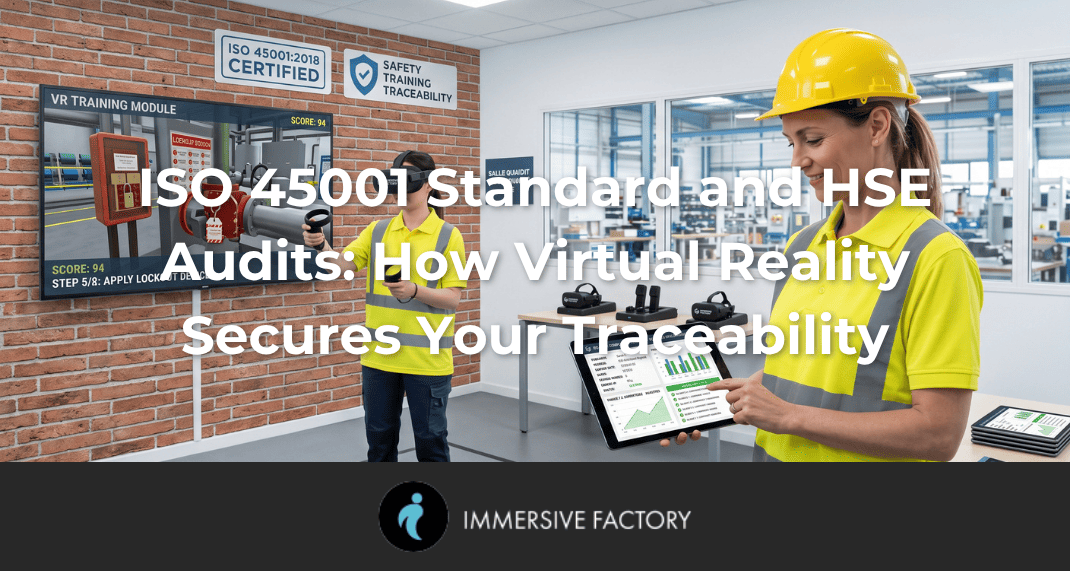
ISO 45001 Standard and HSE Audits: How Virtual Reality Secures Your Traceability
Prepare for your occupational health and safety audits with virtual reality. Discover how VR ensures the traceability of your HSE training.
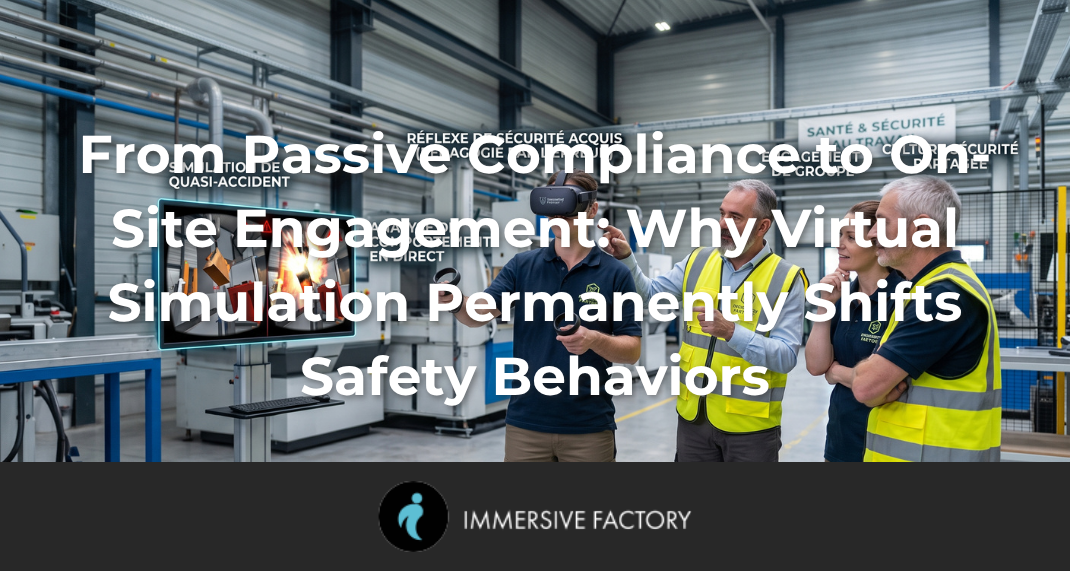
From Passive Compliance to On-Site Engagement: Why Virtual Simulation Permanently Shifts Safety Behaviors
Discover how VR shifts safety culture in industrial workplaces. Explore error-based learning, emotional risk awareness, and interactive safety talks.
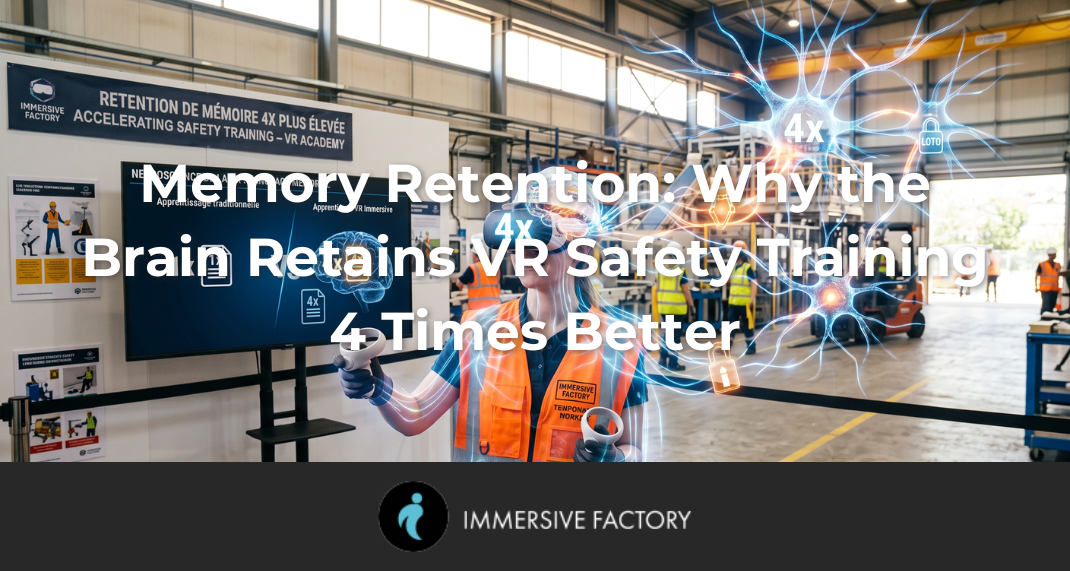
Memory Retention: Why the Brain Retains VR Safety Training 4 Times Better
Discover the neuroscience behind virtual reality: why memory retention and experiential learning make VR safety training up to 4 times more effective.