Preventing Workplace Accidents: 7 Key Actions for Your Business
Preventing Workplace Accidents: 7 Key Actions for Your Business
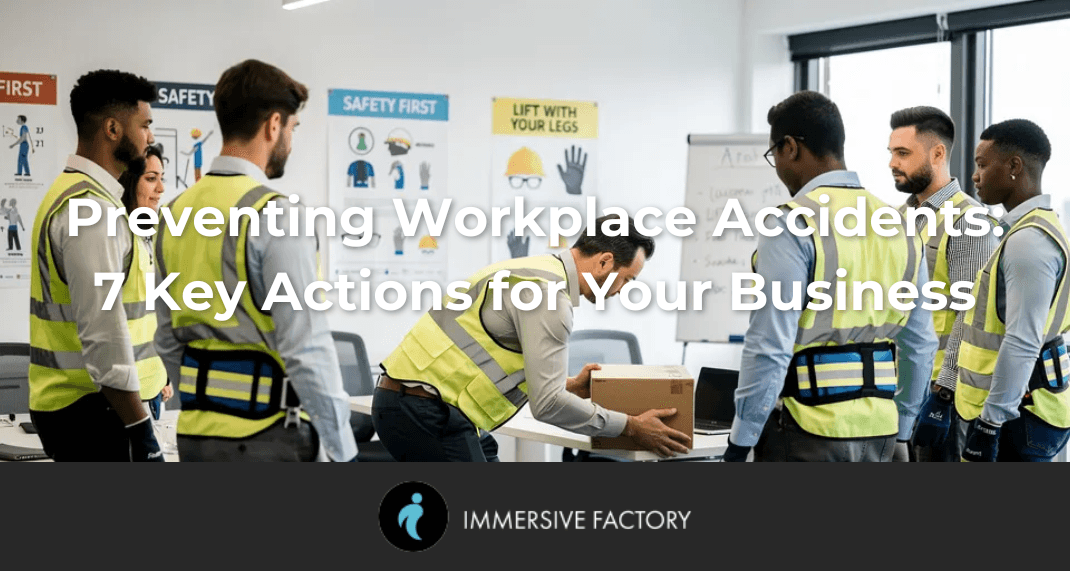
Preventing workplace accidents: 7 key corporate actions.
Summary: Three on-the-ground insights, nothing theoretical
- Employer responsibility isn't a box you check, it’s something you live: The Labor Code breathes to the rhythm of the unforeseen, and prevention is never purely regulatory (neither a simple piece of paper nor a reassuring routine).
- The team moves forward hand in hand: Prevention is about collective commitment and social climate; it's about avoiding chaos after an accident and playing the trust card, not just ticking the "safety" box.
- Tools only live if they are tinkered with, critiqued, and updated: The DUERP (Single Risk Assessment Document) is rewritten, audits shed light on blind spots, and a poster or checklist sometimes carries more weight than a mountain of guides.
Crossing the threshold of an industrial site always holds its share of uncertainty, chance, and sometimes, a palpable tension. You sometimes feel this strange vibration, almost tangible—a singular atmosphere, a mix of acute awareness and habit. You move forward, observing; the reality of safety is never set in stone. Don't hesitate to opt for a Safety Toolbox Talk.
However, you gradually realize that prevention structures the daily experience, blurring the lines between regulatory compliance, respect for the work, and the requirement for well-being. Why not choose Virtual Reality training?
The Legal Framework and Stakes of Workplace Accident Prevention in France
As soon as you look into safety, you brush up against the law, and sometimes administrative complexity. Don't let yourself get carried away by these classic hesitations; the subject is more alive than the texts that govern it.
Employer Responsibility and Regulatory Obligations
The Labor Code sets the scene, deploying the general obligation of safety and gathering the essentials in the famous DUERP. In reality, you are composing with a shifting text that cannot be locked in a drawer, especially when faced with an accident declaration or the return of an injured employee. You have a concrete, immediate responsibility regarding health and accident prevention within your company. Conversely, ignoring these stakes would expose you to economic fallout, severe legal sanctions, or even that “inexcusable fault”, a phrase whose very name evokes its gravity. Your role is no longer limited to a box on an organizational chart; it engages every minute, every life.
Human, Economic, and Corporate Image Stakes
When an accident occurs, the dynamic breaks; the impact goes beyond the strict work stoppage. You then perceive the force of the collapse of the social climate; you measure the hard, brutal distance between absent prevention and a damaged reputation. Reducing disorganization, preventing costly stoppages, protecting collective trust—all this shapes the establishment's daily life. Wisely, you invest in the appropriate approach because, in fact, the gain exceeds simple compliance by durably strengthening your image and reputation with clients, the Carsat (regional health insurance fund), and regional institutions. Prevention anchors itself there, in this meeting between management and humanity, without excessive pageantry.
Main Organizations and Reference Resources
You rarely find your way alone; the relays are multiple, sometimes complex, but their action shapes current professional prevention. Using tools from the INRS, Health Insurance, or the Ministry of Labor is sometimes the difference between amateurism and a professional approach. Awareness campaigns, guides, model DUERPs, the Primary Health Insurance Fund—all become decisive if you truly aim to stem accidents on your turf. Every resource, every institutional support nourishes collective appropriation, even if the administrative burden sometimes seems disproportionate.
- Risk Assessment (Article L4121-1 of the Labor Code): Drafting and updating the DUERP.
- Employee Information and Training (Article L4141-1 of the Labor Code): Regular sessions, posters, and materials.
- Taking Corrective Measures (Articles L4121-2 and L4121-3): Improvement actions on processes, equipment, PPE.
The 7 Essential Actions for an Effective Prevention Approach in the Facility
The heart of the subject vibrates in daily application. You tried to foresee everything, you improvise, you start over, sometimes everything collapses over a detail, but vigilance is also learned through failure.
Risk Assessment: The Foundation of Any Prevention Policy
Starting your approach requires identifying, at each station, the different possible and imaginary dangers. Such an analysis cannot be improvised; it demands technical and human experience, based on listening and consultation, much more than on impersonal templates from another time. The DUERP has no value without your feedback from the field, without taking into account unforeseen situations, the passing incident, or the return from leave. In short, you rewrite this document constantly, refusing the frozen version from the previous year. The snapshot of risk evolves every day, forcing you to re-evaluate relentlessly.
Continuous Employee Training and Awareness: The Bedrock of Workplace Safety
You build safety in the training room just as on the construction site, oscillating between formalized know-how and trade feedback. Adapted modules dive into specifics; postures and gestures adapt to lived reality, fatigue, and the experience of the newest arrival or the most senior veteran. The fifteen-minute meeting, the flash meeting, video campaigns do not replace deep awareness, woven with examples, ordinary conversations, and weak signals. Real work, the attentive manager, the vigilant employee—all this weaves a collective safety that is sometimes invisible.
Adapted Equipment and Its Control: An Essential Measure to Limit Serious or Fatal Accidents
Equipment can save a life, sometimes due to a detail that escaped previous checks. You verify, you adjust, you refuse approximations on PPE (Personal Protective Equipment), a lockout device, or a fire extinguisher deep in the back of the room. Your requirement carries weight at that precise moment, when the hand stops on the visor, the gaze lingers on the inspection date. You then give particular value to the banal act of checking, because fatality always infiltrates where nothing seems to be slipping at first glance. The prevention campaign becomes concrete, tangible, in this repeated gesture, this attentive silence.
- MechanicalPPE: Safety gloves, safety shoesCPA (Collective Protection): Casings, emergency stop devices
- ChemicalPPE: Adapted masks, hermetic gogglesCPE: Ventilation systems, safety showers
- ElectricalPPE: Insulating gloves, dielectric shoesCPE: Locked electrical cabinets
Safety Culture and Collective Engagement: At the Heart of Accident Prevention
You transform safety into daily behavior, far from mere numbers. When management gets involved, the terrain changes, the rule becomes natural, and everyone perceives prevention as a compass, not an administrative punishment. Incident feedback converts into shared knowledge; this sometimes imperfect dialogue is forged through trials. Homemade tools find their legitimacy, recognition of initiatives is expressed without varnish, and collective engagement takes on a new dimension. Inventing, daring, stepping outside classic benchmarks fills the notebook of best practices, where legislation is no longer enough.
Practical Tools and Resources: The Living Matter of Accident Prevention
Tools only make sense when used, reinterpreted, sometimes tinkered with. You learn to juggle, to adapt, to pick the right support then throw everything out to start again.
The Single Risk Assessment Document (DUERP): From Formalism to Action
The DUERP evolves to the rhythm of incidents and organizational changes, changing shape and objectives according to the ecosystem. You make it a partner, not a punitive relic. Revisiting every detail, adding a line, correcting the imperceptible—that is true modern risk management. This intense reporting reflex protects you, anticipates the Carsat visit, and lays the foundation for common vigilance.
Financing Programs and Support Systems: Concrete Help for Implementation
Sometimes, aid looks like a puzzle, but you transform it into a project accelerator. Relying on "TMS Pros" (Musculoskeletal Disorder programs), composing with insurance audits, and targeted subsidies draws, over the months, an adapted, living, supported prevention plan. The professional collective and HR services get involved, refining the approach. Online resources, even imperfect ones, incubate a technical dynamic, a new breath, especially if you solicit an external perspective.
Supports to Train, Raise Awareness, and Durably Involve Every Actor
The poster in the workshop, the morning podcast, the checklist on the smartphone—all this sometimes weighs more than a half-day of top-down training. You vary, explore, move from the ministry's "reflex sheet" to improvised dialogue in the break room. The service-public.gouv site or the regional health insurance platform deserve for you to dig into them, recreating your own Ariadne's thread. Communication deconstructs routine, dissolves false certainties, and invites unexpected conversation, even when you thought you knew everything.
Audit Systems and External Accompaniment: Renewed Vigilance
You ask for a peer's opinion, solicit the social service, or dare to confront an external expert, not to point out faults but to learn and progress. The audit does not punish; it illuminates blind spots, enriching the perception of risk, even when everything seems under control. In fact, an innocuous suggestion, an unexpected trigger, a lead coming from elsewhere sometimes reshapes the culture of prevention from floor to ceiling. You prepare for the future by accepting questioning, building, with each check, a safety that is more tangible, less theoretical.
And After? How to Transform Every Workday with Immersive Factory
Prevention goes beyond simple statistics; it infiltrates daily life, shakes up routine, and imposes its own rhythm. You don't limit yourself to fulfilling an obligation or aiming for compliance; you seek authentic, real appropriation of risk and tools. Some mornings, everything wobbles, the uncontrollable factor sweeps away your certainties, reminding you of the fragility of every system. However, every training session, every gesture, every moment of listening, every spontaneous adaptation, every correction weaves a profound mutation, sometimes invisible to the eye of the hurried visitor.
More Information on Workplace Accident Prevention
What are the means of preventing workplace accidents?
So, let's be real. Prevention of accidents at work is a team sport. We start with solid training, adapted tools, and a well-put-together toolkit (yes, the first aid kit!). Limiting unnecessary travel, anticipating electrical risks, and, between us, who hasn't almost slipped during the coffee break in the open space? Better to prevent than to finish lunch on the floor. Taking charge of one's own safety, but also that of the team. The manager sets the example, the collaborator relays it; everyone observes, alerts, proposes. Organization is the daily challenge, a collective challenge version. Success hides in these small automatisms. And true leadership, in all this, is daring to say "watch out," even when it kills the vibe. Team spirit, training, eyes open: what if we took action, starting today?
What are the 3 types of prevention?
So here it is, in a safety brainstorming meeting, a colleague drops "Primary, Secondary, Tertiary." We look at each other, we smile: more deadlines? No! Prevention, corporate version.
- Primary: Training, anticipating, avoiding the accident before it even dares to show its face.
- Secondary: Reactivity, immediate feedback when the slightest warning signal flashes (the soft skill that saves).
- Tertiary: After-the-fact support, collective feedback loops, coaching so we progress.
Three levels of prevention, like a battle plan for any self-respecting team. Soft skills, upskilling, the safety project: we don't put them in a box, we live them. Ready to level up?
What are the 5 E's of accident prevention?
It sounds like a manager's riddle, but it's fiendishly simple. The 5 E's in prevention are a bit like our team's common thread.
- Education: First, training, real upskilling.
- Encouragement: Boosting mutual aid, congratulating even small "work-safe" gestures.
- Engineering: Or how to reinvent your open space to limit risks.
- Enforcement (Application): Because the best rules remain PowerPoint slides if we miss them in daily life.
- Evaluation: Collective feedback, questioning, and adjustment—a virtuous loop.
We manage as we go, we move forward together. In short, a mindset: nothing is ever taken for granted. Ready to challenge habits?
How to prevent workplace accidents?
One day, a surprise audit in the open space: machines, handling, dodgy products—everything is scrutinized. The key? Take the time to identify and evaluate each risk as a team, get trained (and train new hires), share feedback in meetings, always seek to improve practices. Yes, it requires motivation, leadership, and a good dose of collective spirit. The manager who puts safety before the deadline, the collaborator who flags something (even a small thing)—all that creates trust. The project: avoid the classic tumble down the stairs. Result: fewer accidents, more motivation. And what if we transformed prevention into a collective challenge rather than a chore?

Scritto da Aurélie Tavernier
Responsabile Marketing e Comunicazione presso Immersive Factory.
Appassionata di sensibilizzazione alla salute e sicurezza sul lavoro, convinta che un approccio adattato ai collaboratori possa trasformare la cultura della sicurezza e rafforzare la vigilanza condivisa. Il suo obiettivo: incoraggiare tutte le imprese, qualunque sia la loro dimensione, a impegnarsi attivamente nella prevenzione sanitaria e di sicurezza per il bene dei loro dipendenti.