From Passive Compliance to On-Site Engagement: Why Virtual Simulation Permanently Shifts Safety Behaviors
From Passive Compliance to On-Site Engagement: Why Virtual Simulation Permanently Shifts Safety Behaviors
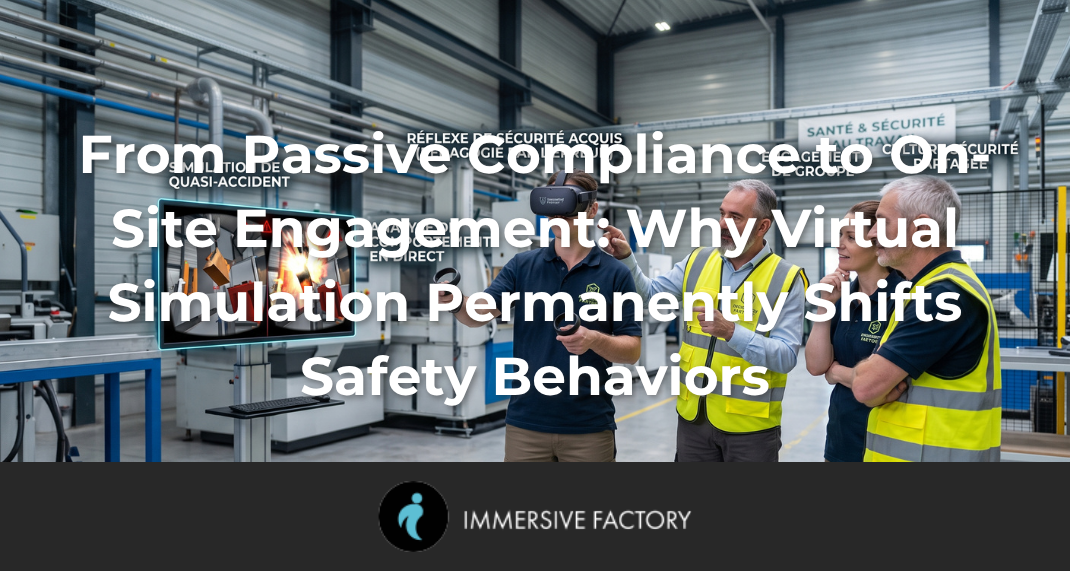
One of the greatest challenges for HSE managers is bridging the gap between knowledge and action. An employee might score 100% on a safety quiz, yet bypass a Lockout/Tagout (LOTO) procedure or skip harness attachment days later due to routine or production pressure.
Why do traditional safety courses struggle to drive long-term behavioral change? And how does virtual simulation transform passive compliance into proactive field engagement?
1. The Bottlenecks of Top-Down Safety Directives
Classroom slide decks and induction videos deliver rules, but rarely instil genuine conviction.
- Safety on Paper: When protocols are viewed strictly as administrative burdens, they collapse under everyday operational stress, deadlines, or fatigue.
- The Illusion of Competence: Memorizing a rule does not equate to understanding its life-saving value. Declarative memory fades quickly without active physical practice.
2. Error-Based Learning: Experiencing Hazards Without Consequences
Virtual Reality provides an unmatchable learning environment: the freedom to fail safely.
- Emotional Anchoring & Gut Reaction: Experiencing a scaffold tip-over, a chemical splash, or a forklift near-miss triggers a controlled adrenaline response. The brain logs the simulation as a genuine personal event.
- Muscle Memory & Reflexes: By observing the immediate consequences of an unsafe choice in VR, workers develop heightened hazard perception and naturally internalize proper safety reflexes.
3. Transforming Safety Talks & HSE Leadership
Virtual simulation also revitalizes daily site management and team debriefs:
- Experience-Led Conversations: Safety toolboxes transition from dry lectures to peer-to-peer discussions ("How did you react when the alarm sounded in the module?").
- Empowering HSE Facilitators: Safety leaders step away from punitive enforcement and adopt a constructive, coaching-oriented role.
Conclusion:
Virtual Reality doesn't replace human leadership—it creates the emotional spark required to evolve from passive compliance into an active, shared safety culture across all operations.

Geschrieben von Aurélie Tavernier
Marketing and Communications Manager at Immersive Factory
She became interested in raising awareness of health and safety at work, convinced that an approach tailored to employees can transform the safety culture and reinforce shared vigilance. Her ambition: to encourage all companies, whatever their size, to invest actively in health and safety prevention for the well-being of their employees.
Teilen
Das könnte Sie auch interessieren
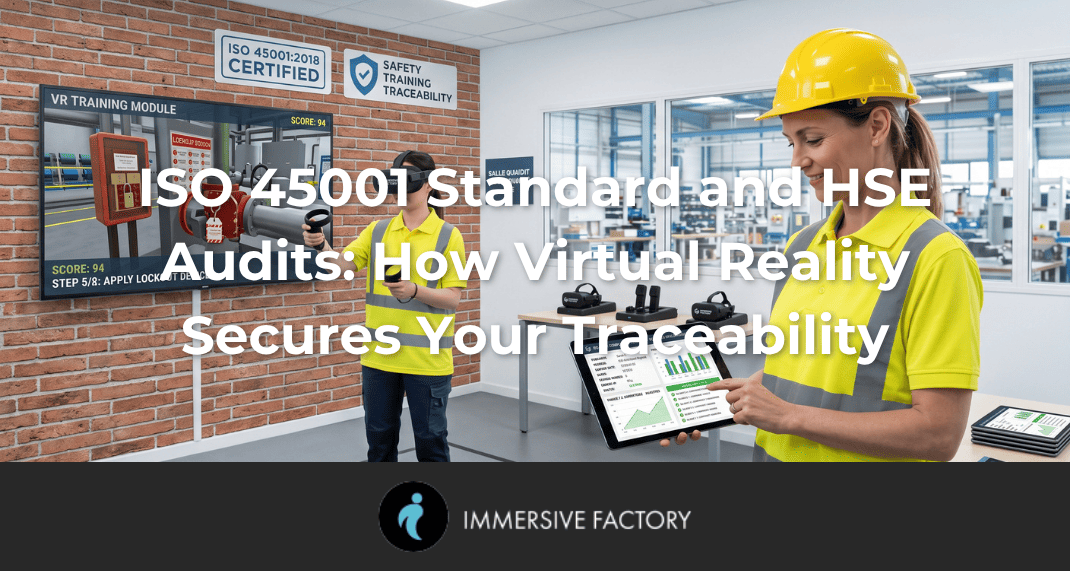
ISO 45001 Standard and HSE Audits: How Virtual Reality Secures Your Traceability
Prepare for your occupational health and safety audits with virtual reality. Discover how VR ensures the traceability of your HSE training.
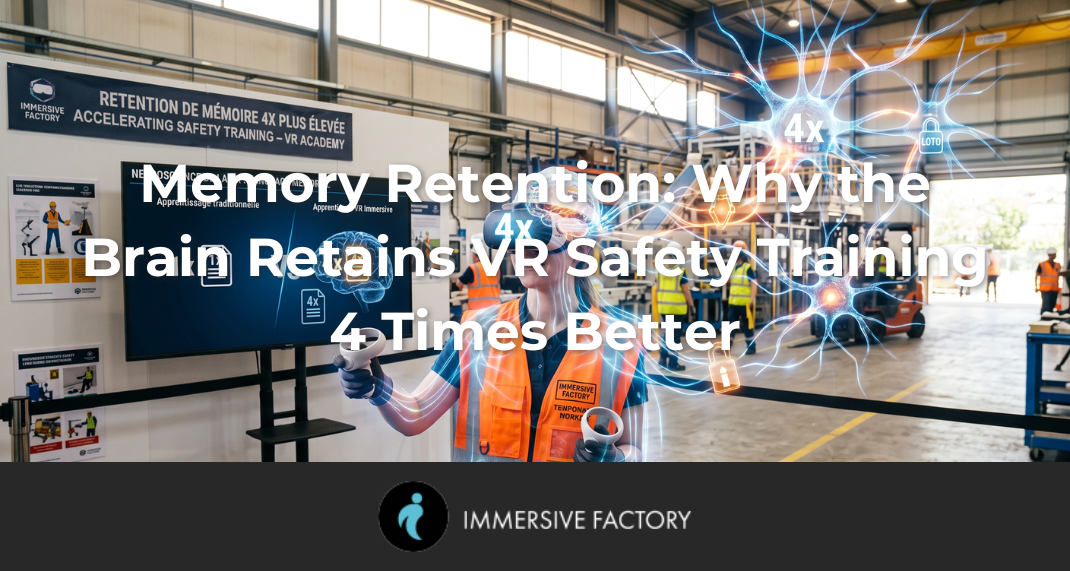
Memory Retention: Why the Brain Retains VR Safety Training 4 Times Better
Discover the neuroscience behind virtual reality: why memory retention and experiential learning make VR safety training up to 4 times more effective.
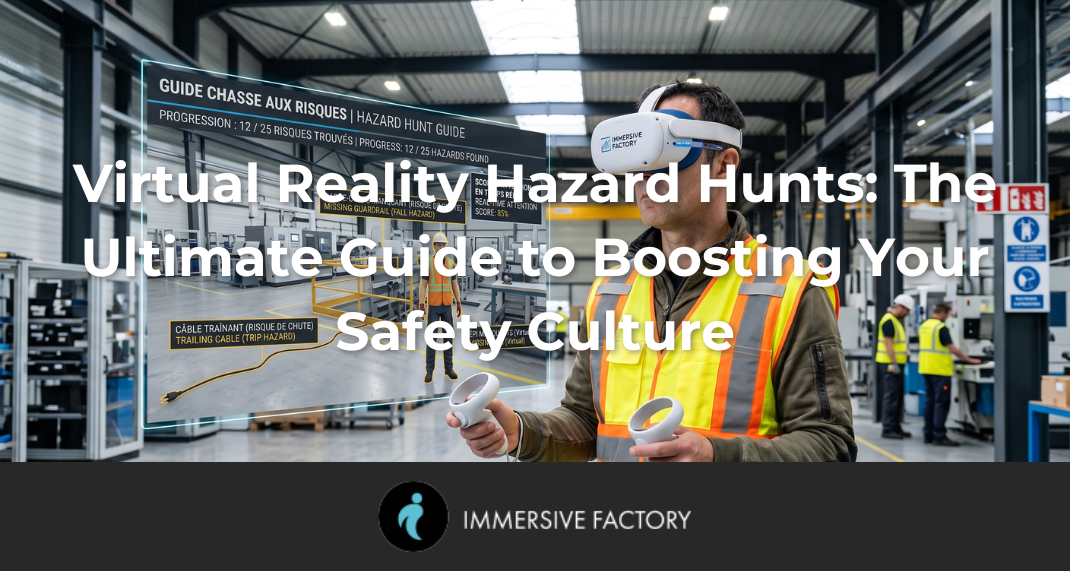
Virtual Reality Hazard Hunts: The Ultimate Guide to Boosting Your Safety Culture
The "Hazard Hunt" is a staple in HSE training. The goal is straightforward: to sharpen employees' critical eyes so they can proactively identify anomalies and dangerous situations in their work environment. It is the absolute f...