Becoming a Forklift Operator Through CACES 1, 3, and 5 Training
Becoming a Forklift Operator Through CACES 1, 3, and 5 Training
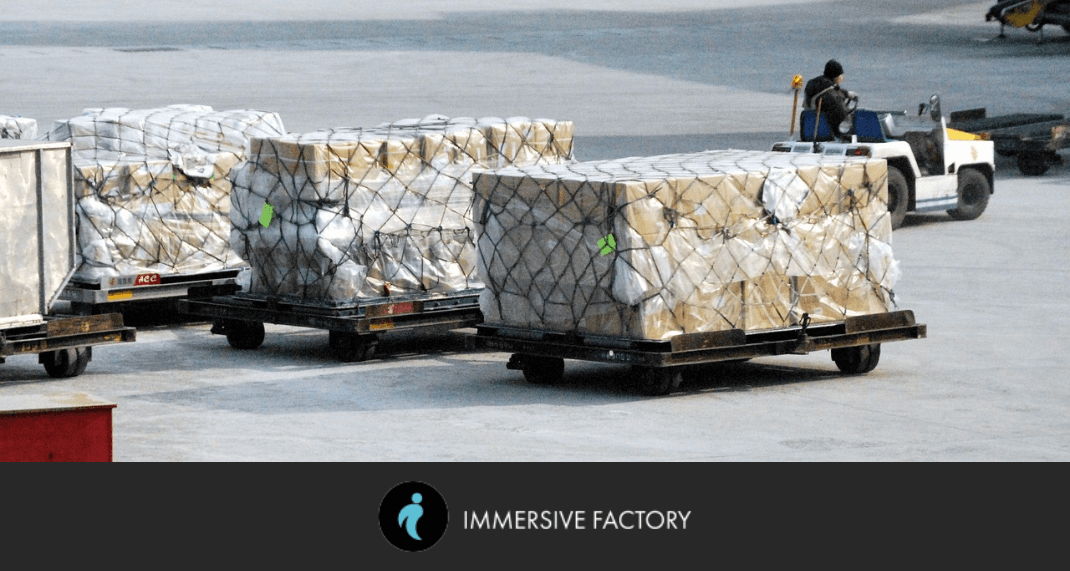
CACES 1 3 5 Training: Essential to Become a Forklift Operator
Many experts operate in the logistics sector. Indeed, for goods to be transported safely, they must follow a predefined path. Forklift operators are among the professionals involved in tracking them. What does this job involve and how can one get into it? Find out in this guide.
What is a Forklift Operator?
Also known as a warehouse operator or handling forklift operator, a forklift operator performs logistics tasks in a warehouse. Inventory management is one of his main responsibilities. This includes:
- Warehouse storage
- Loading and unloading goods (raw materials and finished products)
- Supplying manufacturing stations
While most of these tasks can be done manually, the forklift operator must use specific equipment to move heavy and fragile products. Therefore, this professional must know how to operate a motorized machine. Training in virtual reality is ideal for quickly mastering driving.
Profile of a Good Forklift Operator
The forklift operator works as part of a team in a lively environment. To perform his tasks correctly, he must be meticulous and organized. Goods should be distributed quickly and methodically to simplify future searches. The efficiency of the logistics service largely depends on the profile of the forklift operator. To improve his performance, a risk assessment at work can be organized.
The forklift operator must also have good team spirit. In addition to working with his peers, he often interacts with his supervisor. Also, since he might handle and transport hazardous products, he must follow safety rules.
Duties of a Forklift Operator
The forklift operator's duties can be summarized as follows:
Receiving Goods
He must be present when suppliers unload goods. His role is to ensure that these match the placed order. Then, he drafts related reception documents.
Handling and Storing Goods
Received goods must be transported using pallets and stored with a specific machine like a forklift. The warehouse forklift operator must ensure that the latter is suitable for the planned handling operation. Note that inventory management can be done using digital tools.
Loading Goods
He also handles the loading of goods into the truck when the carrier comes to pick them up. In doing so, he must ensure that the pallets are properly secured to guarantee the safety of the goods. Additionally, the forklift operator must identify anomalies in the products, storage areas, and load-bearing supports at all logistics stages.
Requirements to Enroll in the CACES 1 3 5 Training
It's entirely possible to become a forklift operator without a diploma. Even a high school diploma isn't required. However, you must have a CACES or Certificate of Aptitude for Safe Driving. It comes in three categories:
- CACES 1: For driving pallet trucks with onboard drivers and order pickers whose lift is less than 1 meter.
- CACES 2: For driving a forklift with a load capacity of up to 6 tons.
- CACES 3: Designed for retractable mast forklifts.
CACES 1 Training
The goal of this training is to enable candidates to know the conditions for driving the forklift on public roads and within their company. The certificate also attests that they can identify risks and operate the machines safely.
CACES 2 Training
The CACES 2 training aims at:
- Executing storage and destocking operations, vehicle loading, and load transfers.
- Mastering the driving of a forklift with an onboard driver.
- Ensuring first-level maintenance of the forklift and its accessories.
- Applying safety instructions on public roads and within the company.
CACES 3 Training
The educational objectives of CACES 3 are the same as those of CACES 2. However, it allows mastery of driving a counterbalance forklift with a load capacity of up to 6,000 kilograms.
To undergo the CACES 1 3 5 training, the candidate must be at least 18 years old and have a medical check-up at the occupational health service. He must be recognized as fit to drive heavy machines. Similarly, he must be able to read and write in French.
How Long is the CACES 1 3 5 Training?
The CACES 1 3 5 training lasts 35 hours in total. The CACES 1 takes place over 2 to 5 days and is provided by a CACES trainer. To obtain the certificate, the results must be positive, whether for the theoretical or practical part. In all cases, the training allows one to be autonomous in driving the three categories of equipment mentioned above.
How Long is the CACES 1 3 5 Valid For?
The CACES is valid for 5 years for machines belonging to the following 5 families:
- Mobile cranes
- Tower cranes
- Motorized handling forklifts with an onboard driver
- Mobile personnel lifting platforms
- Loading auxiliary cranes
It's valid for 10 years for construction machinery (R372m). Therefore, it's necessary to renew the training when required. In general, forklift operators choose to do so when they change work environments, when one of their equipment has been modified, or just before the CACES expires.
Trust Immersive Factory for Your Training
We offer virtual reality training to familiarize your teams with heavy machinery. Our goal is to help them optimize their efficiency and reduce the risks present in their work environment. For this, we set up personalized programs according to your needs and budget.
Virtual reality has become an essential tool for training employees. It allows creating realistic scenarios effortlessly. Moreover, it aids concentration and memorization. The experience will be optimal, as the places and objects with which participants interact are exactly like those they will use daily. Purely practical, virtual reality training offers only benefits.
Thanks to our team of experts, we can assist you in its implementation. For this, we take into account your expectations and goals.
Trust our expertise, and you will achieve significant savings.

Written by Aurélie Tavernier
Marketing and Communications Manager at Immersive Factory.
She became interested in raising awareness of health and safety at work, convinced that an approach tailored to employees can transform the safety culture and reinforce shared vigilance. Her ambition: to encourage all companies, whatever their size, to invest actively in health and safety prevention for the well-being of their employees.