Safety Onboarding (HSE): Why Virtual Reality is a Game Changer for New Hires
Safety Onboarding (HSE): Why Virtual Reality is a Game Changer for New Hires
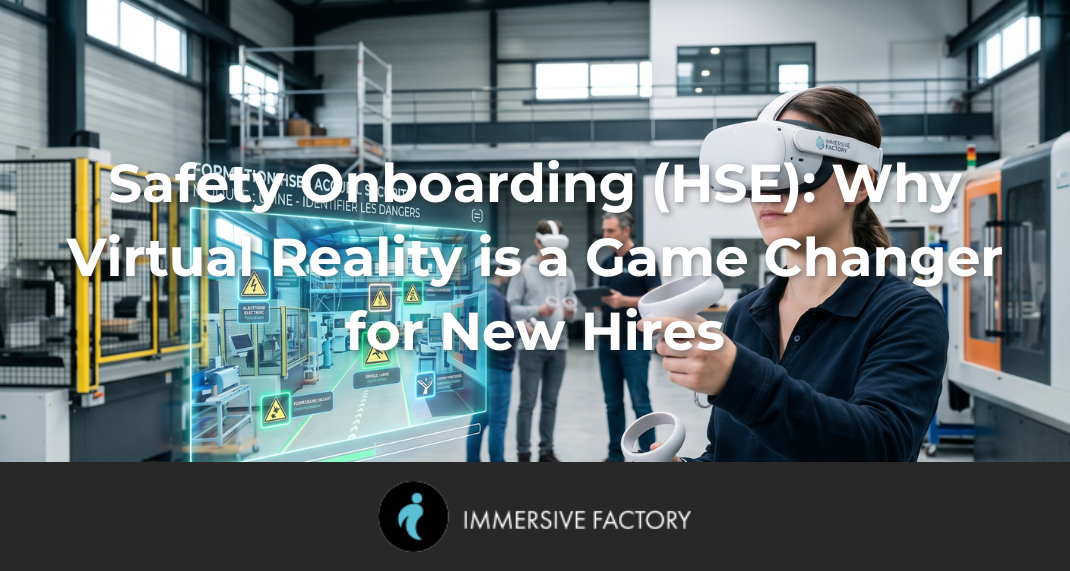
Summer is the perfect time for HSE and HR managers to prepare for the September onboarding season. Welcoming new employees, apprentices, interns, and temporary workers to the field is great news for business growth, but it also represents a period of peak vulnerability. Statistically, an employee is significantly more likely to suffer a workplace accident during their first few weeks on the job.
Faced with this challenge, the traditional paper "welcome booklet" or endless PowerPoint presentations are showing their limitations. To deliver truly impactful company safety onboarding, more and more safety professionals are turning to an innovative solution: Virtual Reality (VR).
Here is why VR is completely redefining HSE onboarding.
The Flaws of Traditional Safety Inductions
Too often, safety training for new arrivals feels like an administrative box-ticking exercise. Sitting in a meeting room, recruits sign stacks of documents and skim through a digital or physical safety handbook filled with complex regulations and rules.
The result? Information overload and very poor retention rates. Once they step out onto the actual shop floor or construction site—often a noisy, dynamic, and stressful environment—theoretical instructions are quickly forgotten. The consequences of poor HSE onboarding can be incredibly costly, both in human and financial terms.
Memory and "Learning by Doing": The Power of VR
This is where virtual reality steps in. Learning by doing is at the core of cognitive neuroscience: the human brain retains what it actively experiences far better than what it passively hears or reads.
By replacing the slide deck with a VR headset, you offer your new recruits a memorable experience:
- The right to make safe mistakes: Newcomers can operate virtual fire extinguishers, navigate a construction site, or interact with heavy machinery without any real-world risk.
- Total engagement: Cut off from external distractions (smartphones, background noise), the learner is 100% focused on their virtual environment.
- Emotions drive memory: VR triggers genuine emotional responses (surprise, a slight apprehension of heights, or a virtual hazard). Information linked to an emotion is anchored much more deeply in long-term memory.
What Does a Reimagined Safety Induction Day Look Like?
Picture the first day for your incoming September recruits. Instead of a purely theoretical morning, they are invited to an immersive workshop.
They put on a VR headset and are instantly transported into a digital twin of your factory or warehouse. Their mission? Identify danger zones, select the correct Personal Protective Equipment (PPE) to enter a specific area, or react to a chemical spill.
Not only does this gamified, interactive approach break the ice among new hires, but it also instantly boosts your employer branding. It sends a clear message: your company is modern, innovative, and genuinely invests in the safety of its teams.
Get ready for your next wave of new hires with Immersive Factory. Modernize your induction process and turn newcomers into proactive safety advocates with our multi-industry virtual reality modules.

Written by Aurélie Tavernier
Marketing and Communications Manager at Immersive Factory
She became interested in raising awareness of health and safety at work, convinced that an approach tailored to employees can transform the safety culture and reinforce shared vigilance. Her ambition: to encourage all companies, whatever their size, to invest actively in health and safety prevention for the well-being of their employees.
Share
Related articles
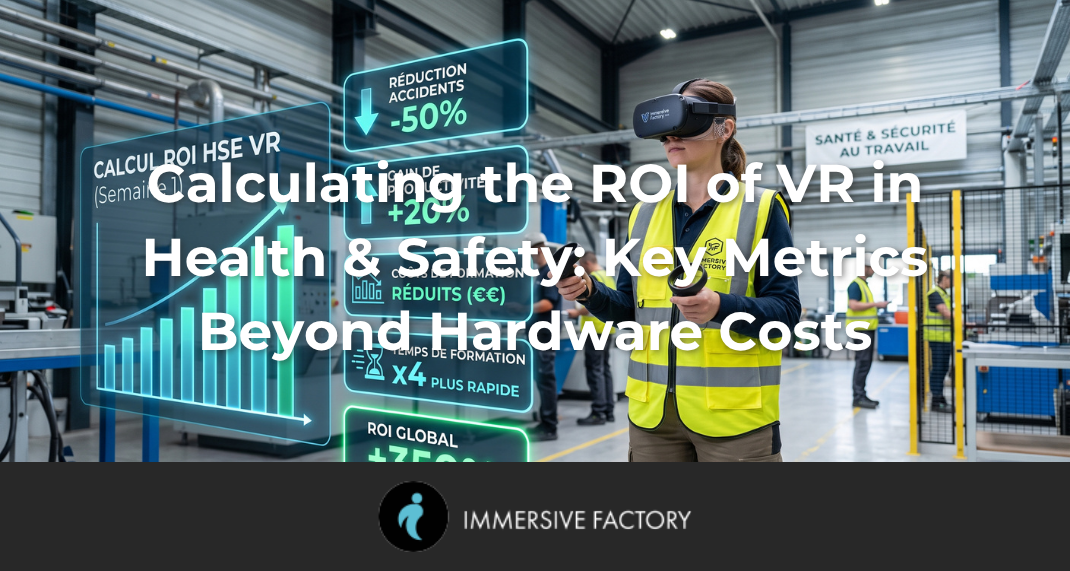
Calculating the ROI of VR in Health & Safety: Key Metrics Beyond Hardware Costs
Learn how to measure the true ROI of virtual reality in HSE safety training. Key metrics, hidden cost savings, and incident rate reduction.
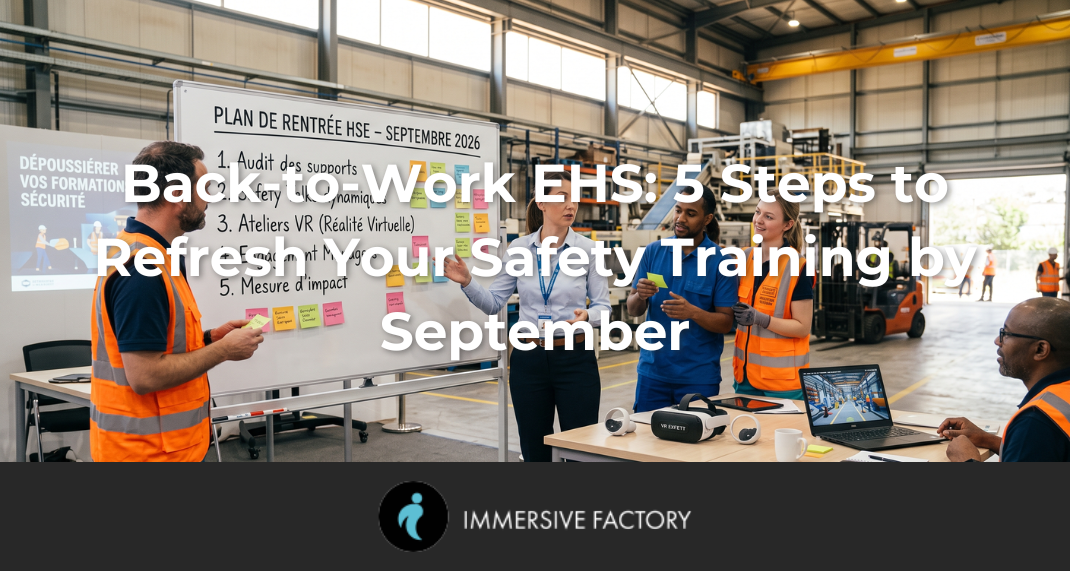
Back-to-Work EHS: 5 Steps to Refresh Your Safety Training by September
Gear up for the fall EHS restart! Discover 5 actionable steps to refresh your safety training, re-engage teams in September, and integrate VR.
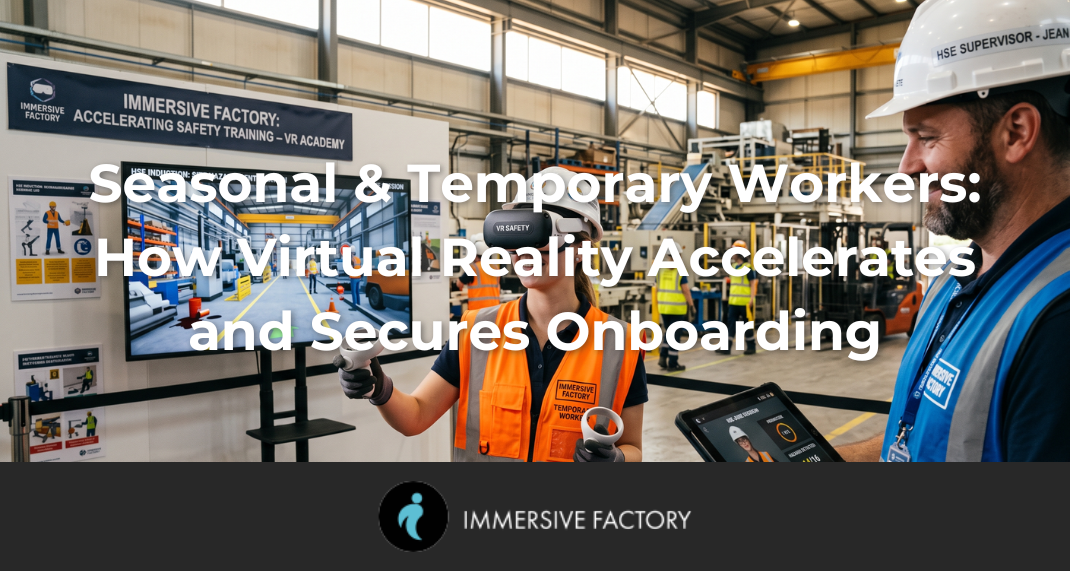
Seasonal & Temporary Workers: How Virtual Reality Accelerates and Secures Onboarding
Discover how virtual reality accelerates and secures EHS onboarding for seasonal and temporary workers. Reduce workplace risks from day one.