Calculating the ROI of VR in Health & Safety: Key Metrics Beyond Hardware Costs
Calculating the ROI of VR in Health & Safety: Key Metrics Beyond Hardware Costs
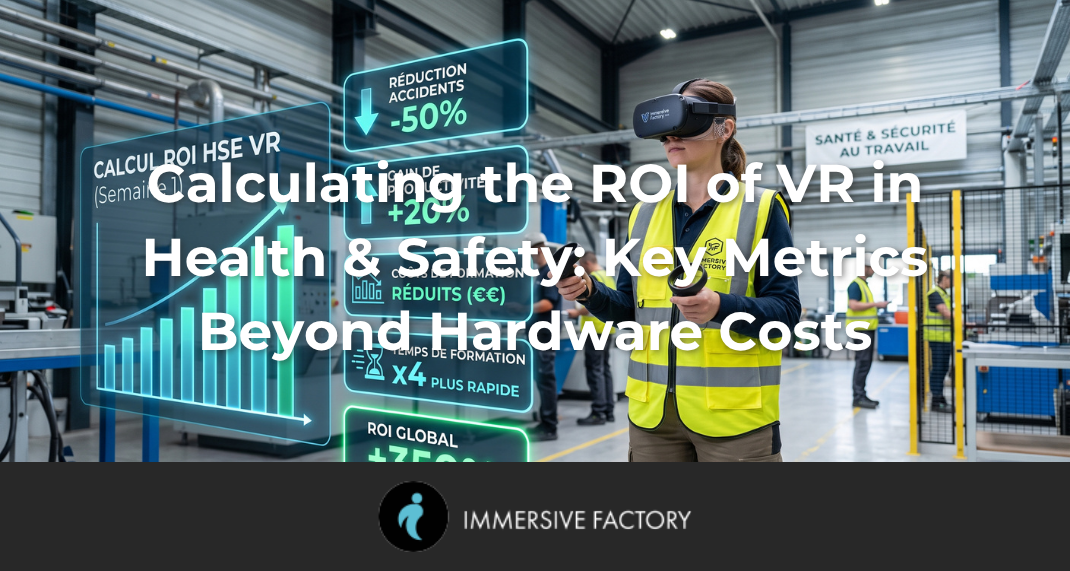
Adopting Virtual Reality (VR) for HSE training frequently hits a financial wall: upfront hardware costs. However, calculating the return on investment (ROI) of immersive learning based strictly on headset pricing is a fundamental accounting oversight. The true financial value lies in eliminating hidden operational expenses, optimizing training efficiency, and directly reducing workplace accidents.
1. Eliminating Hidden Training Logistics
- Zero Production Downtime: Halting heavy equipment or production lines for hands-on training interrupts operational yield. VR simulates industrial environments accurately without affecting active workflows.
- Travel & Facility Expenses: Virtual modules remove travel costs, accommodation, and external training facility rentals across distributed multi-site operations.
2. Accelerating Time-to-Competence
- Faster Completion Times: Employees complete training scenarios up to 4 times faster in VR than in traditional classroom settings, retaining critical safety protocols more effectively.
- Self-Paced Deployment: Standalone VR headsets allow quick refresher sessions during shift rotations, keeping personnel productive while maintaining strict compliance.
3. Financial Impact on Incident Rates
- Lower Accident Rates: Enhanced muscle memory directly lowers human error. Preventing a single lost-time incident saves substantial direct medical costs and indirect operational disruption.
- Reduced Equipment Wear: Practicing hazardous protocols virtually eliminates costly machinery damage often incurred during real-world training trials.
An HSE VR project is not merely a tech expense, but a driver of sustainable financial and human performance for your company.

Written by Aurélie Tavernier
Marketing and Communications Manager at Immersive Factory
She became interested in raising awareness of health and safety at work, convinced that an approach tailored to employees can transform the safety culture and reinforce shared vigilance. Her ambition: to encourage all companies, whatever their size, to invest actively in health and safety prevention for the well-being of their employees.
Share
Related articles
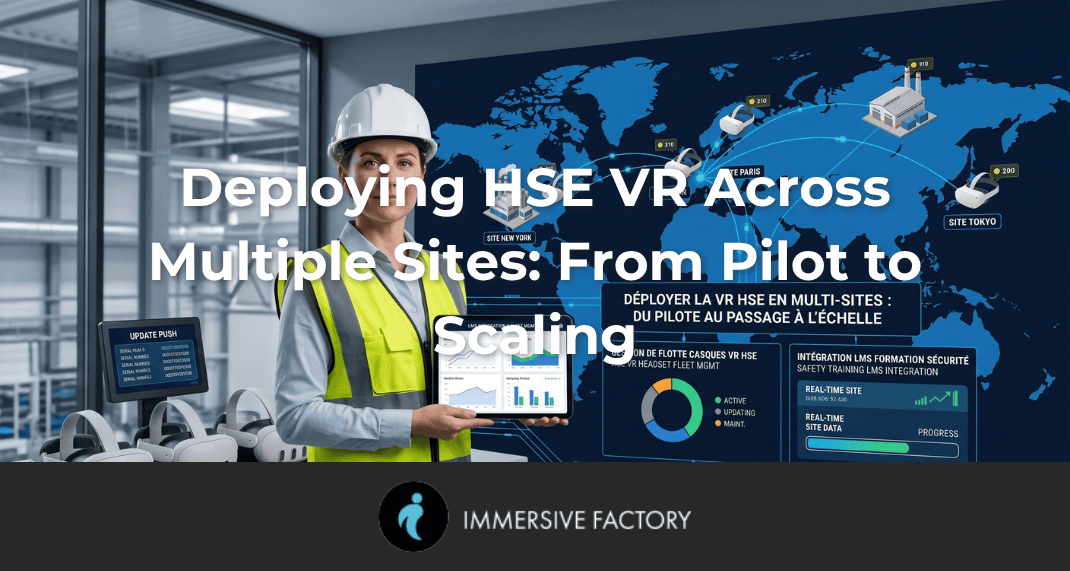
Deploying HSE VR Across Multiple Sites: From Pilot to Scaling
Discover how to successfully scale enterprise virtual reality for multi-site safety training: fleet management, LMS integration, and local adoption.
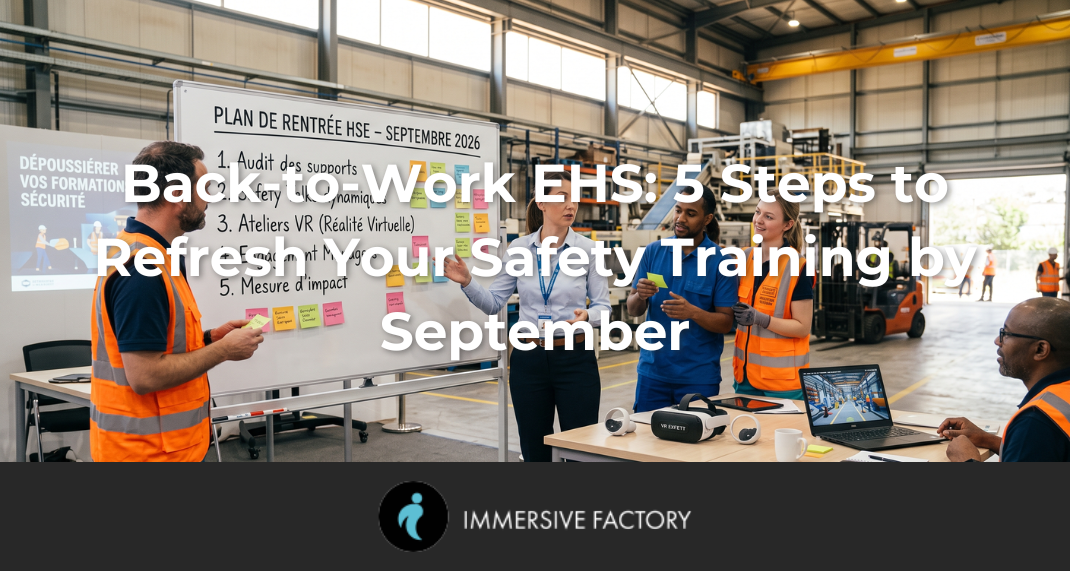
Back-to-Work EHS: 5 Steps to Refresh Your Safety Training by September
Gear up for the fall EHS restart! Discover 5 actionable steps to refresh your safety training, re-engage teams in September, and integrate VR.
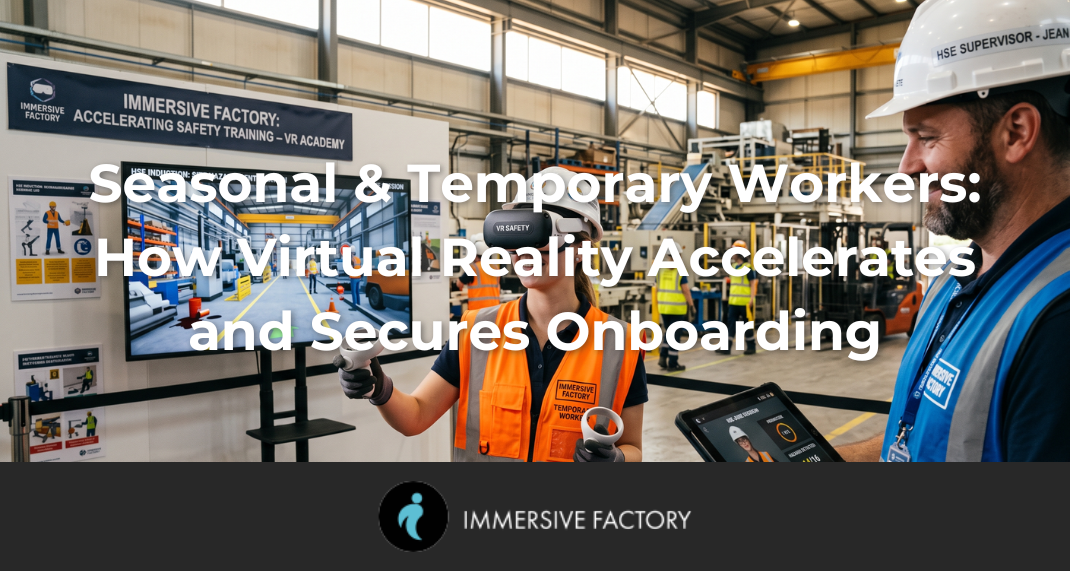
Seasonal & Temporary Workers: How Virtual Reality Accelerates and Secures Onboarding
Discover how virtual reality accelerates and secures EHS onboarding for seasonal and temporary workers. Reduce workplace risks from day one.