Virtual Reality and Its Use in the Professional World
Virtual Reality and Its Use in the Professional World
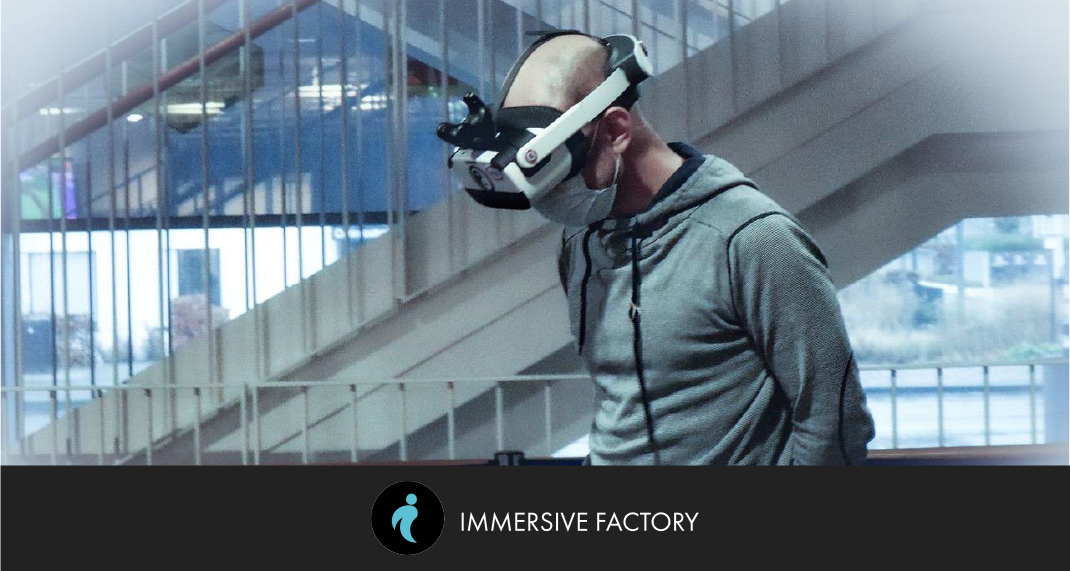
Industrial risk hunting: a process targeting safety.
Virtual reality holds great potential for professional training. Recognized as an educational tool, it offers numerous solutions to companies seeking innovation and efficiency. Indeed, it ensures better learning for trainees and employees, in addition to making training more interesting. So, what role does it play in this process?
What is industrial risk hunting?
Industrial risk hunting, also called anomaly hunting, is a prevention tool against hazards in a workplace. It aims to identify irregularities in a work environment to understand best practices and risks. Its ultimate goal is the reduction of company accidents.
The traditional risk hunting process
Traditional risk hunting can take two forms:
- Paper-based risk hunting
- Escape game risk hunting
Paper-based risk hunting
In this scenario, players must spot the error in a real photo. The goal is to identify improper equipment or practice. The hunt is led by a facilitator who will validate answers and guide participants towards risky situations.
Escape game risk hunting
This often takes place duringhospital training. Participants must identify anomalies in a patient's room, such as a missing patient file or an empty IV. This real immersion allows trainees to more easily apply practices daily.
Advantages of this method
Traditional risk hunting offers many benefits:
- It's a potent tool: effective for professional risk prevention. Indeed, it addresses health and safety issues in a unique and efficient way.
- Improves participant skills
- Encourages engagement and reflection
- Allows everyone to freely express their ideas.
- Sharpens employees' senses.
Note that industrial risk hunting using virtual reality is even more beneficial for companies. The immersive VR specialist will be your partner in this approach.
When is it used?
Work-related risk hunting can be used:
- During the onboarding of newcomers (employees, trainees, or temporary workers)
- During a safety day
- During a 15-minute safety session
- During a prevention challenge
- During prevention training
Work Accidents in Industry
Work accidents are more common in some sectors than others in France. However, the number tends to stabilize or even decrease, mainly due to awareness of employee safety issues. Common workplace accidents include falls, handling, not wearing personal protective equipment, and misuse of tools. These have consequences on employees' lives and the company's overall activity.
Professional Accidents in Figures
While the annual number of work accidents was just under a million in the 1950s, it has now halved, mainly due to stricter regulations and better-secured equipment. For example, in 2020, 540,000 people were victims of work accidents. 550 of them were fatal.
Employer Responsibilities
The employer is held primarily responsible for workplace accidents, as they must implement safety measures to ensure employee safety. However, a third party's responsibility can also be fully or partially engaged by a transaction or court decision.
Solutions to Reduce Accidents
Various solutions can be considered to limit workplace accidents:
- Training
- Promoting a safety culture and sense of responsibility
- Protecting and securing machines
- Implementing a code of conduct for machinery
- Establishing a prevention plan
- Analyzing previous accidents
- Vehicle check-ups
- Using artificial intelligence.
Main Causes of Accidents in Industry
Industrial sector work accidents are typically caused by slips, trips, and falls, handling, falling from heights, moving masses, and using various tools.
VR Training: An Undeniable Advantage
What are VR and VR training?
Virtual Reality or VR refers to a set of devices that digitally simulate a specific environment, allowing one or more people to immerse themselves in an artificial world.
VR training or training in virtual reality is done through a VR headset. The employee or trainee faces a simulated danger situation or is immersed in a case study. They must then make the best decisions to reduce accident risks.
Advantages of VR Training
VR training has numerous benefits for both employers and employees:
- Requires few resources
- Is quick to set up; a small room is enough for training
- Is individualized, so the employee gets better training
- Ensures better results
- Is safer, as dangerous situations are imagined, avoiding unnecessary risks.
Groups Using VR
Companies preferring VR training over traditional training include the logistics multinational UPS, General Motors, Walmart, KFC, and Audi.
Using VR to Limit Workplace Accident Risks
Virtual reality can help ensure staff safety at work. Immersion allows participants to be in the best conditions to memorize useful information for risk prevention. All real-world distractions are removed, accelerating learning.
Like traditional training, VR training can occur during a safety day, safety quarter-hour, a situation assessment, or risk hunting. It diversifies workshops, making learning more interesting for participants.
VR training proves very effective, and VR headsets are playful work tools, making situations more enjoyable for employees. They will be more focused and receptive, ensuring better learning results. Moreover, situations can be repeated as often as necessary until the training goal is met.
Given the high risk of industrial accidents, VR training is a good alternative to reduce or avoid them. It can be broadly and easily deployed in any sector.
Industrial Risk Hunting Training with Immersive Factory
Immersive Factory offers VR safety training to help companies reduce accident risks at their workplaces.
Why choose Immersive Factory?
Our HSE VR trainings will immerse your teams in a safety culture. Here are all the benefits we offer:
Personalized support
We can guide you in setting up your virtual campus or VR training.
Tailored advice
We offer various exercises and subscription formulas and advise on choices best suited for your company and your goals.
Employee Training
We teach your teams how to handle VR headsets and apprehend 3D environments.
Unique Expertise
Several professionals will assist you in designing immersive, fun, and creative training programs that match your educational intentions. These include technical advisors, researchers, and educational engineers.
Custom Creations with Our Experts
We create content with the support of our contributors, who are major industrial companies. We ensure compliance with regulatory monitoring during this process.
Pedagogical Expertise
Our teams strive to help you set up VR training tailored to your needs and your sector's expectations. We focus on immersive learning and active pedagogy, not forgetting playful tools.
Benefits of Immersive Factory Training
Our VR training offers many benefits for companies wanting to implement risk prevention measures:
- More effective learning: participants experience risks in real-world conditions. They will be fully focused and learn faster.
- Better memorization: the training is interesting on several levels, piquing employees' interest, which allows them to better memorize data.
- Decision-making training
- Exposure to risk situations: the best way to understand the general principles of health and safety at work
- Endless learning pathways
- Innovative HSE exercises: like serious games, quizzes, as well as hunting and identifying risks.

Written by Aurélie Tavernier
Marketing and Communications Manager at Immersive Factory
She became interested in raising awareness of health and safety at work, convinced that an approach tailored to employees can transform the safety culture and reinforce shared vigilance. Her ambition: to encourage all companies, whatever their size, to invest actively in health and safety prevention for the well-being of their employees.
Share
Related articles
ISO 45001 Standard and HSE Audits: How Virtual Reality Secures Your Traceability
Prepare for your occupational health and safety audits with virtual reality. Discover how VR ensures the traceability of your HSE training.
From Passive Compliance to On-Site Engagement: Why Virtual Simulation Permanently Shifts Safety Behaviors
Discover how VR shifts safety culture in industrial workplaces. Explore error-based learning, emotional risk awareness, and interactive safety talks.
Memory Retention: Why the Brain Retains VR Safety Training 4 Times Better
Discover the neuroscience behind virtual reality: why memory retention and experiential learning make VR safety training up to 4 times more effective.