The Bradley Curve: An Essential Tool for Improving Workplace Safety Culture
The Bradley Curve: An Essential Tool for Improving Workplace Safety Culture
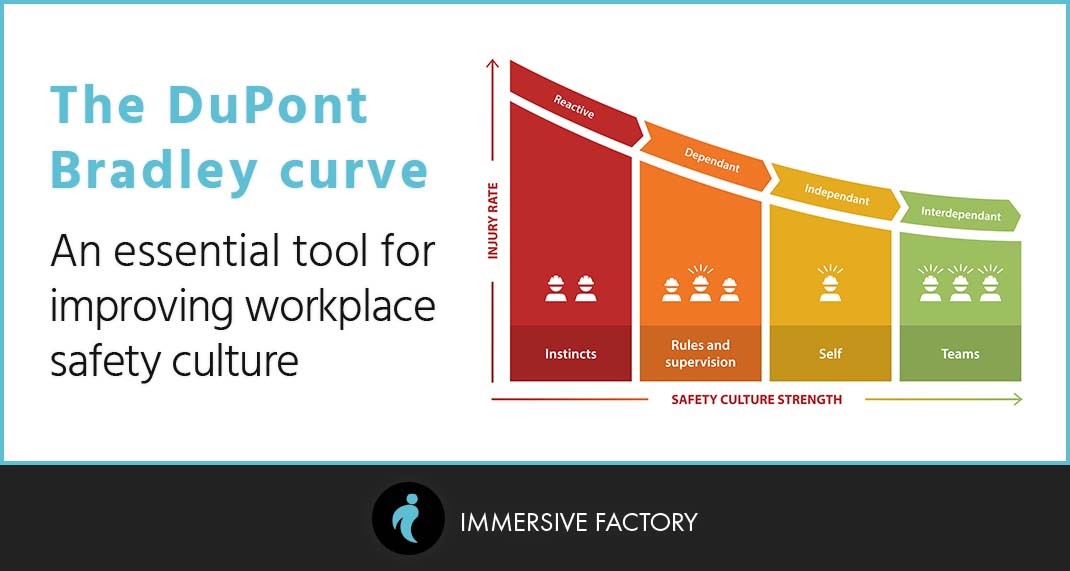
The Bradley Curve is an effective tool for evaluating and improving a company's occupational health and safety policy. Created by Vernon Bradley in 1994 for the Dupont group, this curve allows a company to position itself in its journey towards developing a robust and proactive safety culture.
The Four Stages of the Bradley Curve
The Bradley Curve outlines the progression of companies in four distinct stages:
- Reactive: At this stage, the accident rate is at its highest, and risk prevention is ineffective. Employees are not engaged in risk awareness, and the company only implements legally required measures without any follow-up or continuous improvement.
- Dependent: The accident rate begins to slightly decrease. Employees strictly follow orders without questioning them, and all responsibilities rest on the safety manager.
- Independent: Employees are empowered and actively involved in risk prevention, leading to a significant reduction in workplace accidents. A genuine safety strategy is implemented, accompanied by effective communication between employees and managers.
- Interdependent: Employees become proactive in their safety, fully engaging and collaborating to achieve the goal of zero accidents. Risk prevention becomes a fundamental component of the corporate culture.
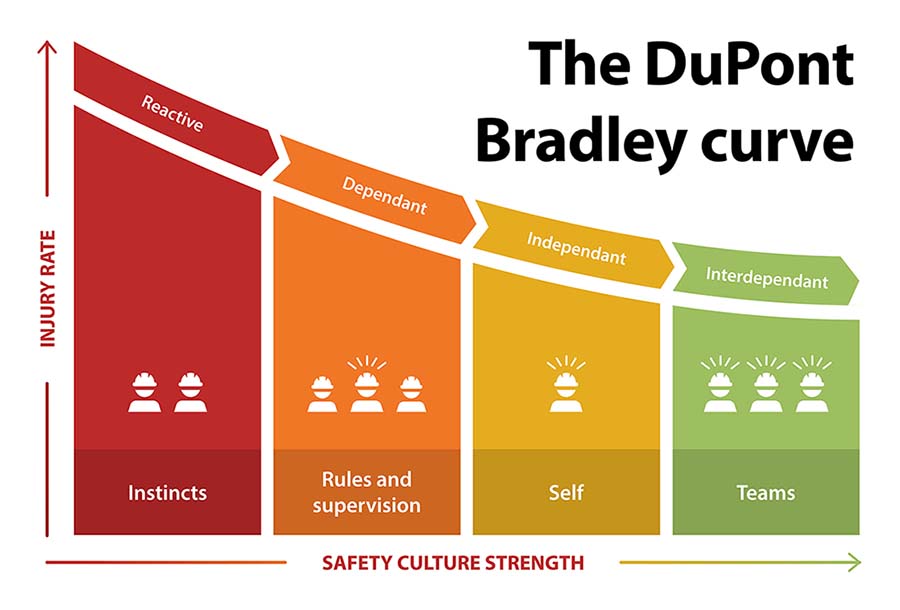
Each stage represents a level of employee involvement and mindset regarding workplace safety. On the y-axis, we see the workplace accident rate, while the x-axis shows the evolution of behaviors and safety culture within the company.
How to Reach the Interdependent Stage
To reach the final stage of the Bradley Curve, specific tools and strategies must be implemented. Numerous companies specializing in various fields offer support to progress in this approach.
Immersive Factory: A Partner to Reach Interdependence
Immersive Factory offers a comprehensive catalog of innovative, immersive, and engaging virtual reality exercises designed to help companies advance to the interdependent stage. Our exercises enable employees to become proactive in their own awareness, practice their safety culture safely, and work together to enhance shared vigilance.
With our various offers, you can benefit from our solution year-round, unlimited. Our programs are designed to integrate safety into employees' daily practices, making risk prevention an integral part of professional life.
Conclusion
The Bradley Curve is an indispensable tool for any company seeking to improve its safety culture and reduce workplace accidents. By progressing through the four stages—reactive, dependent, independent, and interdependent—companies can transform their safety approach and create a work environment where every employee feels responsible and engaged.
For more information on how Immersive Factory can support your company in this evolution, please contact us. Together, we can create a safer and more risk-aware workplace.

Written by Aurélie Tavernier
Marketing and Communications Manager at Immersive Factory
She became interested in raising awareness of health and safety at work, convinced that an approach tailored to employees can transform the safety culture and reinforce shared vigilance. Her ambition: to encourage all companies, whatever their size, to invest actively in health and safety prevention for the well-being of their employees.
Share
Related articles
Deploying HSE VR Across Multiple Sites: From Pilot to Scaling
Discover how to successfully scale enterprise virtual reality for multi-site safety training: fleet management, LMS integration, and local adoption.
Calculating the ROI of VR in Health & Safety: Key Metrics Beyond Hardware Costs
Learn how to measure the true ROI of virtual reality in HSE safety training. Key metrics, hidden cost savings, and incident rate reduction.
Back-to-Work EHS: 5 Steps to Refresh Your Safety Training by September
Gear up for the fall EHS restart! Discover 5 actionable steps to refresh your safety training, re-engage teams in September, and integrate VR.