Legal Challenges in Occupational Risk Prevention: How Virtual Reality Training is Transforming Workplace Safety
Legal Challenges in Occupational Risk Prevention: How Virtual Reality Training is Transforming Workplace Safety
Understanding the Legal Stakes of Occupational Risk Prevention.
Occupational risk refers to any work-related situation that could endanger an employee's health. Prevention involves anticipating or eliminating these hazards through appropriate actions. Companies play a key role in managing workplace safety. According to Article L421-1 of the French Labor Code, employers must take all necessary measures to ensure the safety and protect the physical and mental health of their employees. But what exactly are the legal implications of this obligation? Let's break it down.
Legal Obligations of Companies in Risk Prevention
The Legal Framework
As mentioned, workplace health and safety are governed by the Labor Code, underscoring the legal stakes involved in risk prevention. Employers are required to implement risk prevention measures, organize safety days to raise team awareness, and establish an appropriate structure and resources.
Employers have several legal responsibilities:
- Risk assessment, documented in the DUERP (Document for the Evaluation of Occupational Risks)
- Employee training on safety protocols and best practices
- Implementation of appropriate preventive measures
Penalties for Non-Compliance
Failure to meet legal obligations regarding health and safety at work can lead to hefty administrative fines, ranging from €2,000 to €10,000per affected employee. Additionally, victims can terminate their employment contracts and bring the case to labor courts to seek compensation. To avoid these consequences, companies should regularly promote a prevention culture, such as organizing a safety day.
Legal Risks Associated with Occupational Risk Management
Examples of Legal Disputes from Work Accidents or Occupational Illnesses
Common legal actions include:
- Claims for damages
- Lawsuits for gross negligence
- Failure to assess workplace risks
- Moral harassment
- Lack of adequate preventive measures
Liability for Safety Failures
If employers fail to meet their safety obligations, they face severe sanctions, even in the absence of actual harm. If negligence occurs, civil liability may be invoked, and the employer may be required to compensate the victim. In cases of legal infractions, criminal liability can apply, leading to fines and even prison sentences.
Managing Psychological and Stress-Related Risks at Work
Psychological risks, such as moral or sexual harassment, pressure, and burnout, are increasingly recognized in labor law, though they are often invisible. To manage them effectively, employers must ensure a healthy and respectful work environment. They are also required to conduct awareness campaigns and training programs. Failure to meet these obligations can result in legal action.
Innovation in Prevention: Virtual Reality as a Training Tool
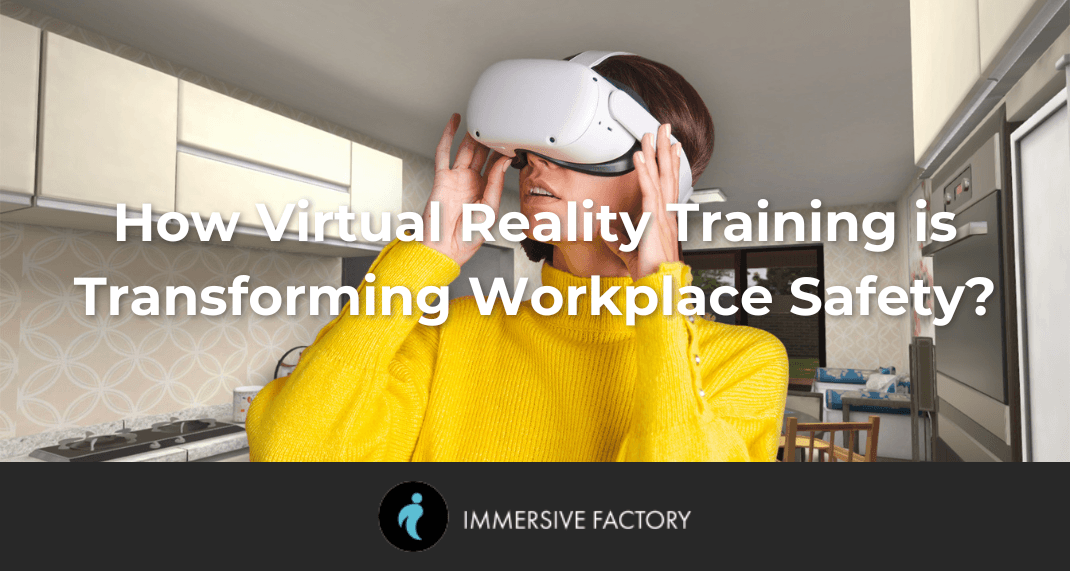
Faced with the legal challenges of occupational risk prevention, virtual reality (VR) stands out as a powerful tool to enhance workplace safety. VR training provides a fun, engaging, and immersive learning experience that offers many advantages.
Benefits of Virtual Reality
Virtual reality is highly effective for simulating hazardous situations with no real danger. This tool can recreate various scenarios to train employees in identifying and responding to risks. These role-playing experiences help raise awareness of daily workplace hazards. VR training also promotes hands-on learning, which leads to better knowledge retention than theoretical methods.
Participants can repeat the sessions until they master the correct responses. They can also make mistakes safely, as the scenarios, while realistic, remain entirely fictional.
Immersive Factory: Innovative VR Training for Occupational Risk Prevention
Immersive Factory: A Specialist in Virtual Reality Training
Immersive Factory offers innovative VR-based training solutions for companies. Our modules cover a wide range of industries—construction, manufacturing, food processing, healthcare, pharmaceuticals, and more. Developed by safety experts, they align with current legal requirements and are tailored to address the legal challenges of occupational risk prevention.
How Immersive Factory Supports Safety Day Events
We help companies organize interactive safety days by first teaching employees how to use VR headsets and accessories. We then immerse participants in realistic virtual scenarios. This innovative, hands-on approach boosts employee engagement and increases their awareness of safety issues.
The Benefits of Immersive Learning
Immersive learning leads to higher information retention, as employees do more than just read manuals or watch presentations—they actively participate in training sessions. This allows them to better understand and anticipate potential hazards.
Research shows that VR-based training increases knowledge retention by up to 70% compared to traditional methods. As a result, it helps strengthen the company’s safety culture and significantly reduces the risk of workplace accidents and occupational diseases.

Written by Aurélie Tavernier
Marketing and Communications Manager at Immersive Factory.
She became interested in raising awareness of health and safety at work, convinced that an approach tailored to employees can transform the safety culture and reinforce shared vigilance. Her ambition: to encourage all companies, whatever their size, to invest actively in health and safety prevention for the well-being of their employees.