Workplace Accidents: The Government Reinforces Penal Response for Better Prevention
Workplace Accidents: The Government Reinforces Penal Response for Better Prevention
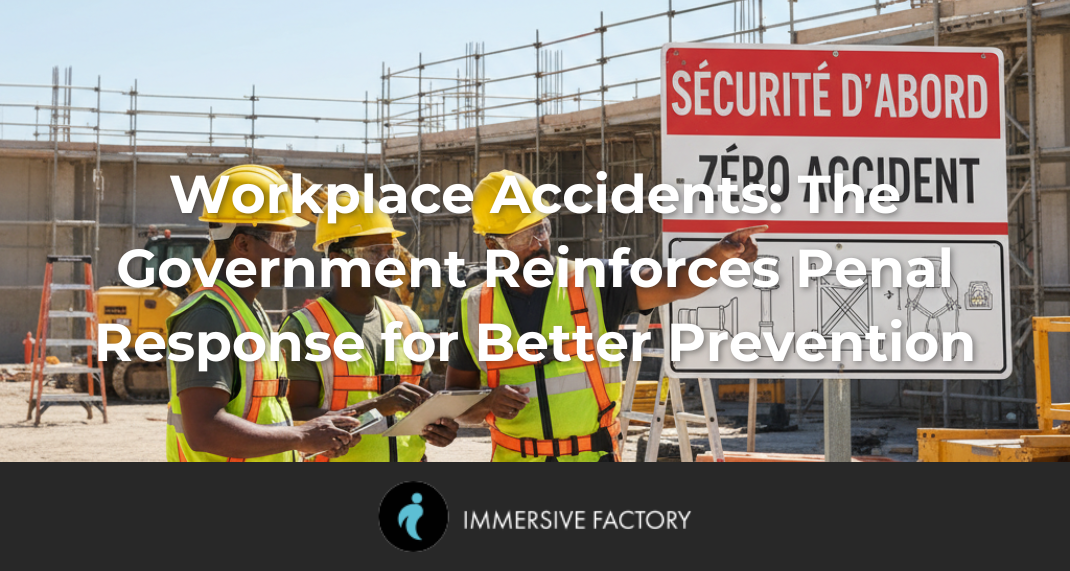
In an effort to curb the stagnation of serious and fatal workplace accidents (SFWAs) in France, the Ministries of Labor and Justice have signed a joint directive. The goal is clear: to improve cooperation between the Labor Inspectorate and the justice system to more strictly penalize failures to comply with health and safety obligations in the workplace.
This new measure, presented by Astrid Panosyan-Bouvet (Minister of Labor and Employment), Gérald Darmanin (Minister of Justice), and Catherine Vautrin (Minister of Labor, Health, and Families), is part of a broader plan to prevent SFWAs. After decades of decline, the figures are alarming: more than two deaths and 100 serious injuries occur daily in the workplace.
The directive responds to a strong demand from victims and their families for faster justice and better support. It is the result of collaborative work between the General Directorate for Labor (DGT) and the Directorate of Criminal Affairs and Pardons (DACG).
Three Major Axes for a More Effective Penal Policy
The directive is structured around three key points:
1. Enhanced Mobilization of Prevention Tools
The Labor Inspectorate is encouraged to issue citations for violations that endanger workers, even if an accident has not yet occurred. This includes risks of falls from height, the use of non-compliant equipment, or a lack of training. The directive also emphasizes the use of penal transactions, which allow a company to pay a fine and rectify its situation by taking the necessary corrective measures, thereby avoiding legal prosecution.
2. A Firmer and Broader Penal Response
In the event of a serious or fatal accident, the justice system will no longer solely target the employer. Criminal investigations will now extend to all involved parties, including contracting authorities and project owners, if their negligence is a factor. To speed up proceedings, increased coordination is planned, notably through the joint referral of cases to the Labor Inspectorate and judicial police services as soon as an investigation is opened.
3. Better Support for Victims and Their Families
The state is committed to being more attentive to accident victims and their relatives. The directive provides for the strengthening of partnerships between public prosecutors' offices and victim support associations for immediate and appropriate care. The Labor Inspectorate will also be responsible for informing victims about their rights and directing them to suitable support structures.
A Moral Imperative and an Avoidable Fatality
As the signatory ministers point out, workplace accidents are not an inevitability. They are too often the result of a lack of prevention, insufficient training, or a flawed chain of responsibility, particularly in long subcontracting chains.
This new directive aims to make justice faster and more humane for victims while sending a strong message to companies: worker safety is an imperative, and failures will not go unpunished.

Written by Aurélie Tavernier
Marketing and Communications Manager at Immersive Factory
She became interested in raising awareness of health and safety at work, convinced that an approach tailored to employees can transform the safety culture and reinforce shared vigilance. Her ambition: to encourage all companies, whatever their size, to invest actively in health and safety prevention for the well-being of their employees.
Share
Related articles

Deploying HSE VR Across Multiple Sites: From Pilot to Scaling
Discover how to successfully scale enterprise virtual reality for multi-site safety training: fleet management, LMS integration, and local adoption.
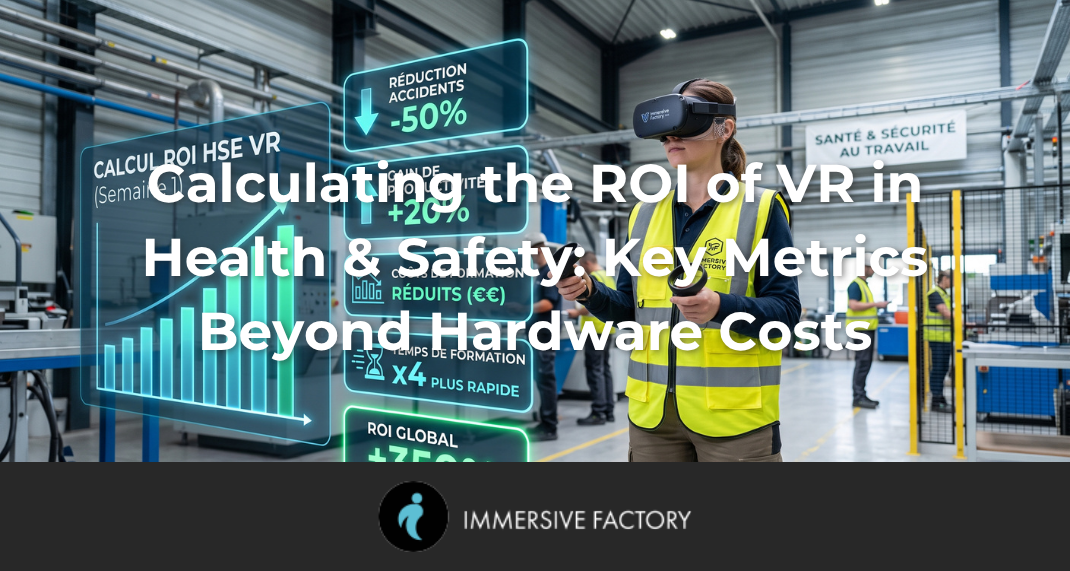
Calculating the ROI of VR in Health & Safety: Key Metrics Beyond Hardware Costs
Learn how to measure the true ROI of virtual reality in HSE safety training. Key metrics, hidden cost savings, and incident rate reduction.
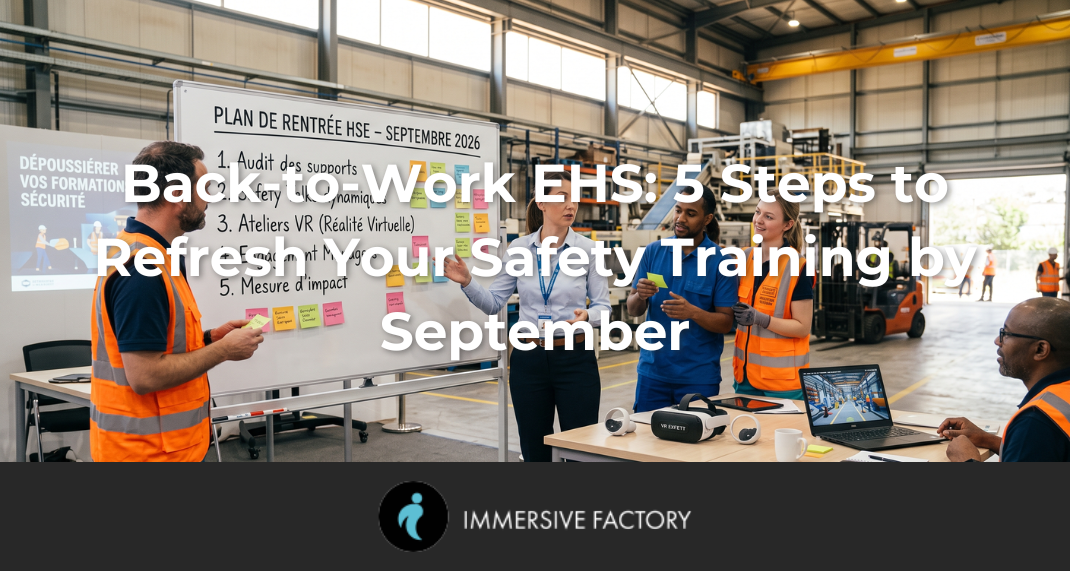
Back-to-Work EHS: 5 Steps to Refresh Your Safety Training by September
Gear up for the fall EHS restart! Discover 5 actionable steps to refresh your safety training, re-engage teams in September, and integrate VR.