Safety Prevention Pans: 7 Steps to Strengthen Workplace Protection
Safety Prevention Pans: 7 Steps to Strengthen Workplace Protection
Safety Prevention Systems: 7 key steps for the company.
Summary: Nothing is fixed, safety is transforming
- Safety prevention infiltrates everywhere: nothing is ever taken for granted; a forgotten fire extinguisher is enough to remind us that danger loves routine. Yes, even if the PowerPoint is left open in the corner of the screen.
- Systems change their face according to the sector: factory, office, large hall—there is no single recipe, just shifting terrain, a thousand stories to tell, where every rule is negotiated between colleagues.
- Training is never just a formality: because without sharing and questioning, it is impossible to avoid surprises... or collective blunders. The team? They make the difference, even when struggling.
It often starts without you noticing. You hear a siren, you pass an extinguisher left there, you read a procedure taped to the wall. You think you know, you tell yourself it’s obvious, and yet safety prevention will always surprise you. Routine fades quickly when risk bursts in. The company stays up late; it never really sleeps, but danger doesn't snooze either. You could call upon an expert for a Safety Day.
Indeed, it emerges around a corridor corner, it reminds you of its presence without warning, it upsets normality. The prevention plan does not stay hidden under a pile of paperwork; you breathe it everywhere around you, it becomes almost tangible. You modify the Single Risk Assessment Document (DUERP), and suddenly everything changes; you understand that it structures a universe, it often saves what is precious to you, it requires you to question yourself. Thus, safety training appears to you as a breath of air; it imposes itself, it infiltrates your reflexes and your technical language. This will also be the opportunity to organize a Hazard Hunt.
The jargon sometimes catches you off guard; it seems rigid or severe, but you discover that the security agent accreditation opens doors, that this whole system is born of necessity, that every regulatory layer has its history, that ultimately nothing happens by chance. Perhaps one day, for you too, everything will become crystal clear during that famous Safety Day which reveals your blind spots and false certainties.
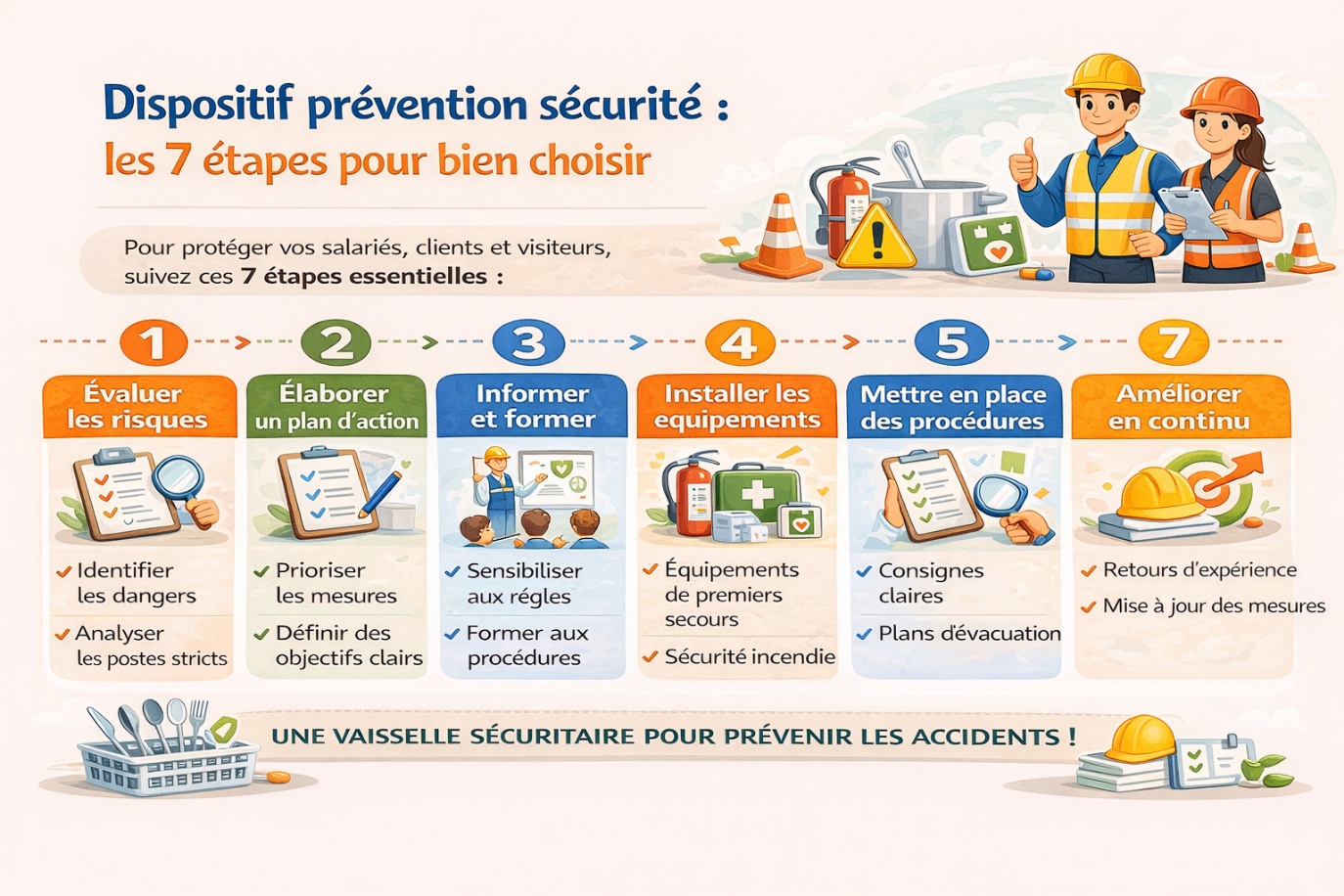
The Landscape of Workplace Safety Prevention Systems
You come across these notions and wonder what they truly embody. Systems do not live only in texts; they weave the reality of daily life.
The Definition of Safety Prevention Systems
You always use these words, system, prevention, safety, without paying too much attention. Yet, each carries its own weight; none fades before the other, and you feel it especially in action. Sometimes, the prevention system takes you through planning; it anticipates what you do not suspect. The other, the safety system, throws itself into the arena when you no longer control anything.
You feel the nuance, not always simple, but everything converges towards one intention: to protect differently. Technique, culture, everything is orchestrated, but the essential lies in the capacity to evaluate, guarantee, and organize—you verify this quickly at the heart of your trade.
The Main Families of Systems Adapted to the Professional World
It is fascinating, actually, to note how the sector shapes your tools. You don't use the same system in a factory or an office; that would be absurd. From now on, you have learned that each environment demands its own barriers, its own reflexes, a unique balance that distinguishes you. Training modules never arrive alone; they emerge from a succession of accidents, disconcerting feedback, sometimes frightening studies. You quickly integrate this new logic: every system becomes a shifting border between exposure and survival.
The Role of Regulatory Obligations and Standards
You no longer ignore the Labor Code, not in 2025. It compels you, it reframes your good intentions, it demands that you adapt your training to the realities of the moment. Sometimes, these standards seem grating to you, but without them, prevention has no foundation. You encounter penalties, sometimes you tremble, but on the contrary, you gain cohesion, a dynamic that tends towards more equity. You can no longer rely on habit alone; you must document, audit, and prove, otherwise safety evaporates.
Comparative Table of Systems by Sector
You notice that industry, the tertiary sector, or establishments receiving the public (ERP) do not live under the same regime. Systems mutate with each sector, change appearance, and redefine the dialogue. Safety redraws the landscape; it becomes living matter that absorbs everything, that bends to the reality experienced after each incident. You can never freeze the rules. However, every obligation claims a study, a consultation—yes, even if you find it laborious. This constant negotiation shapes the robustness of your protection.
After this overview, you feel an idea dawning: you can reinforce your system, not by piling up tools, but by building a lasting logic, modular based on your terrain, your history.
The 7 Essential Steps to Reinforce Safety Prevention
Here, action shakes up the concept; it claims your involvement in every instant.
Occupational Risk Assessment
You check a box in the Single Risk Assessment Document, and that would be too simple. In reality, you become an investigator at every moment; you question everything that could go wrong. Vigilance never weakens; you escalate incidents, you ask colleagues for their stories. You feed the hazard mapping, you overturn the obvious; even the team snack break sometimes reveals a worrying flaw. You never totally sleep; vigilance takes no days off.
Selection of Systems Adapted to the Activity
You face a mental gymnastics; you choose between the gadget and the essential. The law pushes you to test, to refuse the makeshift fix; you measure everything against the test of reality. Sometimes, you discuss it with employees, you confront their experience, you try digital tools, then you return to the solid basics. The neighbor sometimes whispers the right idea; you pick, you adapt, you discard the inadequate tool without regret.
Mobilization of Resources, Aid, and Specialized Organizations
You ignore the acronyms and everything becomes fragile. INRS, CARSAT, training centers—each can become your best ally. You seize the aid, you solicit an external perspective, sometimes you even obtain funding for an unexpected technical novelty. You never remain alone; safety loves solidarity, and your network amplifies your efficiency in the field.
Implementation, Follow-up, and Training on Safety Systems
You train, you repeat, you simulate an alarm, you post your instructions everywhere. You start over every month, sometimes every week, depending on the turn of events. Training imposes itself; it transforms the unexpected into a reflex. You become the relay of safety culture; you feel the dynamic change, you open the door to continuous improvement.
This process, plugged into the field, sometimes claims the slightly crazy audacity to improvise in front of the unforeseen. You rectify, you question, you never freeze. ** The human remains at the heart of the system;** technique is worth nothing without the real involvement of the teams.
Best Practices for Monitoring, Continuous Improvement, and Sharing
You think the prevention plan remains fixed, but it lives; it evolves by force of needs.
The Continuous Improvement Approach in Safety Prevention
You self-evaluate relentlessly, you audit your practices, you share your findings with the team. Continuous improvement invites itself everywhere, even in the coffee break. You mobilize the tradition of the collective audit; everyone comments, no one really stays silent. You compare your indicators to the neighbor's figures, you adjust according to the terrain. Your prevention system absorbs novelty, it refuses blind repetition, it opens you to innovation as soon as possible.
The Immersive Factory Culture: A Break in the Safety Training Sector
Imagine: you put on a virtual reality headset, you dive into the heart of safety, you finally feel the incidents as if you were there. You no longer follow a manual; you experiment. Certification, evaluation, modularity impose themselves on you differently; you live prevention without boredom, without boring abstraction. Every module becomes an adventure; you feel innovation right down to the smallest instruction. You see why the sector is seizing this system; it is no longer really an option, the experience imposes itself.
In Short (FAQ)
What is an example of a safety device?
Imagine, an open space in a rush, machines running at full speed, schedule at the top, deadline approaching. There, the Emergency Stop Button (E-Stop), that true discreet hero, makes total sense. One hit, everything stops, the project is secured, the team reassured. Nothing more impactful to keep the mission under control.
What is safety prevention?
Prevention is that smart reflex, that team culture that goes beyond mandatory training. It is the company rolling up its sleeves, action plan after action plan, to offer collaborators a space where safety becomes the rule of the game. No superheroes, just the collective, evolution, and listening.
What is a safety system?
A small object placed near the door or a state-of-the-art high-tech device, the safety system watches, silent, while the team advances on its missions. Whether it is a camera, an alarm, or a detector, it protects the evolution of every project, collective serenity, and sometimes... the meeting room deserted in the middle of the night.
What is ADEF Safety?
ADEF (Association for the Development of Vocational Training in Security) is a bit like the compass of training in our professional universe. An association for upskilling, coaching in large format for an entire branch. Not just a signature under a schedule, but a team spirit at the service of the evolution of collaborators, managers, and the company over the long term.

Written by Aurélie Tavernier
Marketing and Communications Manager at Immersive Factory
She became interested in raising awareness of health and safety at work, convinced that an approach tailored to employees can transform the safety culture and reinforce shared vigilance. Her ambition: to encourage all companies, whatever their size, to invest actively in health and safety prevention for the well-being of their employees.
Share
Related articles

Deploying HSE VR Across Multiple Sites: From Pilot to Scaling
Discover how to successfully scale enterprise virtual reality for multi-site safety training: fleet management, LMS integration, and local adoption.
Calculating the ROI of VR in Health & Safety: Key Metrics Beyond Hardware Costs
Learn how to measure the true ROI of virtual reality in HSE safety training. Key metrics, hidden cost savings, and incident rate reduction.
Back-to-Work EHS: 5 Steps to Refresh Your Safety Training by September
Gear up for the fall EHS restart! Discover 5 actionable steps to refresh your safety training, re-engage teams in September, and integrate VR.