Occupational Accident and Disease Risk: Compliance Guide and Payroll Files
Occupational Accident and Disease Risk: Compliance Guide and Payroll Files
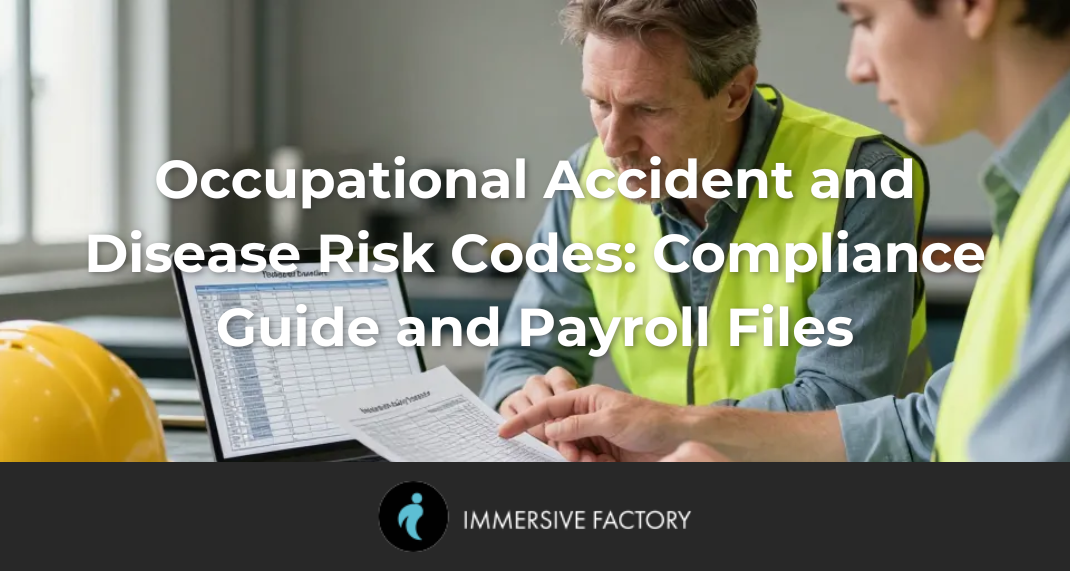
List of AT/MP risk codes: 2026 compliance guide.
Integrating a safety day at the heart of your annual strategy allows you to give life to data often perceived as abstract. If a morning on a construction site begins with adjusting a helmet, the manager's reality becomes more complex when a payroll line reveals an obsolete risk code. This administrative failure generates hidden costs: lost time, stress during audits, and financial penalties weighing on profitability. It therefore becomes crucial to transform this rigid nomenclature into a truly dynamic management tool.
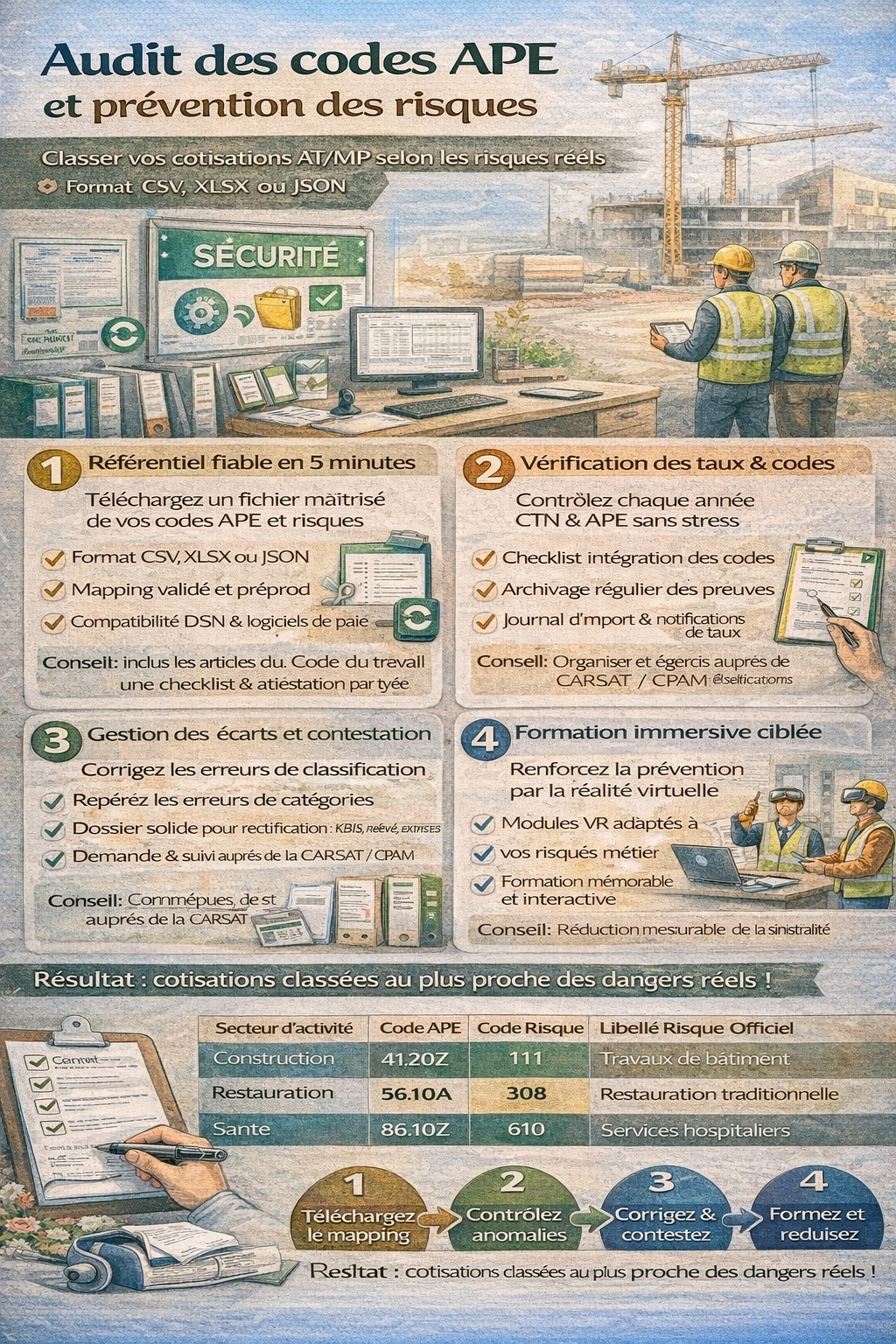
The file is not a simple list, but a lever for social compliance, providing a classification usable by HR and HSE departments. Available in CSV, XLSX, or JSON formats (UTF-8 encoding), it ensures total compatibility with software such as Sage or SAP. This precise mapping from the APE code to the actual risk, tested in pre-production, guarantees healthy DSN (Nominative Social Declaration) flows and eliminates contribution calculation errors that clutter your social declarations.
Control Rigor and Archiving: Securing Establishment Compliance
Once the technical tool is in hand, compliance no longer rests on data alone but on a rigorous verification process, a central pillar of a true safety culture within the company. The payroll manager must locate the risk code on the annual rate notification sent by regional funds (CARSAT) and systematically compare it with the information in the "Compte Entreprise" (Company Account) via official portals. This painstaking work helps identify if your establishment is classified according to its actual activity and avoids frequent inversions between CTN (National Technical Committee) and APE codes, which have radically different functions.
To secure every step and anchor this vigilance in your practices, the use of an integration checklist becomes indispensable. This document must validate the strict correspondence of codes, the success of import tests in the payroll software, and the systematic archiving of proof. Carefully keeping theimport log, rate notifications, and screenshots constitutes your legal shield in case of a URSSAF audit or unannounced check. This compliance file, sorted by establishment, becomes the administrative memory of your structure. By linking payroll rigor to field reality, you transform a management constraint into a strong act of safety culture, essential for small structures and multi-site groups alike.
Strategic Management of Discrepancies and Administrative Dispute Protocol
Identifying anomalies is not enough if it does not lead to structured corrective action. If a classification error is detected—for example, a pure office activity incorrectly classified in a risky category such as "construction work"—the correspondence manual provides the management rules necessary to initiate action. The request for administrative rectification then requires a solid file: up-to-date APE sheets, proof of actual activity, and recent Kbis extracts. This dispute protocol, though technical and sometimes long, often allows for a rate correction with a retroactive effect valuable for cash flow.
However, it is crucial to keep in mind that the final classification always depends on the actual activity observed on the ground by the social security agents. This is why proactive annual monitoring of CARSAT, CPAM, and the Ministry of Labor is imperative to maintain the reliability of your data tables. By clearly displaying the "last update date" on your exports, you guarantee decision-makers that the contribution calculation base is free of historical errors that could skew the coming year's social budget.
| Sector | APE Code | Risk Code | Official Risk Label | Validation Source |
|---|---|---|---|---|
| Construction | 41.20Z | 111 | Building construction work | CARSAT 2026 |
| Catering | 56.10A | 308 | Traditional catering | CPAM 2023 |
| Health | 86.10Z | 610 | Hospital services | Ministry of Labor |
Active Prevention through Technology: Linking Data to Immersive Training
Finally, the purpose of a risk code is not solely for accounting or reporting; it is primarily human and preventive. By linking your administrative classification to innovative solutions such as Virtual Reality (VR) offered by Immersive Factory, you transform abstract numbers into sustainable safe behaviors. These training modules, precisely indexed to your actual business risks (falls from height, chemical risks, complex handling, or commuting accidents), provide a memorable experience that significantly strengthens the HSE prevention culture.
For HR decision-makers, the benefit is dual and measurable: an immediate drop in the frequency and severity of field incidents translates mechanically, in the medium term, into a reduction in your AT/MP contribution rate. Adopting this global annual action plan—including regular audits, rigorous HRIS testing, and immersive training based on real-life scenarios—aligns risk management with the company's overall strategy. At the end of the chain, this approach guarantees a tangible ROI and ensures optimal protection of your employees, transforming an administrative constraint into a true lever for performance and social engagement.

Written by Aurélie Tavernier
Marketing and Communications Manager at Immersive Factory
She became interested in raising awareness of health and safety at work, convinced that an approach tailored to employees can transform the safety culture and reinforce shared vigilance. Her ambition: to encourage all companies, whatever their size, to invest actively in health and safety prevention for the well-being of their employees.
Share
Related articles
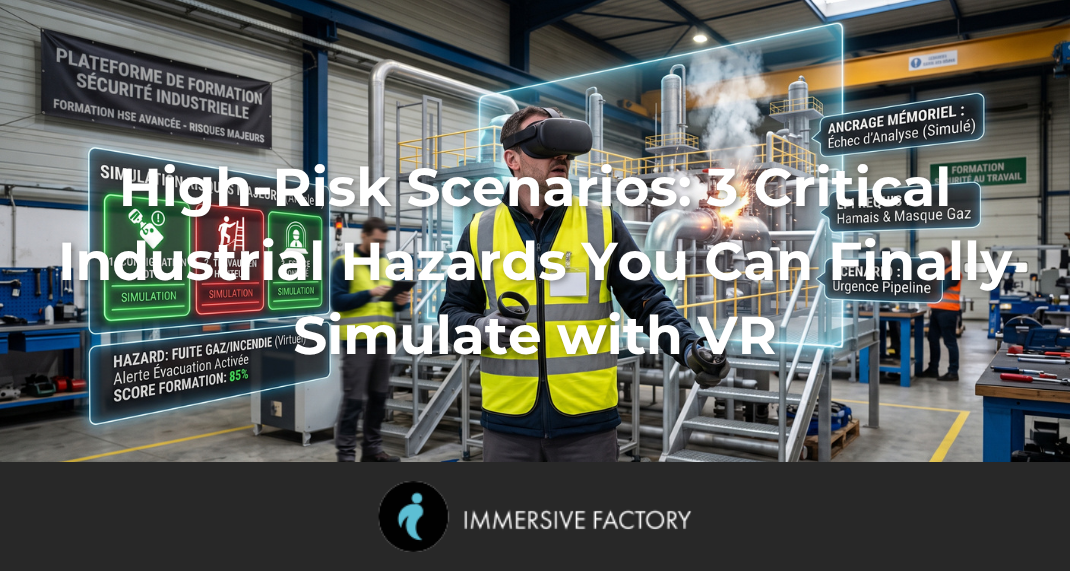
High-Risk Scenarios: 3 Critical Industrial Hazards You Can Finally Simulate with VR
Learn how VR enables safe, realistic simulation of major industrial hazards: Lockout/Tagout (LOTO), working at height, and confined space entry.
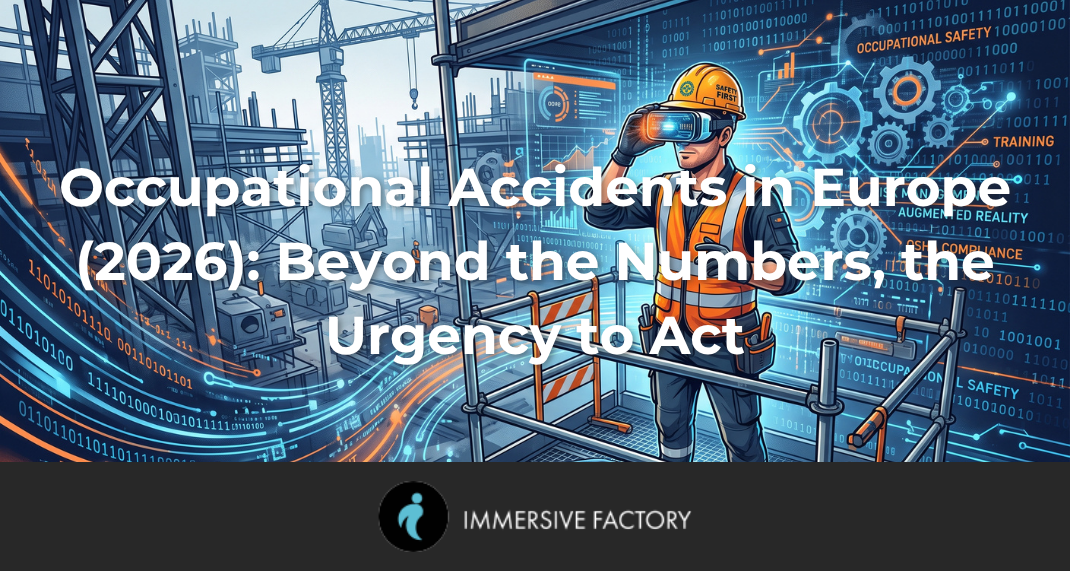
Occupational Accidents in Europe (2026): Beyond the Numbers, the Urgency to Act
What do 2026 European workplace accident stats really reveal? Immersive Factory analyzes the EUROGIP study & offers actionable VR safety solutions.
Heatwaves and Extreme Heat at Work: How Virtual Reality Helps Prevent Risks
As summer temperatures continue to soar year after year, extreme heatwaves are no longer exceptional events. For companies worldwide, managing thermal discomfort and high temperatures has become a critical annual health and saf...