Generative AI: The New Frontier of Workplace Safety and HSE Prevention
Generative AI: The New Frontier of Workplace Safety and HSE Prevention
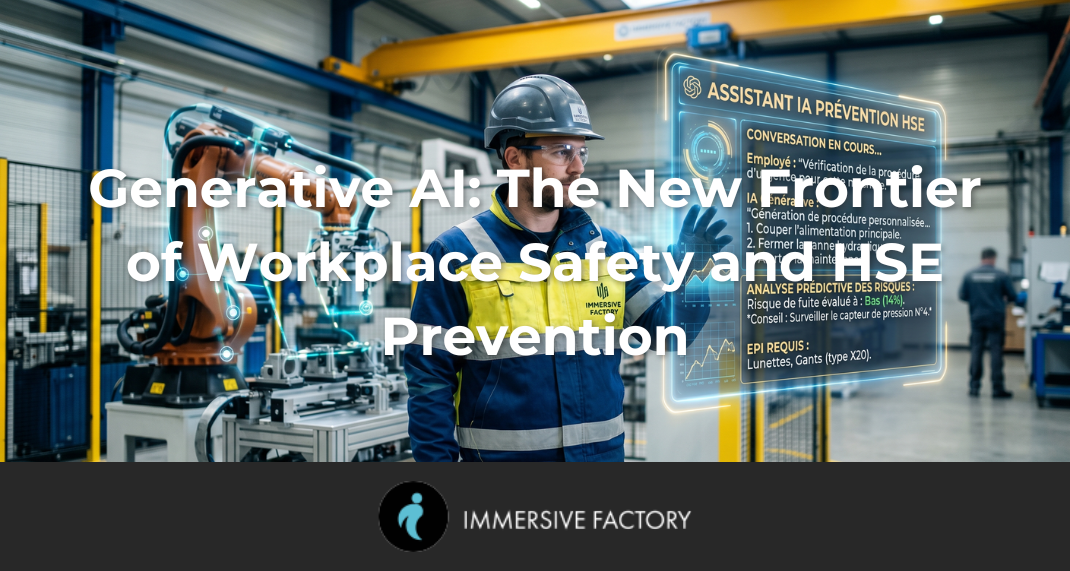
Generative AI & HSE: The Future of Workplace Safety in 2026.
In 2026, Generative Artificial Intelligence (GenAI) has moved beyond being a mere tech gadget to sit at the very heart of factories and construction sites. While it is transforming productivity, its impact on Health, Safety, and Environment (HSE) is a genuine revolution.
How is Generative AI enabling a shift from reactive safety to ultra-personalized prevention? Here are the three pillars of this transformation.
1. Training Scenario Creation: One-Click Customization
Until now, one of the major hurdles to immersive training was the time required to create content. Thanks to Generative AI, this barrier is crumbling.
- Dynamic Scenarios: Imagine being able to generate a Virtual Reality scenario specific to your factory simply by uploading your floor plans and past incident reports. The AI analyzes your data to create a simulation where the risks presented are exactly those your employees encounter every day.
- Linguistic Adaptability: AI can translate and culturally adapt safety modules in seconds for international teams, ensuring that safety instructions are perfectly understood by everyone, regardless of their native language.
2. The Safety "Co-pilot": Instant Answers on the Field
The days of flipping through a 200-page binder to check a complex lockout-tagout (LOTO) procedure are over.
Generative AI now powers intelligent voice assistants capable of answering operators' questions in real-time:
"What is the emergency procedure for a leak of chemical X on this machine?"
"What PPE is required for this specific intervention according to this morning's regulatory update?"
These assistants don't just read text; they synthesize relevant information to provide a concise, actionable answer, drastically reducing the risk of human error linked to stress or forgetfulness.
3. Predictive and Visual Analysis: Anticipating the Invisible
Generative AI excels at understanding images and video streams. When paired with on-site surveillance cameras, it can identify risky situations before they even happen:
- Detection of non-compliant PPE usage.
- Identification of work postures that could lead to Musculoskeletal Disorders (MSDs).
- Alerts in case of a dangerous trajectory between a pedestrian and a forklift.
The AI doesn't just flag the danger; it can generate daily summary reports for HSE managers, highlighting priority vigilance points for the next morning's "safety toolbox talk."
Keeping Humans at the Center of AI
Despite these advances, AI remains a support tool. The final decision and the empathy required for a strong safety culture remain human prerogatives. The challenge for companies is to train their HSE managers to become "HSE Data Managers," capable of orchestrating these tools to best protect workers.
Did you know? Companies integrating AI into their prevention processes observe an average 25% reduction in minor incidents within the first year, thanks to better real-time awareness.
Conclusion: Toward Predictive Safety
Generative AI is the missing catalyst needed to make workplace safety truly interactive and personalized. By combining the power of immersion (VR) with the intelligence of AI, we are entering the era of "Zero Accidents" through anticipation.

Written by Aurélie Tavernier
Marketing and Communications Manager at Immersive Factory
She became interested in raising awareness of health and safety at work, convinced that an approach tailored to employees can transform the safety culture and reinforce shared vigilance. Her ambition: to encourage all companies, whatever their size, to invest actively in health and safety prevention for the well-being of their employees.
Share
Related articles
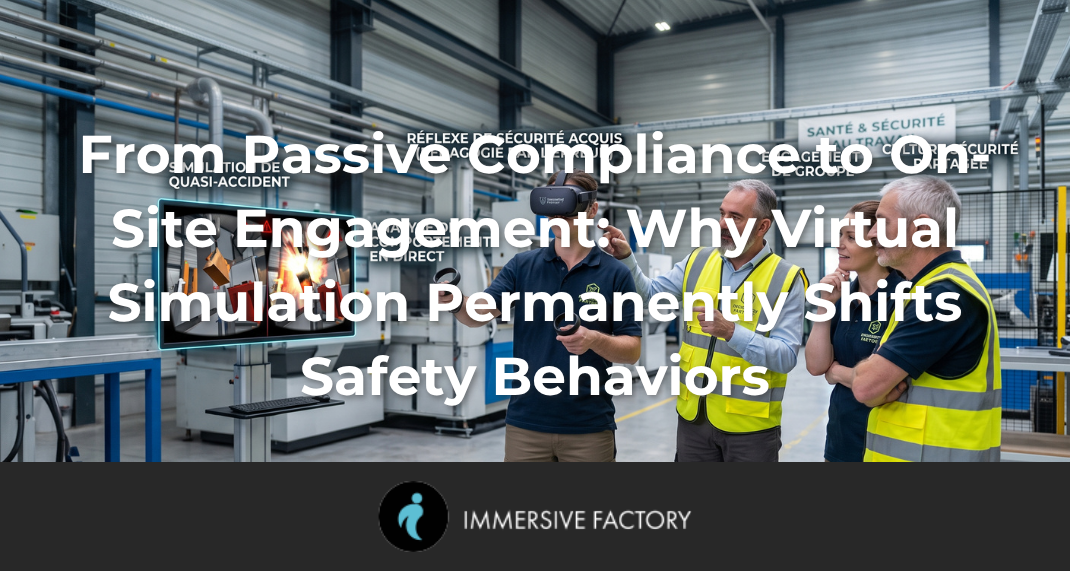
From Passive Compliance to On-Site Engagement: Why Virtual Simulation Permanently Shifts Safety Behaviors
Discover how VR shifts safety culture in industrial workplaces. Explore error-based learning, emotional risk awareness, and interactive safety talks.
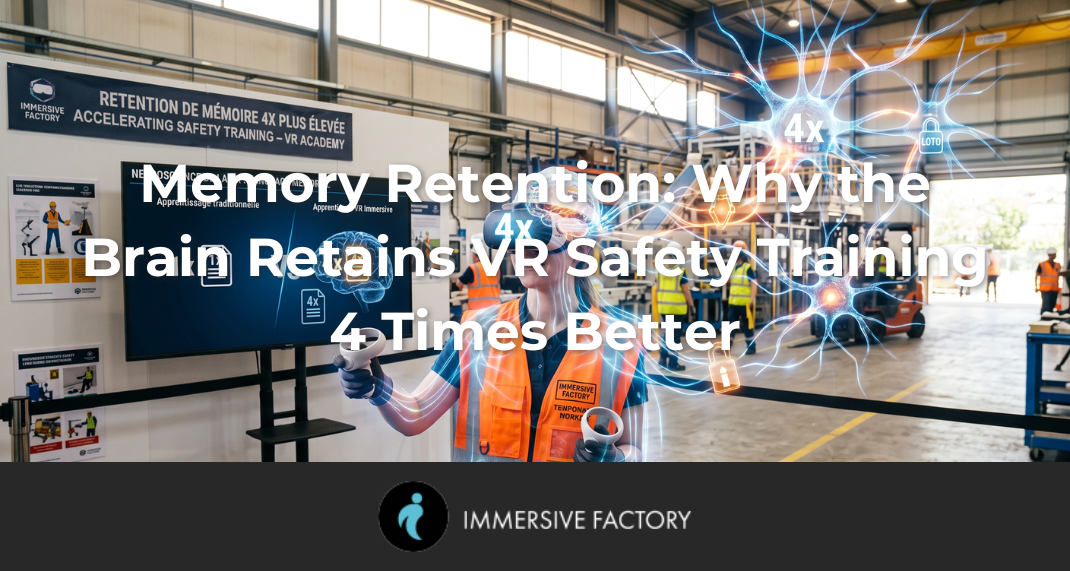
Memory Retention: Why the Brain Retains VR Safety Training 4 Times Better
Discover the neuroscience behind virtual reality: why memory retention and experiential learning make VR safety training up to 4 times more effective.
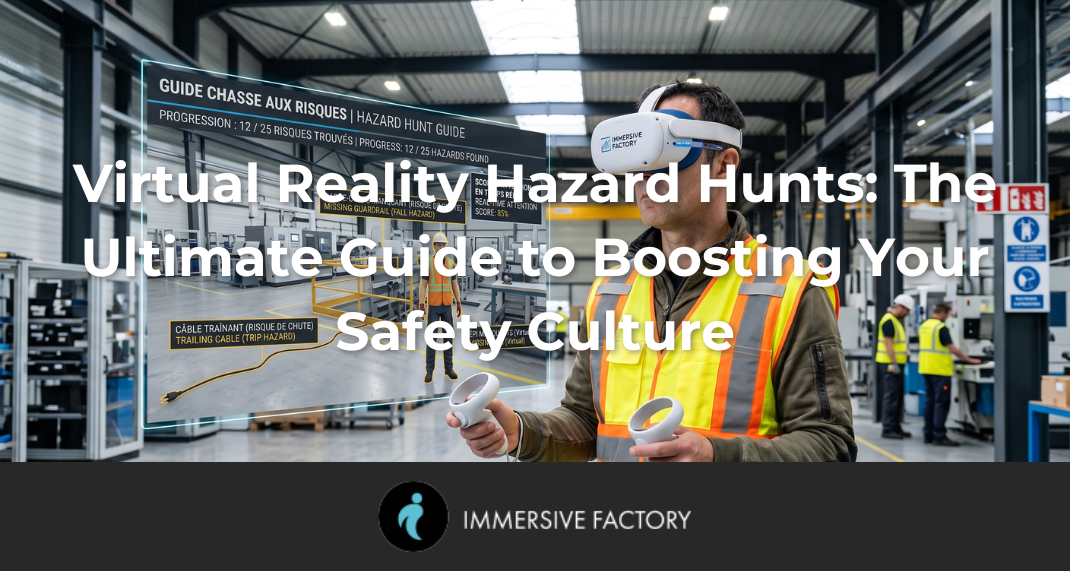
Virtual Reality Hazard Hunts: The Ultimate Guide to Boosting Your Safety Culture
The "Hazard Hunt" is a staple in HSE training. The goal is straightforward: to sharpen employees' critical eyes so they can proactively identify anomalies and dangerous situations in their work environment. It is the absolute f...