Worksite Safety: The 3 Rules to Effectively Protect Your Teams
Worksite Safety: The 3 Rules to Effectively Protect Your Teams
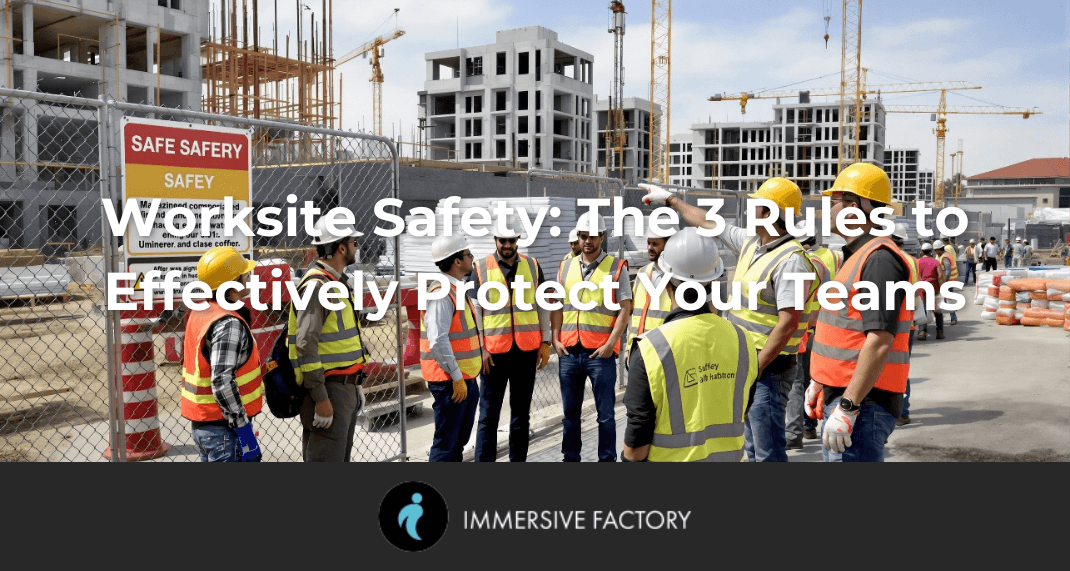
Construction Site Safety: 3 Essential Rules for Your Teams.
The New Era of Construction Safety Training with Immersive Factory
Construction site safety is a critical challenge that combines prevention, technological innovation, and human responsibility.In high-risk environments such as construction, training must be both engaging and effective despite the complexity of regulations and frequent lack of employee involvement.Immersive Factory puts people back at the center of prevention by using virtual reality (VR) to boost engagement through realistic, immersive scenarios.Consider hosting a Construction Safety Quarter-Hour session to keep teams actively involved.
Understanding the Core Principles of Construction Site Safety
The Regulatory Framework and Legal Obligations
Before tackling risk management, it is essential to understand that the construction sector is governed by strict regulations derived from the French Labor Code and European directives.Regulatory compliance requires:
- Implementing prevention plans for every job site
- Reviewing safety data sheets for materials and machinery
- Shared responsibility among workers, safety managers, and SPS coordinators (Health & Safety Protection)
- Ongoing monitoring to incorporate legislative updates (PPE, signage, etc.)
The ability to regularly update practices ensures worker protection and demonstrates organizational excellence.
Main Occupational Risks on Construction Sites
Construction sites present a wide range of hazards, including falls from height, heavy handling, and exposure to electricity or hazardous substances.Key risks include:
- Falls from height
- Crushing by machinery or materials
- Electrocution, chemical exposure, and inhalation of dust
Controlling site traffic, ensuring scaffold compliance, maintaining proper signage, and using checklists are all essential.Securing the site remains the top priority to prevent accidents that can have serious or irreversible consequences.
Fundamentals of Accident Prevention
Effective occupational risk assessment requires the involvement of all stakeholders.Key prevention measures include:
- Developing and regularly updating prevention plans
- Using tools such as checklists, posters, and procedure sheets
- Conducting daily inspections, safety briefings, and incident reviews
Immersive Factory enables safe accident simulations, reducing incident rates and preparing teams for unexpected situations.
Essential Resources for Site Safety
Organizations such as the French Building Federation (FFB) and OPPBTP provide:
- Certified training (First Aid, electrical authorizations, etc.)
- Virtual reality training modules (Immersive Factory)
- Downloadable resources (checklists, practical guides)
Digital and immersive tools simplify upskilling and support a well-controlled work environment.
Selecting and Properly Using Personal Protective Equipment (PPE)
Choosing the Right PPE
PPE must be chosen according to the job role, level of risk, and type of tasks performed—helmets, safety shoes, gloves, goggles, and more.Proper maintenance is crucial to ensure effectiveness and regulatory compliance.Immersive Factory offers VR modules focused on identifying and correctly using PPE, as well as understanding equipment requirements for each specific task.
Best Practices for PPE Implementation
Clear safety signage and daily briefings are key to a successful safety strategy:
- Daily PPE checks
- Personal accountability for every worker
- Interactive training and VR simulations to improve retention and encourage immediate action
Practical, hands-on learning reduces incidents caused by improper PPE use.
The Role of Signage and Alert Systems on Site
Proper signage and alert systems are vital for coordination and accident prevention:
- Standardized signs, alarms, and barriers
- Regular testing of visual and audible alert devices
- Clear communication via radios or daily briefings
Safety depends on the availability and quality of on-site information.

Organizing and Implementing an Effective Prevention Plan
Risk Assessment as the Foundation
Every construction project begins with a detailed diagnostic phase involving observation, analysis, and self-assessment.Key actions include:
- Ranking risks and updating the plan as the project progresses
- Incident reviews, unannounced site visits, and compliance checks
- Collaboration among safety managers, site supervisors, and subcontractors
Flexible, responsive emergency procedures are essential to protect workers and maintain continuity.
Managing and Communicating the Prevention Plan
Creating a prevention plan involves:
- Formalizing and sharing actions with all stakeholders
- Using accessible materials such as diagrams, lists, and downloadable templates
- Monitoring through internal audits, safety sheets, and inspection checklists
- Integrating emergency management (evacuation plans, regular drills)
Immersive Factory’s VR simulations automate preparation for critical situations.
Continuous Training and Team Engagement
The success of any safety system relies on ongoing training, awareness, feedback, and collective commitment.
- E-learning modules (MOOCs, videos, Safety Quarter-Hour sessions)
- Daily briefings, weekly meetings, and experience sharing
- Opportunities for employees to voice observations and concerns
Active participation fosters continuous improvement and quick adoption of new prevention measures.
Practical Resources and Tools
Various tools support daily safety management:
- Templates, checklists, incident forms, and FAQs for streamlined operations
- Field testimonials, case studies, and practical guides
- Digital platforms from Immersive Factory centralizing resources and documentation
A structured organization aligns prevention efforts with top international standards.
A Global, Human, and Innovative Vision of Construction Safety
Digital technology and virtual reality—championed by Immersive Factory—are ushering in a new era of construction safety.Strict regulatory compliance is paired with a profound transformation of behaviors and safety culture, emphasizing responsibility and innovation.Companies that invest in these solutions build a sustainable dynamic of collective protection, performance, and adaptability to meet the challenges of the future.

Written by Aurélie Tavernier
Marketing and Communications Manager at Immersive Factory.
She became interested in raising awareness of health and safety at work, convinced that an approach tailored to employees can transform the safety culture and reinforce shared vigilance. Her ambition: to encourage all companies, whatever their size, to invest actively in health and safety prevention for the well-being of their employees.