Who is Responsible for Workplace Safety? Optimizing Key Actors' Training with Virtual Reality
Who is Responsible for Workplace Safety? Optimizing Key Actors' Training with Virtual Reality
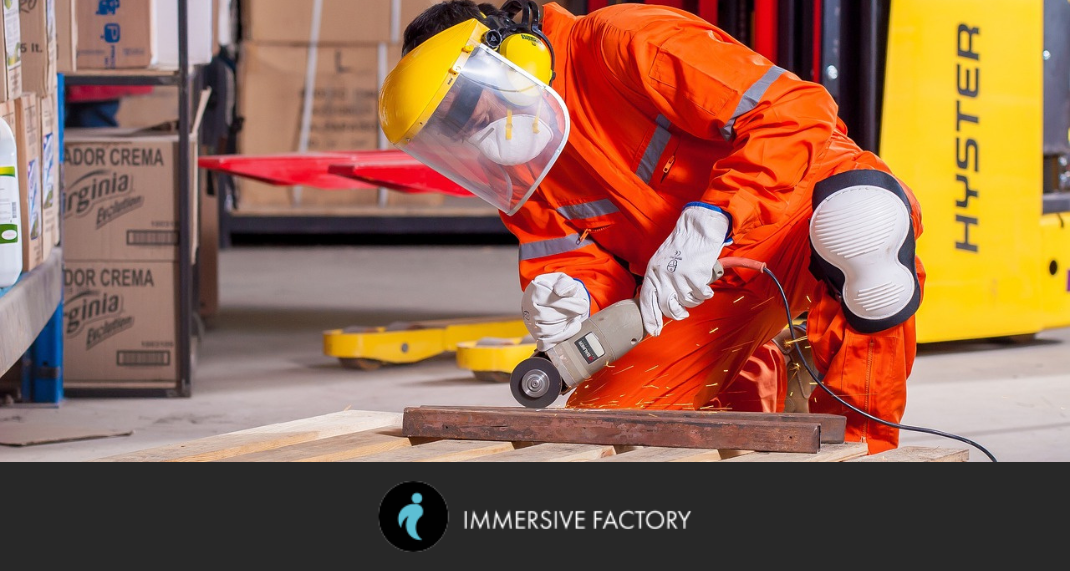
Who is responsible for workplace safety in the company?
Workplace safety enhances productivity and promotes employee well-being. Indeed, it benefits both the company and its collaborators. Key players in safety, including the employer and those responsible for professional risk prevention, play a significant role in promoting and implementing safe practices. To create a safe environment for everyone, training must be a priority in the company, and it can be optimized with virtual reality. Thus, in this guide, discover who is in charge of workplace safety in the company and the contributions of VR in training.
Key Players in Workplace Safety
The various actors involved in workplace safety
Many players are involved in occupational health and safety:
- The employer;
- The safety manager;
- The employees;
- The employee representatives;
- The regulatory authorities.
Their respective roles and responsibilities
The key players in workplace safety have specific responsibilities:
The employer
If you are wondering who is in charge of workplace safety in a company, know that according to the Labor Code, the employeris the main responsible party. Indeed, they must provide a healthy and safe work environment for employees, offer appropriate training, and ensure regulatory compliance in occupational health.
The safety manager
This professional manages the coordination and supervision of safety initiatives in the company. Besides developing action plans, they must identify professional risks and train the staff, which includes organizing safety briefings.
The employees
Employeesmust follow established safety procedures and rules. They should also participate in training and report potential hazards in their workplace.
The employee representatives
Employee representatives communicate the workforce's expectations to the employer. They may also participate in negotiating collective agreements on health and safety-related topics.
The regulatory authorities
Regulatory authorities include health agencies and governmental bodies. They set safety standards and ensure that companies comply with them.
Challenges of Safety Training
The question of who is in charge of workplace safety in the company has been answered. So, how can the employer protect employees? Regular training implementation is highly recommended.
Issues and challenges related to safety training
Safety training presents many issues and challenges:
Maintaining engagement
Stimulating interest and engagement among employees can be challenging during training sessions, especially if information is conveyed with static documents and materials. Indeed, it's important to make learning more interactive to capture learners' attention.
Realistic situational training
Realistic situational training is crucial to help employees face dangers they might encounter in the field, allowing them to respond correctly to prevent workplace accidents. However, this requires significant resources that a company might not always have.
Skills assessment
Assessing the skills acquired after training can be complex, requiring relevant methods like practical exercises or performance-based tests in the field.
Safety culture
Promoting a safety culture is a real challenge for the employer, as it demands continuous commitment from key players.
Limitations of traditional training methods
Traditional training methods have limitations:
- Passivity: Classic approaches like presentations and lectures can be tedious for employees, making learning passive and reducing knowledge retention;
- Lack of personalization: Traditional training methods do not consider the individual needs of participants, leading to effectiveness loss;
- Difficulty maintaining attention: Learners are easily distracted because the content of classical training is neither relevant nor dynamic;
- High cost: Setting up traditional training requires time and many resources, which can be a barrier for companies with limited budgets for team training.
Virtual Reality as an Innovative Solution
While it's important to know who is responsible for workplace safety in a company, it's also crucial to determine how to implement training, which can be delivered using an innovative tool like virtual reality.
What is virtual reality, and how does it work?
Virtual reality is an innovative technology that allows immersion in a computer-generated virtual environment. It operates using special equipment like VR headsets or glasses that display high-resolution images. These devices incorporate action-tracking sensors that detect head movements, allowing the virtual environment to react in real-time, creating a true sense of immersion. Note that some VR devices include controllers or handsets that let the user interact directly with the virtual environment. They are also equipped with audio systems providing spatial sound.
The advantages of virtual reality for safety training
Virtual reality offers only advantages for occupational health and safety training:
Immersion
Virtual reality can virtually reproduce dangerous work conditions, allowing employees to experience different realistic situations, which strengthens learning.
Interactivity
Learners can interact with the virtual environment, either by exploring or manipulating objects, making training more dynamic and encouraging engagement.
Customizable scenarios
Scenarios can be tailored to the specific needs of the company and learning objectives. Thanks to customization, employees are trained to face all situations.
Performance evaluation
VR systems record all actions during training, giving trainers complete data to assess learners' performances. They can provide precise and immediate feedback.
Immersive Factory: Adopting Virtual Reality for Corporate Safety Training
Adopt virtual reality for safety training
By adopting virtual reality for safety training, you will offer your employees a highly beneficial immersive experience. Indeed, our realistic simulations will allow them to become familiar with procedures and develop their skills. Moreover, this approach reduces the risk of workplace accidents and demonstrates your commitment to safety excellence. Therefore, trust our team at Immersive Factory to promote a proactive safety culture within your organization.
Future Prospects for the Use of Virtual Reality in Workplace Safety
With technological innovations, virtual reality could evolve in the coming years. Indeed, simulations will become more realistic and customized according to the needs of industries. Moreover, VR could be combined with other technologies to make training more effective. Its use could even be extended to other applications like facility inspections and emergency planning.

Written by Aurélie Tavernier
Marketing and Communications Manager at Immersive Factory
She became interested in raising awareness of health and safety at work, convinced that an approach tailored to employees can transform the safety culture and reinforce shared vigilance. Her ambition: to encourage all companies, whatever their size, to invest actively in health and safety prevention for the well-being of their employees.
Share
Related articles
Deploying HSE VR Across Multiple Sites: From Pilot to Scaling
Discover how to successfully scale enterprise virtual reality for multi-site safety training: fleet management, LMS integration, and local adoption.
Calculating the ROI of VR in Health & Safety: Key Metrics Beyond Hardware Costs
Learn how to measure the true ROI of virtual reality in HSE safety training. Key metrics, hidden cost savings, and incident rate reduction.
Back-to-Work EHS: 5 Steps to Refresh Your Safety Training by September
Gear up for the fall EHS restart! Discover 5 actionable steps to refresh your safety training, re-engage teams in September, and integrate VR.