Road Risk Training in the Workplace: Reduce Accidents with Immersive Simulations
Road Risk Training in the Workplace: Reduce Accidents with Immersive Simulations
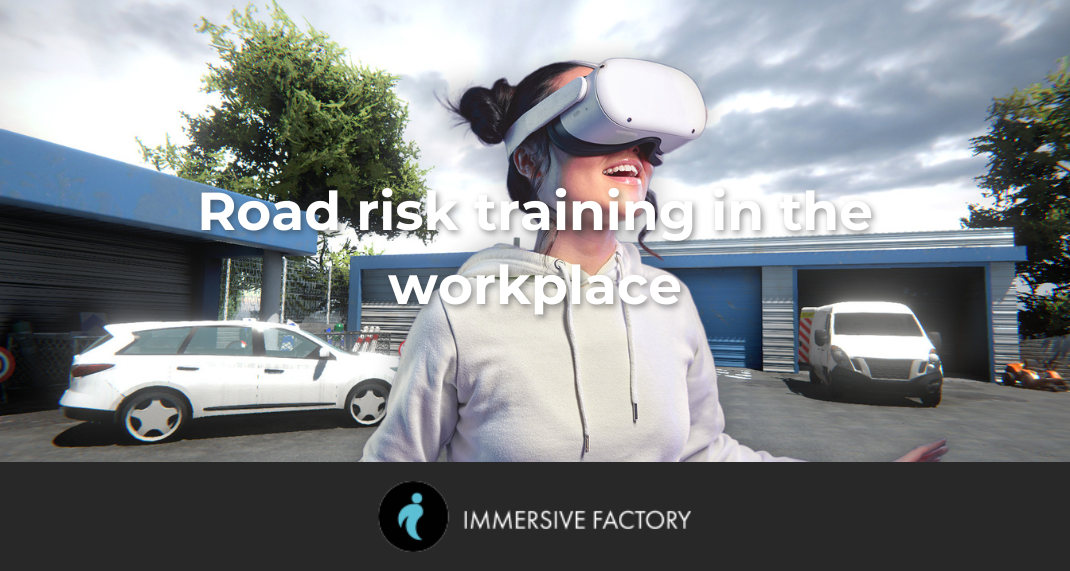
Road Risk Training in the Workplace with Virtual Reality.
The majority of workplace accidents occur during professional travel. This is why promoting road safety should be a priority for businesses. Additionally, road accidents can have significant financial impacts on a company, including covering medical expenses, daily allowances, and the loss of productivity caused by staff absence. Therefore, to teach your employees good driving practices and ensure their safety, invest in road risk training in the workplace.
Identifying Common Road Risks
The maincauses of road accidents are:
- Distractions: using a phone while driving, conversations, etc.;
- Fatigue and drowsiness;
- Inability to adapt to road conditions: speeding, insufficient vehicle lighting, lack of adequate distance between road users, etc.;
- Failure to follow traffic laws: incorrect overtaking maneuvers, failure to yield to pedestrians;
- Poor weather conditions leading to reduced driver visibility;
- Driving under the influence of alcohol.
Road safety training is an effective way to reduce the risk of road accidents.
Statistics and Examples of Road Accidents in the Workplace
In 2022, 485 people were killedduring professional travel. These numbers slightly decreased in 2023, thanks to companies' efforts to raise awareness of road safety. Note that road accidents can take various forms, such as solo collisions (involving the driver and an obstacle), simple collisions (involving fewer than three road users), or multi-collisions (involving at least four road users).
Traditional Road Risk Prevention Strategies
Traditional Methods of Road Safety Training
In the past, road risk training in the workplace was provided using traditional methods such as:
- Theoretical courses: the instructor taught traffic laws in a classroom using conventional materials like books and manuals;
- Accompanied driving: to gain practical driving experience, young drivers were accompanied by a tutor and trained on a closed circuit;
- Educational films: to show the consequences of reckless driving, learners were often shown videos of accidents and various driving situations on the road.
Advantages and Limitations of These Methods
These traditional methods of road risk training in the workplace have both advantages and disadvantages. Direct interaction with the instructor is crucial for learners, as they can get clear and immediate answers to their questions. Additionally,practical experiences allow driving skills to develop quickly. The tutor's guidance is also reassuring for young drivers, as it boosts their confidence behind the wheel. Finally, with driving manuals at their disposal, they can learn traffic laws at their own pace.
However, traditional training methods do not engage learners sufficiently. Consequently, learning becomes passive, which reduces its effectiveness. If theoretical sessions are too long, learners lose concentration and struggle to retain information. Moreover, physical resources are not always comprehensive and may not reflect recent changes in traffic laws, making them unreliable at times. Finally, practical sessions can be costly to implement.
Innovations in Training: Virtual Reality
Introduction to the Use of Virtual Reality in Road Safety Training
Today, virtual reality is increasingly being used for road risk training in the workplace. It allows users to learn to drive in a simulated environment. Road users can experience realistic learning scenarios through virtual reality, which is both an innovative and effective way to teach good driving practices.
Comparison Between Virtual Reality and Traditional Methods
Compared to traditional training methods, VR training offers several advantages. With virtual reality, employees can experience various hazardous situations on the road (challenging traffic conditions, poor weather) without being exposed to real danger. This allows them to effectively prepare for any eventuality. It would be difficult, if not impossible, to replicate dangerous scenarios in real life. Additionally, virtual reality engages learners more effectively, as the immersive training is more interesting and requires their direct involvement. This leads to better information retention compared to traditional training.
How a Virtual Reality Road Risk Training Session Works
Description of the Immersive Training Process
Immersive road risk prevention training always begins with an explanation of how to use VR headsets and the equipment used during the session. Next, the instructor explains the topic and objectives of the course to the learners. Then, they go through several scenarios before receiving a report on their performance. This report provides an overview of areas for improvement. The instructor may also provide feedback and advice for further progress.
Concrete Examples of Simulation Scenarios and Skills Acquired
Here are two examples of virtual reality road risk training scenarios in the workplace:
Scenario 1: Night Driving
In this scenario, the driver must drive a vehicle on a poorly lit road outside the city. Animals may suddenly appear in the middle of the road, and other vehicles may dazzle the driver with their headlights. The goal is to help the driver stay alert to road signs, drive carefully, and obey traffic lights. After the training, the driver will know how to adapt their driving to low visibility conditions.
Scenario 2: Managing Distractions
In this scenario, the driver must stay focused on the road despite numerous distractions, such as passengers' conversations, phone notifications, or other events on the road. Ultimately, they will be able to manage all internal and external distractions and make safe decisions.
Improve Workplace Road Safety with Immersive Factory
Do you want to improve road safety in your company? Opt for our immersive workshops. Our virtual reality programs will help raise your teams' awareness of the dangers of reckless driving and the importance of vigilance on the road. Our goal is to help you protect your staff's health effectively by offering high-quality training that combines dynamism and innovation.

Written by Aurélie Tavernier
Marketing and Communications Manager at Immersive Factory
She became interested in raising awareness of health and safety at work, convinced that an approach tailored to employees can transform the safety culture and reinforce shared vigilance. Her ambition: to encourage all companies, whatever their size, to invest actively in health and safety prevention for the well-being of their employees.
Share
Related articles
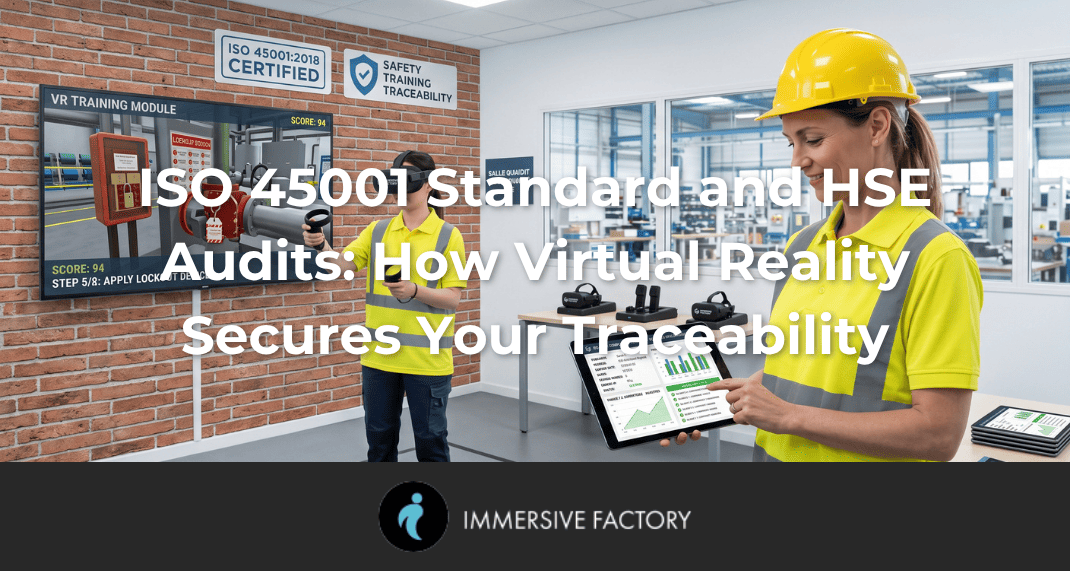
ISO 45001 Standard and HSE Audits: How Virtual Reality Secures Your Traceability
Prepare for your occupational health and safety audits with virtual reality. Discover how VR ensures the traceability of your HSE training.
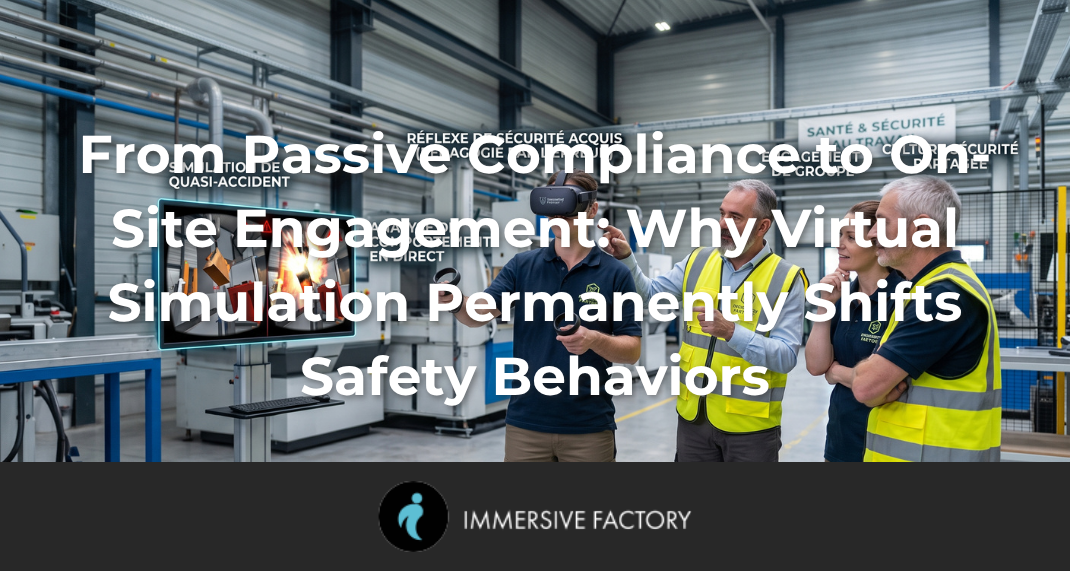
From Passive Compliance to On-Site Engagement: Why Virtual Simulation Permanently Shifts Safety Behaviors
Discover how VR shifts safety culture in industrial workplaces. Explore error-based learning, emotional risk awareness, and interactive safety talks.
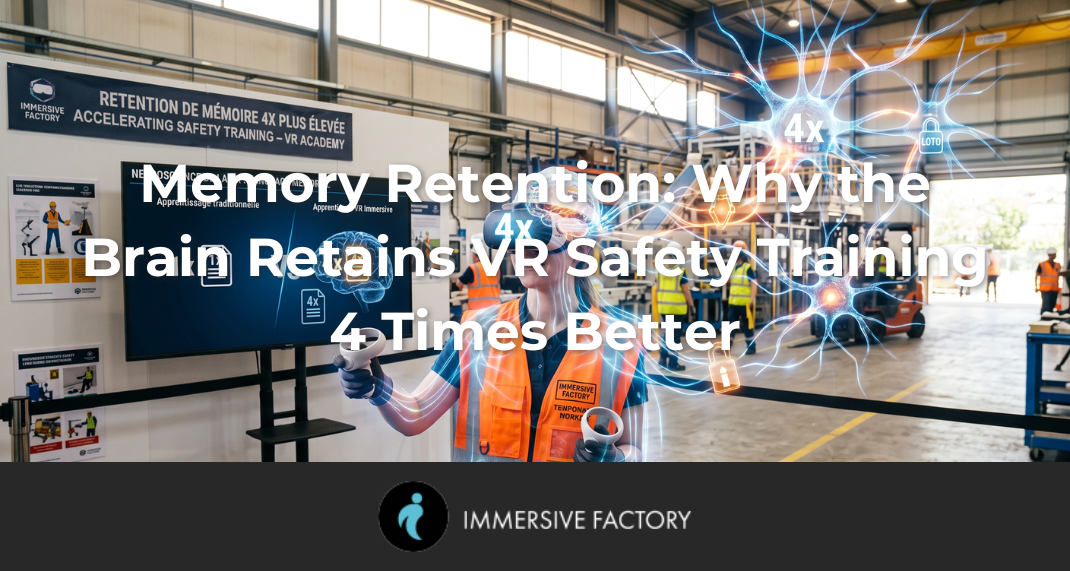
Memory Retention: Why the Brain Retains VR Safety Training 4 Times Better
Discover the neuroscience behind virtual reality: why memory retention and experiential learning make VR safety training up to 4 times more effective.