Risk Assessment Matrix: Tools and Innovative Solutions for Effective Risk Management in the Workplace
Risk Assessment Matrix: Tools and Innovative Solutions for Effective Risk Management in the Workplace
Risk Assessment Matrix: An Effective Tool for Risk Management
Risk management is a crucial issue for companies, encompassing employee safety, cost control, and brand protection. The risk assessment matrix is a highly effective instrument for achieving these goals. It helps calculate the level of risk criticality and categorize risks for better management. With this tool, decision-makers can easily identify hazards and prioritize preventive actions. Moreover, using this matrix ensures compliance with legal obligations.
The Core Principles of a Risk Assessment Matrix
The Different Types of Risks to Evaluate
Risks can be grouped into several categories:
- Physical risks: loud noise, extreme heat or cold, radiation exposure
- Psychological risks: excessive pressure, stress, aggressive behavior, workplace harassment, workload overload
- Environmental risks: pollution, ecological accidents
- Chemical risks: handling or exposure to toxic substances
The safety quarter-hour is an effective tool for addressing these risks by encouraging discussions around best practices.
The Probability and Severity Scale Used in a Matrix
A risk assessment matrix uses a scale of probability and severity to classify and rank hazards. Probability is rated from 1 to 5 (rare to frequent), while severity is evaluated on a similar scale from minor to catastrophic. For example, in a warehouse, the probability of a fire may be low, but its severity is high. As a result, the risk is moderate to significant and requires specific measures.
How to Interpret Results and Implement Preventive Actions
Once the evaluation is complete, it becomes easier to prioritize necessary actions. Risks with high probability and severity must be addressed first, requiring swift measures. These can be technical, human, or organizational. For instance, regular hazard hunts can help identify potential dangers before they lead to accidents.
The Limits of Traditional Risk Assessment Methods
Despite their benefits, traditional risk assessment methods also have some limitations:
Challenges of Manual Risk Assessment
Manual risk assessment is often highly subjective, relying solely on the observations of experts and QHSE managers. Interpretation errors are common, meaning some hazards may be underestimated while others are overestimated. Thus, the results displayed in the risk matrix may not always be reliable. Additionally, manual assessments are often static and cannot simulate real-world situations, resulting in a lack of interactivity that reduces their effectiveness.
The Importance of Simulating Real-World Scenarios
Simulating real scenarios is essential for a better understanding of risks. Experiencing hazardous scenarios helps employees understand the importance of following procedures and safety instructions. It enables them to adopt the right reflexes and respond effectively in emergencies. Moreover, virtual simulations pose no health risk.
While traditional methods offer a solid foundation for risk assessment, they should be combined with more modern approaches such as immersive simulation to ensure optimal safety.
Immersive Factory: Virtual Reality to Enhance Risk Assessment in the Workplace
Immersive Factory specializes in immersive training focused on workplace safety. Using modern technological accessories such as VR headsets, we can immerse your employees in realistic and risk-free environments. We offer a variety of modules tailored to different industries.
Hazard Hunts and Safety Quarter-Hours: Innovative Tools for Risk Assessment
Hazard hunts and safety quarter-hours are part of the innovative solutions for risk assessment. In a hazard hunt, participants are immersed in a virtual environment where they must identify hidden dangers. This exercise boosts their awareness. As for the safety quarter-hour, it involves practical role-playing scenarios to improve the company’s safety culture. It's a short and regular session where employees gather to discuss safety-related topics, including interactive and hands-on exchanges.
These two immersive tools offer employees the chance to explore simulated work environments and experience various scenarios. They help prepare them to face real-world dangers.
How VR Training Deepens Risk Analysis
VR training enhances risk analysis in several ways. First, VR sessions are realistic, with scenarios that accurately replicate actual work environments, offering a unique experience. Secondly, mistakes have no real-world consequences, so participants can learn safely without risking injury or property damage. Finally, as they actively participate in the sessions, VR training strengthens their engagement, helping them better understand safety challenges. Immersion and interactivity lead to a more precise risk evaluation.
In summary, the risk assessment matrix can be supplemented with innovative tools such as virtual reality to improve occupational risk management. This technology represents a forward-thinking solution for companies aiming to ensure employee safety and well-being. In any case, to maintain a high level of safety and a strong safety culture, training must be ongoing and adaptable to regulatory changes. To transform your approach to risk assessment, contact Immersive Factory today and access a wide range of customizable immersive solutions tailored to your needs.

Written by Aurélie Tavernier
Marketing and Communications Manager at Immersive Factory
She became interested in raising awareness of health and safety at work, convinced that an approach tailored to employees can transform the safety culture and reinforce shared vigilance. Her ambition: to encourage all companies, whatever their size, to invest actively in health and safety prevention for the well-being of their employees.
Share
Related articles
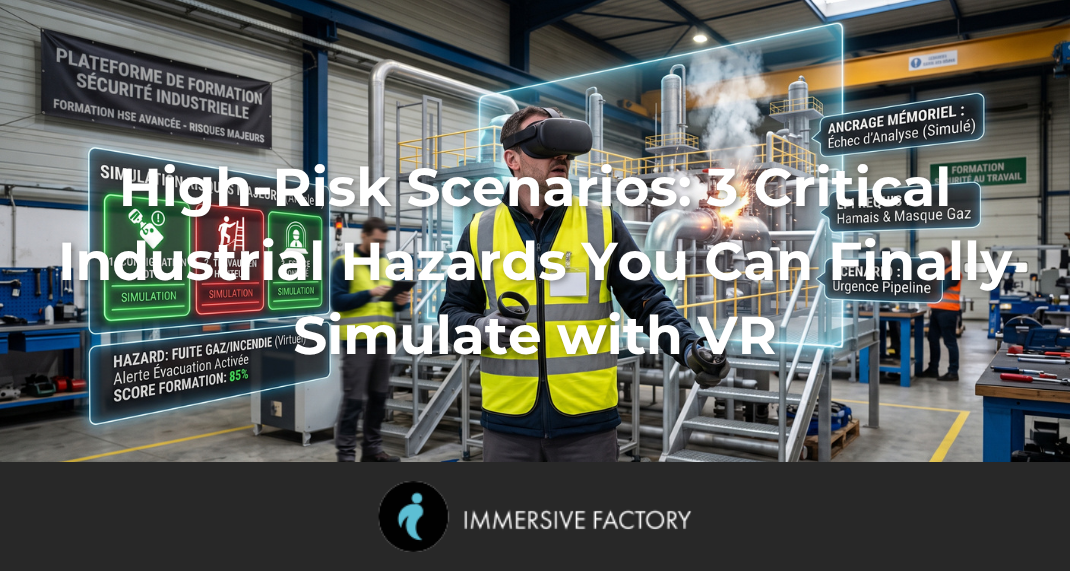
High-Risk Scenarios: 3 Critical Industrial Hazards You Can Finally Simulate with VR
Learn how VR enables safe, realistic simulation of major industrial hazards: Lockout/Tagout (LOTO), working at height, and confined space entry.
Occupational Accidents in Europe (2026): Beyond the Numbers, the Urgency to Act
What do 2026 European workplace accident stats really reveal? Immersive Factory analyzes the EUROGIP study & offers actionable VR safety solutions.
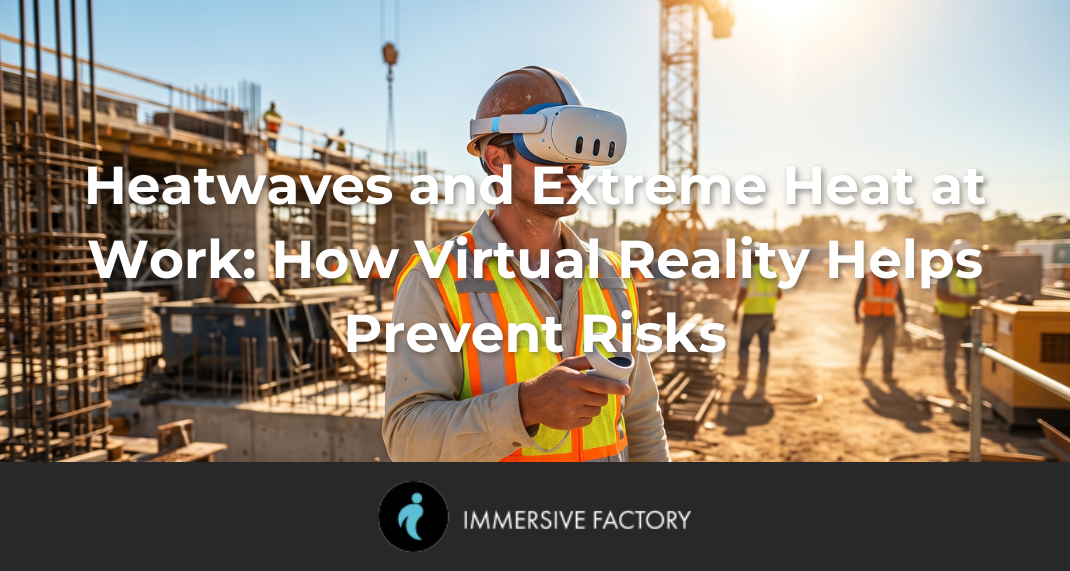
Heatwaves and Extreme Heat at Work: How Virtual Reality Helps Prevent Risks
As summer temperatures continue to soar year after year, extreme heatwaves are no longer exceptional events. For companies worldwide, managing thermal discomfort and high temperatures has become a critical annual health and saf...