Safety Rules: From Posting to Field Execution
Safety Rules: From Posting to Field Execution
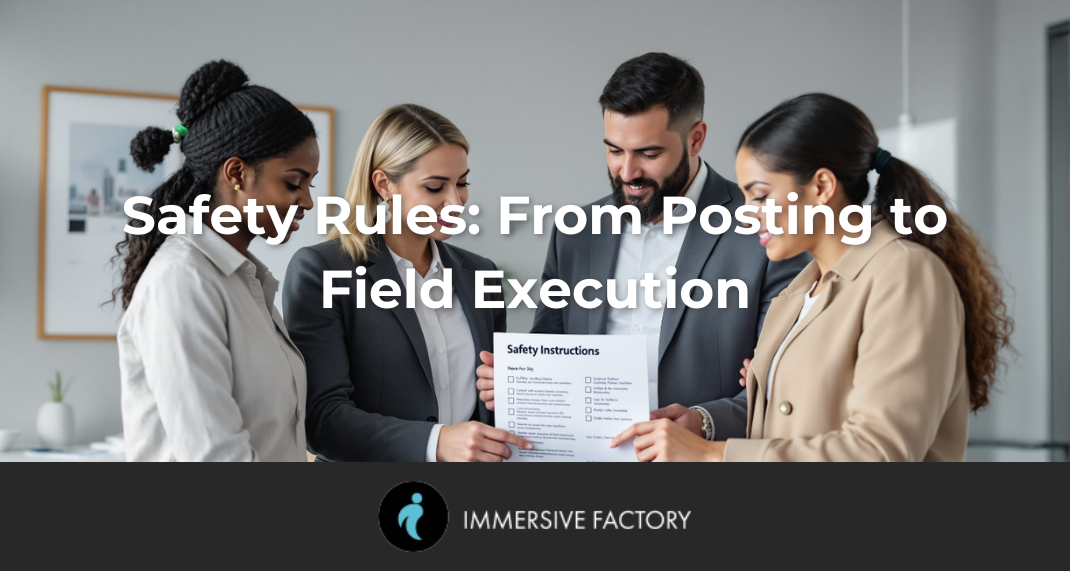
Workplace safety instructions: best practices and situational practice.
The Effective Safety Pack
- Immediate Readability: Clear, prioritized, and visible instructions reduce reaction times and limit errors during emergencies.
- Field Application: When integrated into a Safety Moment (Safety Quarter Hour) or a Toolbox Talk, instructions transform from mere posters into operational reflexes.
- Traceability & Continuous Improvement: Dated updates, regular drills, and immersive training guarantee regulatory compliance and measurable team progress.
The sound of an alarm echoing through an industrial building leaves no room for hesitation. At that moment, only clear and truly integrated safety instructions can prevent confusion. This is why revisiting them during a Safety Moment or a Toolbox Talk is crucial: these structured interactions turn a posted rule into an operational reflex.
An effective instruction should not simply exist on a board. It must be understood immediately, memorized, and applied without delay.
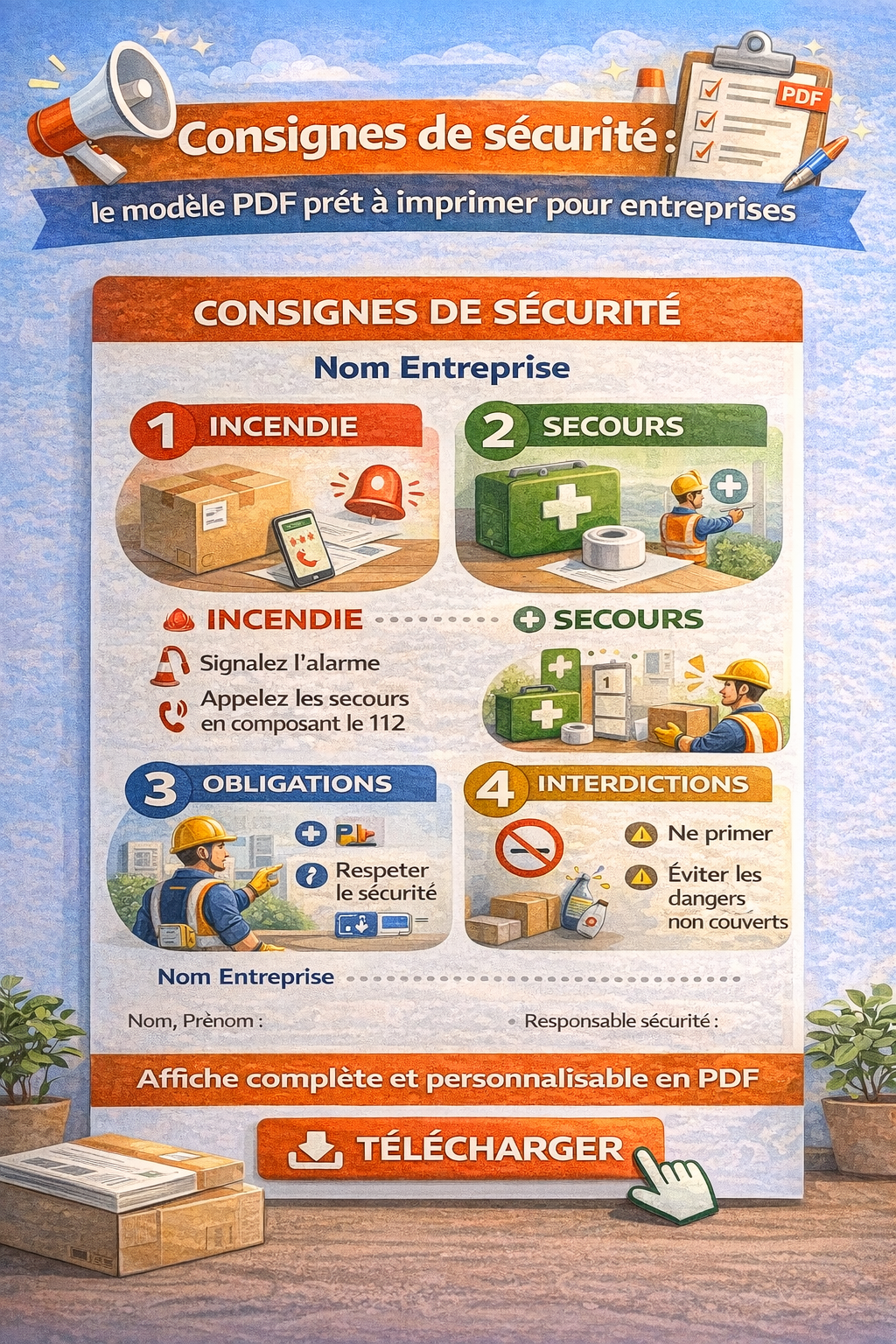
Making Instructions Immediately Actionable
Readability drives reaction. A short sentence, a clear action verb, and a standardized pictogram facilitate decision-making in high-stress situations. In a noisy or frantic environment, visual hierarchy directly influences the ability to act correctly.
We distinguish several types of instructions based on on-site scenarios:
- Fire Instructions: Rapid evacuation/evacuation plan + assembly point/alarm activation.
- Hazardous Materials: Chemical prevention/mandatory PPE + segregated storage/daily handling.
- Accident Instructions: Immediate management/alerting emergency services + securing the area/field incident.
- Internal Traffic: Collision reduction/traffic flow + speed limits/warehouse logistics.
From Written Instructions to Situational Practice
To be truly effective, an instruction must be tested, repeated, and contextualized. Practical exercises, simulations, and feedback loops help anchor expected behaviors. Without situational practice, an instruction remains purely theoretical.
This is where regular reminders via Safety Moments or Toolbox Talks take on their full meaning. They reactivate collective memory and ensure all team behaviors are aligned.
Signage, Field Reminders, or Immersion: Which Approach to Choose?
Every method has its place, but their effectiveness varies depending on the objective.
- Static signage: regulatory compliance/low retention rate
- Safety moment: quick, regular reminders/limited time for depth
- Toolbox talk: participatory exchange/quality depends on the facilitator
- Immersive VR training: realistic situational practice/initial setup required
An effective strategy generally combines multiple levels: Signage + Field Reminders + Situational Practice.
Immersive Factory: Turning Instructions into Operational Reflexes
Immersive Factory supports companies in this transformation by offering Virtual Reality (VR) training. Employees no longer just read an evacuation procedure or a fire protocol; they experience them in a simulated environment that mirrors real-world conditions.
This approach improves memory retention, reduces errors in emergencies, and allows for measurable tracking of acquired skills. Formats are adaptable, ranging from full "Immersive Safety Days" to short modules integrated into periodic reminders.
A safety instruction only becomes truly effective when it moves from the wall panel to mastered behavior.
Regulatory Compliance and Legal Validation
Legal obligations must be clearly stated on every instruction and poster. A clear mention should cite applicable articles and provide links to official texts. You should formalize an internal validation procedure before on-site distribution to ensure the reference to specific decrees is accurately explained.

Effective safety instructions are clear, compliant, visible, and tested. Without training, they remain theoretical. With repetition and immersion, they become a reflex. Prevention does not rely solely on signage; it relies on behavior.
The Immersive Factory Value Proposition
Feedback shows a notable drop in incidents following immersive training. This solution integrates seamlessly into a complete training path, allowing you to plan sessions according to the pace and specific needs of your teams. The proof of effectiveness is in the data.
FAQ: Common Questions on Safety Instructions
What are safety instructions?
Safety instructions are the set of information and prevention measures that save lives. Whether regarding fire, evacuation, or workplace accidents, they describe the first behaviors to adopt before emergency services arrive. They list contacts, emergency phone numbers, and specify the signage to follow on-site. Simple, clear, and accessible—this isn't just paperwork; it’s a practical tool for the moment it's needed most. Keep them visible, revise them, test them in drills, and above all, talk about them with colleagues so everyone knows what to do without hesitation.
What are the different types of instructions?
We distinguish between three types: Target-oriented instructions (stating the final goal), Process instructions (step-by-step guidance), and Directional instructions (highlighting specific aspects of a task). Thinking in terms of Goal, Process, and Direction helps design useful displays and intelligible signage. In practice, these often overlap—and that’s a good thing. A clear goal boosts motivation, a solid process secures execution, and clear direction prevents "silly" mistakes. Draft, test, simplify, and then adapt based on how they perform in the field.
How do you draft safety instructions?
Start with a precise title. Indicate if the instruction is Permanent or Temporary. Describe the context, then clearly detail the actions to be taken when the situation arises. Add emergency contact numbers (including on-call managers) and specify the expected signage. Drafting isn't about writing an administrative manual; it’s about creating an operational guide that is readable under stress. Test the text in real conditions, gather feedback, and simplify as much as possible. Use action verbs and a layout designed for speed.
What are the main safety rules?
The fundamentals include knowing emergency procedures, wearing Personal Protective Equipment (PPE), respecting posted instructions, attending mandatory training, and following traffic rules on-site. Add to this a "Safety Mindset": vigilance, communication, regular equipment checks, and reporting anomalies. This isn't a dry catalog of rules; it’s a coherent system that limits risk. Practice through drills, share feedback, and constantly improve. Safety is a collective effort—a small action today prevents a major crisis tomorrow.

Written by Aurélie Tavernier
Marketing and Communications Manager at Immersive Factory
She became interested in raising awareness of health and safety at work, convinced that an approach tailored to employees can transform the safety culture and reinforce shared vigilance. Her ambition: to encourage all companies, whatever their size, to invest actively in health and safety prevention for the well-being of their employees.
Share
Related articles

Deploying HSE VR Across Multiple Sites: From Pilot to Scaling
Discover how to successfully scale enterprise virtual reality for multi-site safety training: fleet management, LMS integration, and local adoption.
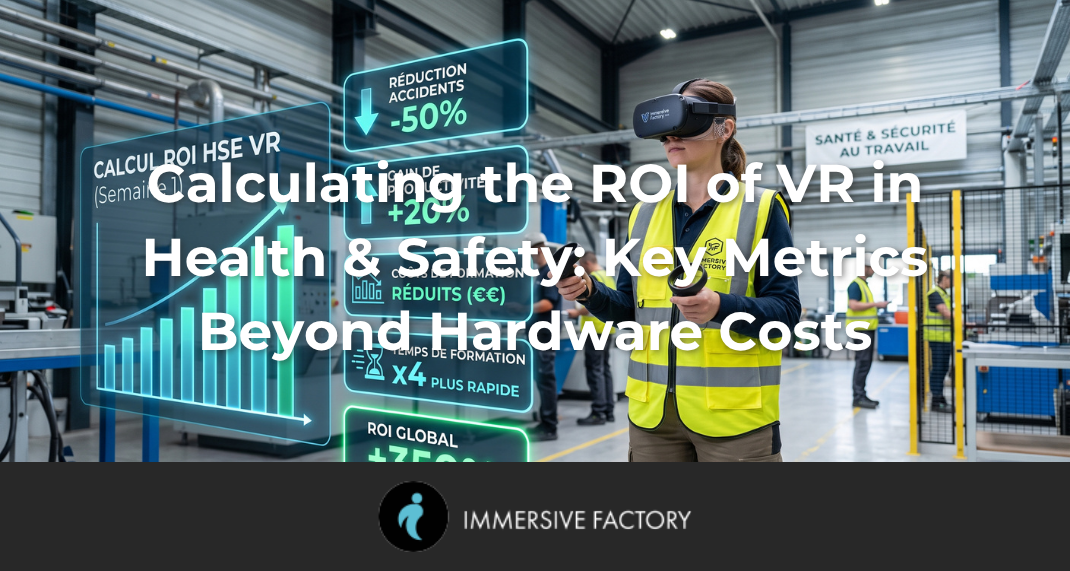
Calculating the ROI of VR in Health & Safety: Key Metrics Beyond Hardware Costs
Learn how to measure the true ROI of virtual reality in HSE safety training. Key metrics, hidden cost savings, and incident rate reduction.
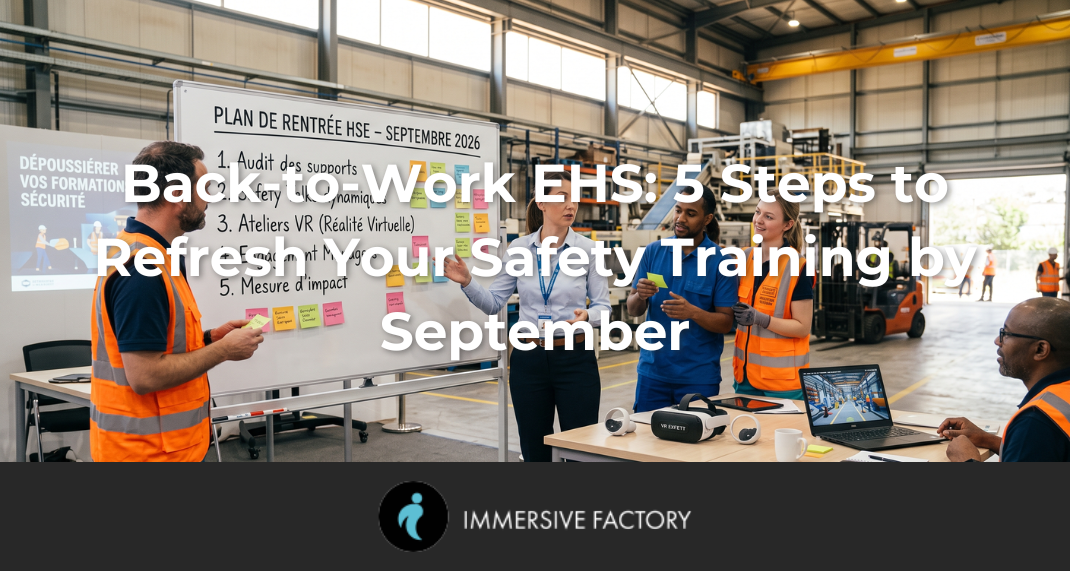
Back-to-Work EHS: 5 Steps to Refresh Your Safety Training by September
Gear up for the fall EHS restart! Discover 5 actionable steps to refresh your safety training, re-engage teams in September, and integrate VR.